About Hotels and Lodges in Wyoming
Wyoming's lodging landscape breaks down roughly by region, and that region shapes the price, character, and booking timeline you should expect. The state's most visited corner is the northwest: Jackson Hole and the Tetons pull most of the crowds and command the highest rates. Jackson Hole Airport (JAC) is the only commercial airport inside a U.S. national park, and properties within a few miles of the terminal or downtown Jackson fill early. During peak summer weeks in July and August, mid-range rooms in Jackson run $200 to $500 per night. Cowboy Village Resort on Flat Creek Drive, with 40 cabin-style units and a heated pool a short walk from the town square elk-antler arches, sits at the lower end of that range. The Lodge at Jackson Hole on Scott Lane offers a similar mountain-lodge feel at rates that often come in a bit lower, particularly for early and late summer dates.
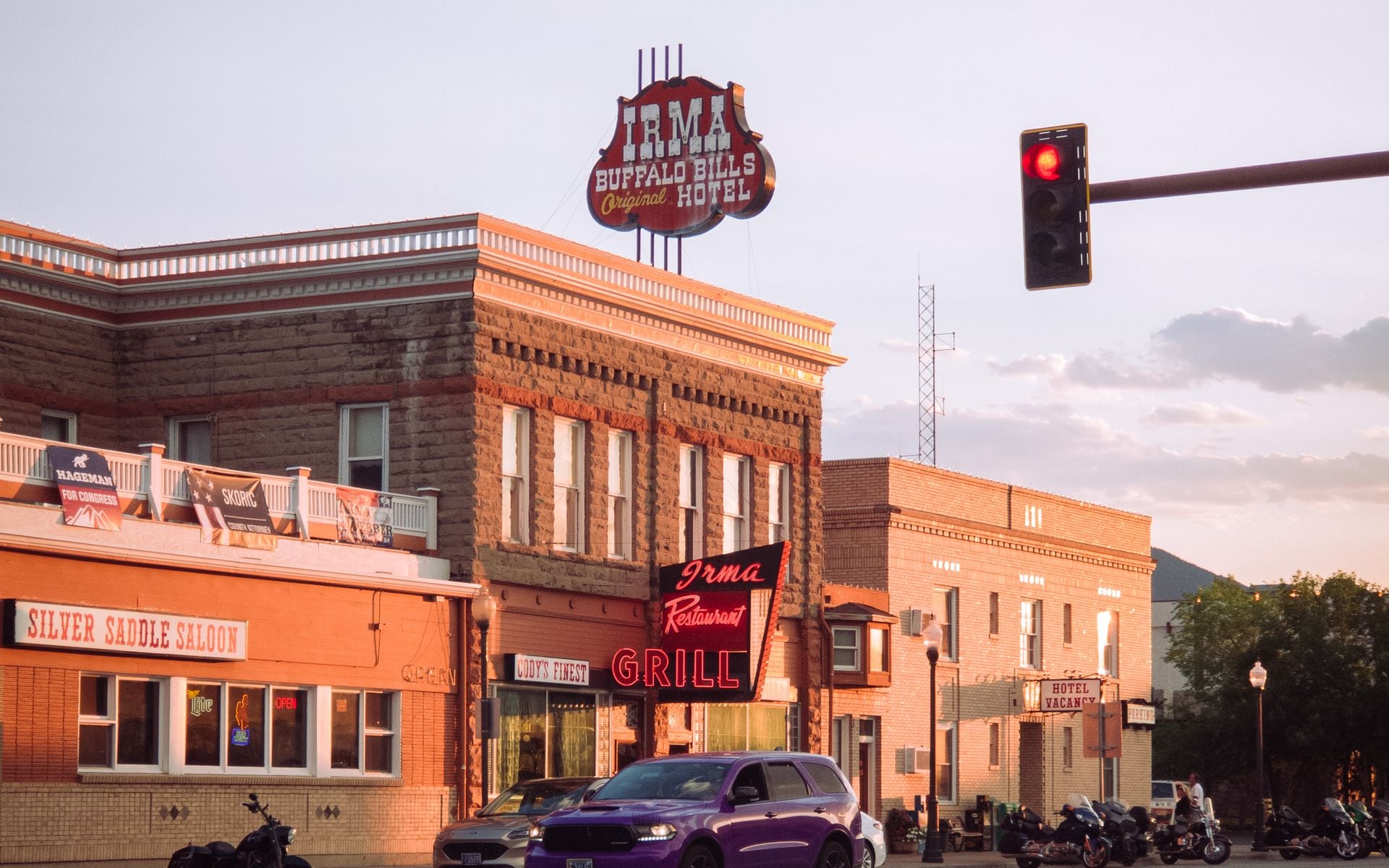
Cody, roughly 52 miles from the East Entrance to Yellowstone, gives you a meaningful alternative base, especially if your trip is centered on the Lamar Valley and Yellowstone's eastern wildlife corridors. Buffalo Bill's Irma Hotel on Sheridan Avenue has been operating since 1902. Colonel Cody had the cherrywood bar shipped in as a gift from Queen Victoria, the rooms run on the smaller side by contemporary standards, and summer rates typically land between $130 and $180 per night. For travelers who want more square footage and a complimentary breakfast, Best Western Premier Ivy Inn & Suites on 8th Street keeps an indoor pool and runs at comparable or slightly lower rates. Both properties fill up during the Cody Nite Rodeo season, which runs every evening from June through August, and prices ease considerably once September arrives.
Central Wyoming's Wind River corridor is underserved by conventional hotels, but The Longhorn Ranch Resort Lodge on US-26 near Dubois combines standard lodge rooms with RV sites, a restaurant, and fly-fishing and horseback riding access on the river. Rates generally run $100 to $150 per night, and the staff knows the canyon road wildlife well enough to point you toward bighorn sheep sightings you'd miss on a standard drive-through. Dubois sits about 85 miles east of Jackson on a route that passes through the Absaroka foothills, making it a useful overnight for visitors splitting a week between the Wind River Range and the parks.
Along I-80 in the southeast, Cheyenne sits 90 minutes north of Denver (DEN) and anchors the state's most consistent chain-hotel inventory. Little America Hotel & Resort on West Lincolnway is the property that stands apart from the highway-strip competition: 294 rooms on manicured grounds with a restaurant, a golf course, and enough space to feel like a destination rather than a stop. If you're visiting Cheyenne for Frontier Days in the last week of July, the largest outdoor rodeo in the country, book rooms as early as November or December the year before. Demand that week exceeds supply by a significant margin. In Laramie, 45 minutes west of Cheyenne off I-80, Hilton Garden Inn Laramie on Grand Avenue is the most reliable full-service property at 7,200 feet elevation, with an on-site restaurant and rooms that accommodate both University of Wyoming visitors and road-trippers crossing the high plains.
For travelers who want more than a hotel room, Wyoming's working guest ranches include meals, horses, and guided activities in the rate. See the Best Dude Ranches in Wyoming guide for a curated comparison. And for the full picture on the Wyoming Travel Guide, lodging planning fits naturally alongside choosing the right region, season, and activities.
How to Choose the Right Wyoming Hotel
Start with where you're spending time, because in Wyoming, distance between points matters more than it does in smaller states. If skiing Jackson Hole Mountain Resort is the core of your trip, staying in Teton Village puts you at the base of the aerial tram. Staying in downtown Jackson instead means a 12-mile commute on US-89, which the resort's shuttle covers but which adds time on powder days when the road is slow. If your trip is Yellowstone-focused, both Jackson and Cody work as bases, but Cody's East Entrance is often less congested than the South Entrance from Jackson, and the Lamar Valley wildlife corridor is closer to Cody by a meaningful margin. Splitting a two-night stay, one in Cody and one in Jackson, lets you cover the park from both sides without retracing the same road.
Season changes price and availability more sharply here than in most destinations. Jackson peaks in July and August and again from late December through mid-March for ski season. Shoulder windows, particularly May, late September, and October, typically cut rates 30 to 50 percent compared to peak weeks and come with smaller crowds, fall aspen color along the Snake River, and the September elk rut audible from hotels near the National Elk Refuge. Cody peaks June through August around the Nite Rodeo and the Buffalo Bill Center of the West summer season, then settles considerably. Chain hotels in Cheyenne, Rock Springs, and Rawlins along I-80 rarely require advance reservations except during Frontier Days week in late July, and they run $90 to $140 per night for most of the year.
If your trip is built around a specific activity, let that guide your base. Anglers chasing the Snake River, the North Platte, or the Wind River will find better value in Dubois, Pinedale, or Lander than in Jackson. Properties near those rivers pair logically with the guides and outfitters in the Fly Fishing Outfitters directory. For ski trips beyond Jackson, Grand Targhee above Alta and the Snowy Range near Centennial each have their own lodging ecosystems worth understanding before you book a Jackson property by default. The Ski Resorts directory maps out those options alongside the mountain stats.
A practical note on remote corridors: Wyoming has real dead zones. US-189 between Rock Springs and Pinedale, US-26 through the Wind River Canyon, and US-212 along the Beartooth Highway all have long stretches with no lodging. Confirming that a property is open and has availability before driving two to three hours out is a habit worth building, especially in May when spring closures can linger, and in October when some smaller operations close for the season.