Overview
The Wyoming Travel Guide covers a wide state, but the national parks are the reason most out-of-state visitors make the drive. Yellowstone, roughly 2.2 million acres and about 96 percent inside Wyoming, is the world's first national park and still one of the most geologically active places on earth. Grand Teton sits just south of Yellowstone's boundary, connected by the John D. Rockefeller Jr. Memorial Parkway, and covers 310,000 acres of granite peaks, glacial lakes, and sagebrush flats. Devils Tower in the northeast corner was the country's first national monument, declared by Theodore Roosevelt in 1906. Fort Laramie National Historic Site, about 90 miles east of Laramie in Goshen County, preserves the military outpost that anchored the Oregon, Mormon, and California Trails. Together, these four units offer a cross-section of Wyoming's geology, wildlife, and history that no single region page can fully contain.
Yellowstone and Grand Teton are the big two, and they pair naturally on a single trip. The southern boundary of Yellowstone is about 8 miles north of Grand Teton's northern boundary, and you can drive between them on US-89 in under 30 minutes in summer. Most people use Jackson or the wider Jackson Hole valley as a base for both, flying into Jackson Hole Airport (JAC), the only commercial airport inside a US national park. Cody to the east is the practical alternative base for Yellowstone's East Entrance, 52 miles west on US-14/16/20.
What to Expect at Each Park
Yellowstone is bigger than Rhode Island and Delaware combined, and you need at least two full days to make a dent in the Grand Loop Road's thermal areas, canyons, and wildlife corridors. Old Faithful in the Upper Geyser Basin erupts every 60 to 110 minutes, reliable enough to plan your afternoon around. The Grand Canyon of the Yellowstone drops 800 to 1,200 feet and colors the canyon walls with white rhyolite and yellow sulfur deposits you won't see anywhere else in the state. Lamar Valley in the northeast is the best place in North America to watch wolves, bison, bears, and pronghorn from a paved road with nothing but open country in front of you. If wildlife watching is your primary goal in Wyoming, Lamar is where to spend your mornings before 8am.
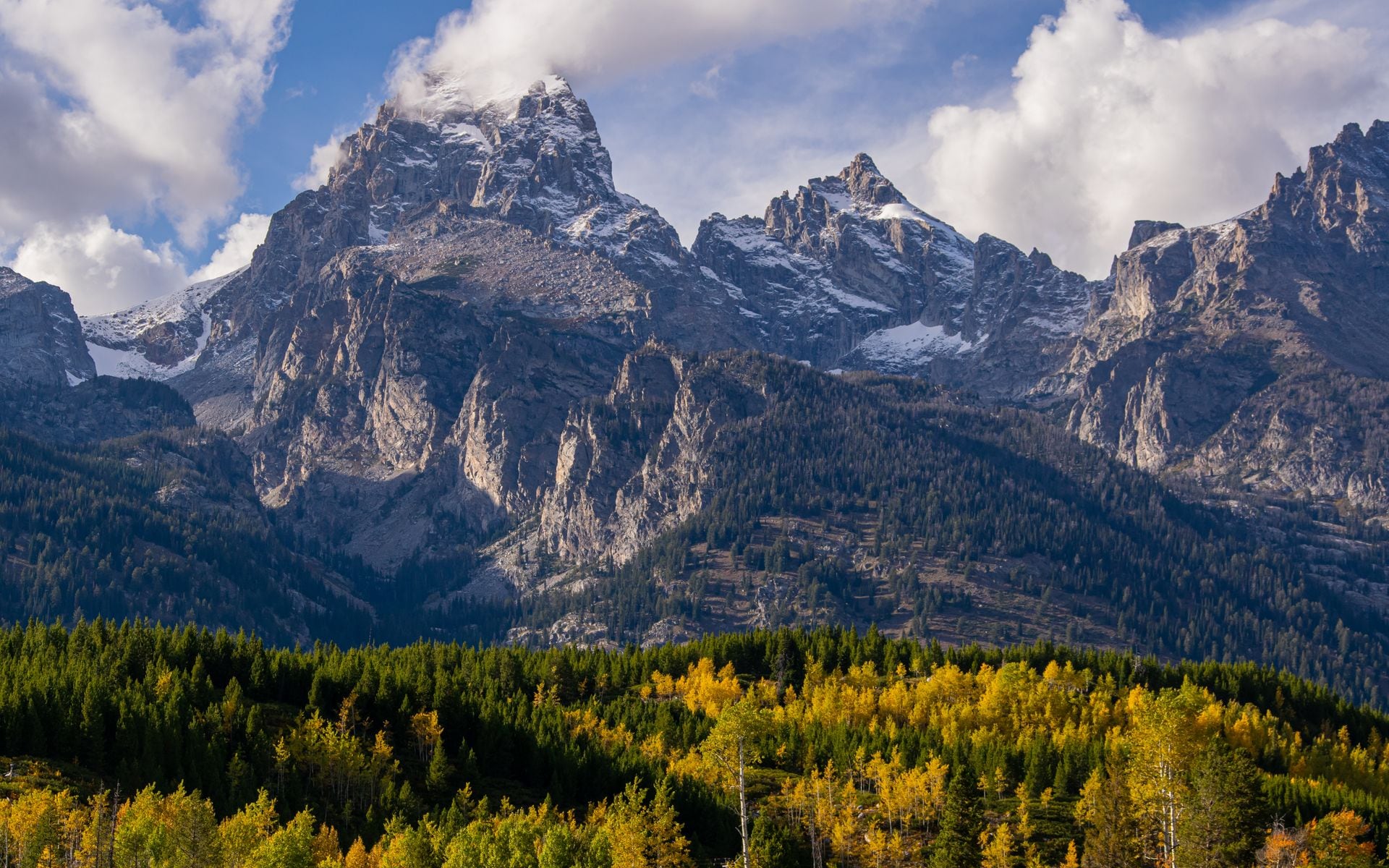
Grand Teton runs at a different pace. The Teton Range rises straight off the valley floor with no transitional foothills, so the vertical drop hits you immediately driving north from Jackson on Hwy 191. Jenny Lake, about 20 miles north of town, is the launch point for the boat shuttle to Hidden Falls and Inspiration Point, one of the most efficient hike-and-view combinations in the park. Mormon Row, a cluster of historic homestead barns on the valley floor near Moose, pulls the best morning light and a clean mountain backdrop that photographers have been chasing for decades. Float trips on the Snake River run through the park from June through August, and the Yellowstone and Grand Teton Road Trip itinerary covers the full loop routing with drive times and day-by-day logistics.
Devils Tower stands 867 feet above the Belle Fourche River near Hulett in the northeast corner, about 25 minutes from Sundance off I-90. The 1.3-mile paved loop at the base gives you a full circumnavigation in about an hour and close views of the columnar basalt joints that draw crack climbers from across North America. It is a sacred site to the Lakota, Cheyenne, and several other Northern Plains tribes, and June carries a voluntary climbing moratorium in that tradition. The tower sits about 3.5 hours from Cody and 4.5 hours from Jackson, so it works best as a standalone destination or as part of a Black Hills detour.
Best Season
June through August is when Wyoming's national parks run at full capacity. The Teton Park Road and Yellowstone's complete Grand Loop are open, valley temperatures run 70 to 85°F during the day with cooler nights above 6,000 feet, and every visitor service, restaurant, and boat dock is operating. The trade-off is crowds: summer weekends at Yellowstone can mean full parking lots at Old Faithful by 9am and hour-long waits at the popular geyser pullouts near Madison. Going mid-week or starting your day before 7am makes a measurable difference.
September is worth considering if your schedule allows. The elk rut runs through most of the month, with bulls bugling across Grand Teton's meadows near Gros Ventre and in Yellowstone's Madison and Gibbon river corridors. Aspen in the Teton foothills and along the Gros Ventre River road turns gold in mid-to-late September. Crowds drop noticeably after Labor Day, lodging rates follow, and the low-angle morning light in fall suits the Teton range better than the flat overhead summer light.
Yellowstone closes to private vehicles from early November to late April on most interior roads, but the park does not go dormant. Guided snowcoach and snowmobile tours run from late December through early March, covering the Madison River corridor, Old Faithful, and Norris Geyser Basin under winter conditions that very few visitors ever see. Companies like Yellowstone Vacation Tours, based in West Yellowstone, run day-trip snowcoach tours that give you the thermal basins and winter wildlife without navigating deep snowpack in your own vehicle. Grand Teton's inner Teton Park Road also closes in winter, though US-26/89/191 through the park stays open year-round for wildlife viewing. That winter window connects well with skiing and snowboarding at Jackson Hole Mountain Resort, about 12 miles south of the park's southern boundary.
Typical Costs
Both Yellowstone and Grand Teton charge an estimated $35 per vehicle for a 7-day pass, which covers a single park. If you're visiting both parks plus Devils Tower and other federal sites, the America the Beautiful Annual Pass covers all federal fee lands for an estimated $80 and pays for itself in two park entries. Devils Tower entry runs about $25 per vehicle for a 7-day pass. Fort Laramie is free to enter year-round.
In-park lodging at Yellowstone, including the historic Old Faithful Inn and Lake Yellowstone Hotel, runs an estimated $200 to $450 per night during peak summer. These book 6 to 12 months ahead for June through August dates, and availability inside the park for late-bookers is nearly zero. If you can't get park lodging, Jackson, 30 miles south of Grand Teton's south entrance, has the widest range of options: budget motels starting around $120 per night and resort properties running well over $400. Dude ranches on the park borders offer an alternative to town lodging, with ranch-stay packages that bundle meals, horseback rides, and activities.
Guided park tours cost an estimated $150 to $350 per person for a full day out of Jackson or West Yellowstone. Jackson-based operators like BrushBuck Wildlife Tours and Jackson Hole EcoTour Adventures cover the Teton and southern Yellowstone corridors with small groups and high-quality spotting scopes, which makes wildlife identification far more productive than driving yourself and scanning open fields. For Yellowstone's interior, the tour operators and guides running from West Yellowstone, like Yellowstone Vacation Tours, are your best option for full-day coverage of the park's northern and southern loops with someone who knows the geyser schedules and the wildlife timing.
How to Book
Neither Yellowstone nor Grand Teton currently requires a timed-entry vehicle reservation to drive in, though that policy has shifted in previous years during peak summer demand. Check the NPS website for the current season before finalizing your plans. What does require advance booking is in-park lodging and campgrounds (6 to 12 months ahead for summer), backcountry camping permits in Grand Teton (reserve at recreation.gov starting in January for the following summer), and concessioner activities like the Jenny Lake boat shuttle and guided Snake River float trips.
For guided wildlife and park tours, BrushBuck Wildlife Tours runs sunrise and evening departures out of Jackson covering Grand Teton and the southern Yellowstone corridor, with trips typically running 4 to 8 hours. Jackson Hole EcoTour Adventures operates similarly with small groups, naturalist guides, and roof hatches in the tour vans for unobstructed viewing. Both have consistent track records for moose, elk, and bear sightings in the pre-9am window when animals are active and crowds are thin. Book 2 to 4 weeks ahead in summer; last-minute slots fill by June.
If you're planning the full drive between both parks, the Yellowstone and Grand Teton Road Trip routing runs north from Jackson through Grand Teton and into Yellowstone at the South Entrance near Flagg Ranch, then loops the Grand Loop Road before exiting via the East Entrance toward Cody or the North Entrance toward Gardiner, Montana. Plan for a minimum of 5 to 7 days to cover both parks without spending all of it in the car.
Frequently asked questions
Do you need reservations to enter Yellowstone or Grand Teton?
As of 2026, neither park requires a timed-entry vehicle reservation to drive in, but that policy has been tested in previous summers during peak demand. What fills up fast is in-park lodging and campgrounds, which book many months in advance. Check the current NPS policy for each park before your trip, since it can change year to year without much notice.
Which Wyoming entrance to Yellowstone should I use?
Wyoming has two Yellowstone entrances: the South Entrance on US-89 from Jackson and the East Entrance on US-14/16/20 from Cody, 52 miles to the west. The South Entrance is most convenient if you fly into Jackson Hole (JAC) or are coming from Grand Teton. The East Entrance via Cody is less crowded, runs through the scenic North Fork of the Shoshone River canyon, and puts you within reach of Lamar Valley and the Northeast Entrance on the same day.
Can you visit Yellowstone and Grand Teton on the same trip?
Yes, and most visitors combine them. The parks share a boundary connected by the John D. Rockefeller Jr. Memorial Parkway, and the drive between Grand Teton's north entrance and Yellowstone's South Entrance takes under 20 minutes in summer. Five to seven days is a reasonable minimum for seeing both parks at a real pace. Three days can work if you're focused on two or three specific areas per park.
Is it worth hiring a guide for Wyoming's national parks?
For wildlife, yes. A naturalist guide with a spotting scope can find wolves in Lamar Valley, bears near Fishing Bridge, or moose along the Snake River that you would drive right past. Jackson-based operators like BrushBuck Wildlife Tours and Jackson Hole EcoTour Adventures cover the Teton corridor well, and Yellowstone Vacation Tours handles the park's interior from West Yellowstone. For thermal features and geysers, self-driving is straightforward, though a guide helps orient first-time visitors to the park's size and timing.