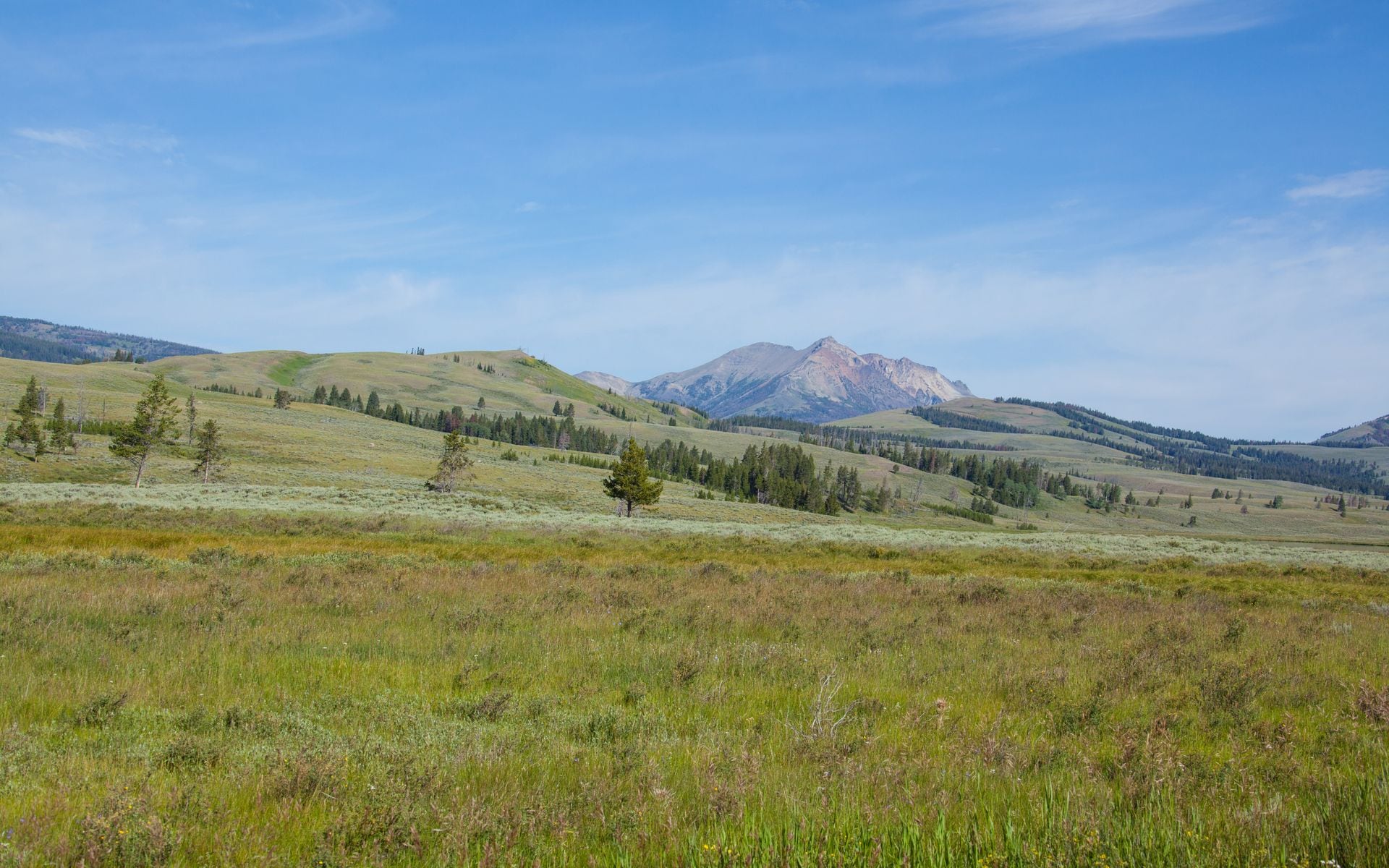
Why visit Cody & Yellowstone Country
Cody sits 52 miles due east of Yellowstone's East Entrance on US-20, making it the most practical base on that side of the park. Unlike the approach from Jackson through Grand Teton, this corridor drops you straight into Yellowstone's interior without another national park, another entry fee, or the South Entrance traffic that stacks up on summer mornings. The Wyoming Travel Guide covers six distinct regions, and this one earns its high priority for a straightforward reason: nowhere else in the state puts you this close to well-regarded wildlife watching, a legitimate five-museum complex, and a professional nightly rodeo, all within a five-mile radius.
The Wapiti Valley, the 52-mile stretch of the North Fork Shoshone River between Cody and the park boundary, is one of the densest concentrations of outfitters, guest ranches, and wildlife habitat in the state. Bighorn sheep graze the canyon walls along US-20 year-round, and black bears feed on chokecherry and serviceberry along the corridor through August and September. Cody itself is a real working town with a grid of streets, a main drag on Sheridan Avenue, and residents who live there twelve months a year. It reads differently from a ski-resort town, and that difference matters if you're looking for something more grounded than Jackson Hole.
Top places in Cody & Yellowstone Country
Yellowstone National Park is the centerpiece, and this region reaches it through two separate gates. The East Entrance, 52 miles west of Cody on US-20, puts you at Yellowstone Lake and Hayden Valley within 25 miles of the gate. Hayden Valley runs along the Yellowstone River between the lake and the Grand Canyon of the Yellowstone, and it is one of the most consistent spots in the park for grizzlies, bison by the hundreds, trumpeter swans, and sandhill cranes. The Northeast Entrance, reached from Cody by driving north on Wyoming-120 and west on US-212 through Cooke City, Montana, opens into the Lamar Valley: the most productive wolf-watching terrain in North America, where reintroduced gray wolf packs have denned since the mid-1990s.
The Buffalo Bill Center of the West on Sheridan Avenue in Cody is five separate museums under one roof and legitimately takes four to five hours to do properly. The Whitney Western Art Museum holds one of the largest collections of Frederic Remington and Charles Russell originals in the country. The Plains Indian Museum covers Northern Plains tribal culture in more depth than most university collections. The Draper Natural History Museum does a serious job explaining the Greater Yellowstone ecosystem, which gives you useful context before entering the park. A combined adult ticket runs roughly $20 to $22 (estimate range, check current year). The Chief Joseph Scenic Byway (Wyoming-296) and the Beartooth Highway (US-212) both branch off from within an hour of Cody. The Beartooth, which climbs to nearly 11,000 feet before dropping into Cooke City and the Northeast Entrance, is consistently rated one of the top paved scenic drives in the country.
Top things to do
Wildlife watching is the defining activity in this region and costs nothing beyond your park entry fee. Hayden Valley, about 25 miles from the East Entrance, produces grizzly sightings reliably in May and June when bears feed on winter-killed elk near the Yellowstone River. Bison herds of several hundred animals cross the road through July and August, and the traffic jams they cause are a real planning factor: add an hour to any Hayden Valley crossing in peak season. The Lamar Valley, accessed from the Northeast Entrance via Cooke City, is where serious wolf-watchers go. The Druid Peak area has produced some of the most-documented wolf pack activity in the world, and October through early December is the best window, when snow makes pack movement visible at distance. Bring a spotting scope; a quarter mile of open valley is typical viewing range.
The Cody Nite Rodeo runs every evening June through August at the Stampede Park arena on the west edge of town, with performances beginning at 8 p.m. Ticket prices run about $20 for adults and $12 for children (estimate). This is a working competitive rodeo with bull riding, saddle bronc, team roping, barrel racing, and bareback events on a nightly rotation, using professional and regional competitors. It wraps in under two hours. The Cody Cattle Company on Demaris Drive offers a Western dinner show and all-you-can-eat BBQ buffet timed to connect with the rodeo, with shuttle service from several Cody-area hotels. The combination of dinner, show, and rodeo in a single evening is a legitimate three-hour experience worth planning around.
River rafting and fly fishing run on the Shoshone River from June through late August. The Red Rock Canyon section, just west of downtown Cody, is a three-mile canyon float appropriate for families with children. Several outfitters offer half-day guided floats in the $40 to $55 per person range (estimate). If you're focused on trout fishing, the North Fork Shoshone above Wapiti on US-20 holds brown and rainbow trout in wade-fishable water accessible from pullouts along the highway. The Clarks Fork of the Yellowstone, north of Cody via Wyoming-120, is a separate drainage with excellent stream fishing and fewer people than the more famous rivers farther west.
The Chief Joseph Scenic Byway makes a manageable half-day drive from Cody. Take Wyoming-120 north from town about 17 miles to the WY-296 junction, then follow the byway through the Sunlight Basin and into Cooke City. The 47-mile route climbs to views of the Absaroka Range and the Clarks Fork canyon before joining US-212 at Cooke City. From there, the Beartooth Highway continues east another 68 miles into Red Lodge, Montana, or you can double back through the Northeast Entrance into Lamar Valley. If you drive the full Chief Joseph plus Beartooth loop from Cody and back, plan for 200 miles and a full day, with at least one fuel stop in Cooke City.
Where to stay
Cody has the widest range of options in the region. Chain motels along US-20 run in the $100 to $180 per night range in summer (estimate). For something with more character, Buffalo Bill's Irma Hotel on Sheridan Avenue is a 70-room historic property built by William F. Cody himself in 1902. It has a working restaurant and bar, period decor throughout, and a location in the center of the main strip that puts you within walking distance of the Buffalo Bill Center and the rodeo arena. It's not a luxury hotel, but it's the most historically specific lodging option in the region and holds up well for a night or two. Nightly rates run in the $120 to $200 range in season (estimate). For a fuller picture of lodging options across the state, the where to stay by region guide covers properties from Cody to Jackson to Sheridan.
The Wapiti Valley corridor, US-20 between Cody and the park, holds a string of lodges, cabins, and guest ranches from roughly mile 10 west to the park boundary. These properties book up fast for July and August and often require minimum stays of three to five nights. If a full week at a working ranch is what you're after, see the best dude ranches in Wyoming: several Sunlight Basin and North Fork valley operations are among the better-regarded options in the state. In-park lodging at the Lake Yellowstone Hotel or Fishing Bridge RV Park should be booked six to twelve months in advance for summer dates.
Getting there and around
Yellowstone Regional Airport in Cody (COD) is the closest commercial airport for this region, with seasonal service on United and Delta from Denver (DEN) and Salt Lake City (SLC). The airport is about 2 miles east of downtown. Fly into COD if your itinerary is focused on the east side of Yellowstone or if you're combining Cody with a drive over the Beartooth into southern Montana. Billings Logan International (BIL), about 100 miles north via US-14A and I-90, has significantly more daily connections and is worth comparing fares if COD's seasonal schedule is thin. Many visitors also drive in from Denver, about 470 miles south on I-25 and US-20, a seven-hour trip that passes through Casper and Thermopolis.
A rental car is not optional in this region. Cody to the East Entrance is 52 miles on US-20, a straight shot of about 55 minutes in normal conditions. From the East Entrance to Old Faithful via the Grand Loop Road is roughly another 80 miles and two hours, depending on wildlife traffic. The Northeast Entrance from Cody via Wyoming-120 North and US-212 runs about 80 miles and two hours. The Beartooth Highway (US-212 east of Cooke City) closes in mid-October and does not reopen until late May or early June, depending on snowpack. If you're visiting in early May or late October, call ahead or check wyoroad.info to confirm access.
Best time to visit
June through September covers the full-access window. The East Entrance typically opens in mid-May, though the date varies each year: in a heavy snow year it can push into late May, and you should check nps.gov/yell for current-year road dates before committing to early-season plans. July and August are peak months, with Cody daytime highs in the mid-80s to low 90s and the park roads at full capacity. Late June is a good compromise: most park roads are open, the crowds are lighter than July Fourth week, and wildflowers are peaking along the Shoshone River corridor and in the high meadows above the Sunlight Basin.
September is the month locals most often name as the best. Temperatures drop to comfortable hiking range, crowds thin noticeably after Labor Day, and the elk rut begins in the Lamar Valley and in the Absarokas above Wapiti, with bulls bugling at dawn within a few hundred yards of the road. October is genuinely spectacular in terms of wildlife activity, but the Northeast Entrance through Cooke City closes for the season in late October, and the Beartooth closes even earlier. Winter in Cody is cold and dry: January highs average in the mid-20s, and the town stays operational but quiet. The East Entrance into Yellowstone closes in early November and does not reopen until late April or early May, so winter visitors who want to reach the park should plan on entering from West Yellowstone or Mammoth, which remain open for oversnow travel.
Frequently asked questions
Is Cody a good base for visiting Yellowstone?
Yes, Cody is the most practical base on the east side of the park. It's 52 miles from the East Entrance on a direct two-lane highway with no other park traffic in between, and the drive through Wapiti Valley is itself worth the time. The downside compared to Jackson is distance from Old Faithful and the geyser basins, which sit about 80 more miles via the Grand Loop once you're through the gate. If your priority is Hayden Valley wildlife and the Lamar Valley wolves, Cody is better positioned. If you want to split time between the park and ski resorts or Grand Teton, Jackson makes more sense.
When does the Yellowstone East Entrance open in spring?
Mid-May is typical, but it varies every year based on snowpack and road conditions. In an average year the East Entrance opens between May 1 and May 15. In a heavy snow year it has opened as late as early June. Check nps.gov/yell for real-time road status before booking anything that depends on east-side access in April or May.
What is the best time to see wolves in the Lamar Valley?
October through early January is the most productive window. Pack activity is highest after the elk move into the valley in fall, and snow cover makes the wolves visible against open terrain at the distances typical for Lamar viewing. Dawn and dusk are the peak activity periods. You'll need a spotting scope; binoculars alone won't give you enough magnification at 500 to 1,000 yards. In summer, wolves are in the valley but spend more time in the timber and are harder to locate. Drive the Lamar early in the morning and look for clusters of cars with scopes pointed at the same hillside: that's the practical field technique.
Can you drive the Chief Joseph Scenic Byway and the Beartooth Highway in one day from Cody?
Yes, with an early start. The Chief Joseph Byway (WY-296) from Cody to Cooke City is about 65 miles via WY-120 North, taking about 90 minutes without stops. The Beartooth Highway from Cooke City to Red Lodge, Montana, is another 68 miles and roughly 90 minutes to two hours. The return from Red Lodge to Cody via US-212 east and US-14/US-16 is about 125 miles and two and a half hours. Total loop runs around 250 miles and takes a full day with stops. Fuel in Cooke City before heading over the Beartooth; there are no services on the pass. The Beartooth typically closes by mid-October, so this loop is a warm-season-only option.