The Short Answer
Yellowstone and Grand Teton share a border, connected by the 8-mile John D. Rockefeller Jr. Memorial Parkway. You can drive from Yellowstone's South Entrance to the Colter Bay junction inside Grand Teton in about 20 minutes on a light traffic day. Because of that geography, most five-day-or-longer itineraries combine both parks, using Jackson as the southern base and working north through the Tetons and into Yellowstone's thermal basins and wildlife valleys. See the full Wyoming Travel Guide for how these parks fit into a broader trip.
If you genuinely have only two or three days total and must pick one: choose Yellowstone for geothermal features, scale, and the Lamar Valley wildlife corridor. Choose Grand Teton if you want mountain hiking with summit views, a compact and navigable park you can cover in a day or two, and reliable moose sightings near the Snake River. Neither choice is wrong. They do different things.
Size, Scale, and What That Means for Your Day
Yellowstone covers about 3,472 square miles, roughly the size of Rhode Island and Delaware combined. The Grand Loop Road alone runs 142 miles, and Old Faithful to Lamar Valley in the northeast corner is about 65 miles of driving. In July and August, that stretch can take close to two hours with bison jams and summer traffic. You need at minimum three days to cover the Upper Geyser Basin, Norris Geyser Basin, the Grand Canyon of the Yellowstone, and Hayden Valley without feeling like you drove past everything.
Grand Teton covers about 484 square miles, roughly one-seventh the size of Yellowstone. The Teton Park Road runs 42 miles from Moose to Jackson Lake Junction. A motivated visitor can reach Jenny Lake, the Mormon Row barns near Moose, Oxbow Bend, and Signal Mountain Overlook in a single long day. Most people take two days to add a real hike into Cascade Canyon or time on the Snake River. The Jackson Hole & the Tetons region covers both parks along with the town of Jackson, the National Elk Refuge, and the ski terrain on the range, so building a base in Jackson puts you within easy reach of both.
| Feature | Yellowstone | Grand Teton |
|---|---|---|
| Size | ~3,472 sq miles | ~484 sq miles |
| Primary draw | Geothermal features, wide wildlife valleys | Teton peaks, alpine hiking, Snake River floats |
| Best wildlife spot | Lamar Valley (wolves, bison, grizzlies) | Oxbow Bend and Willow Flats (moose, elk) |
| Signature short hike | Grand Prismatic Overlook (1.6 mi RT) | String Lake Loop (3.5 mi RT) |
| Geothermal features | Yes, 10,000+ | None |
| Closest Wyoming airport | COD (Cody, 52 mi to East Entrance) | JAC (inside the park, near Moose) |
| Minimum realistic visit | 3 days | 1–2 days |
| Winter car access | North entrance (Gardiner) only, Nov–Apr | US-191 corridor only (Teton Park Rd closes) |
Wildlife and What You're Likely to See
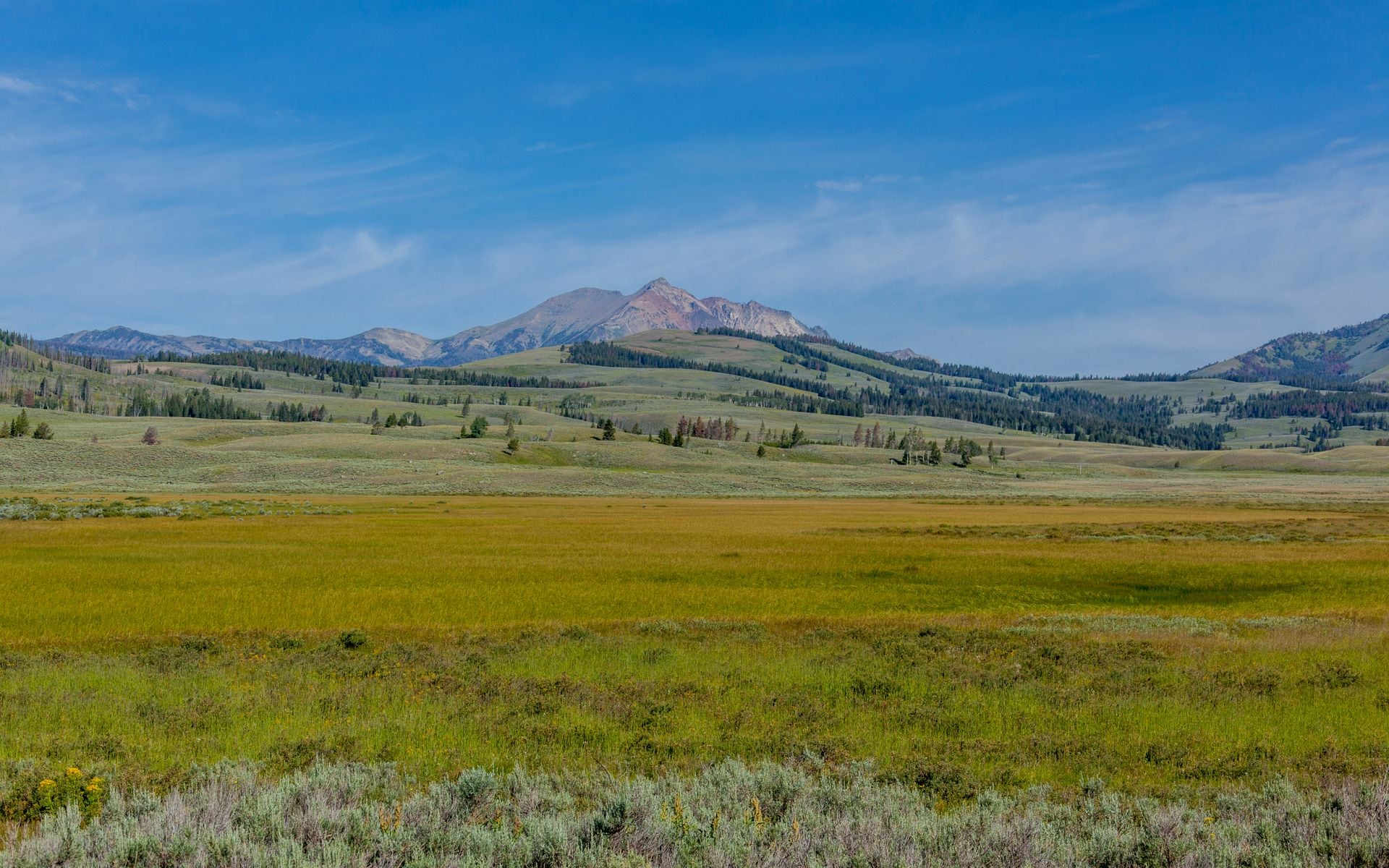
Both parks hold bison, elk, mule deer, moose, black bears, grizzly bears, bald eagles, and osprey. The meaningful difference is Lamar Valley in Yellowstone's northeast corner: a wide, flat river valley that reliably produces wolf sightings from the road, particularly in early morning during late May and through September and October. The Yellowstone wolf packs use the valley as a travel corridor, and wolf-watchers set up spotting scopes at pullouts along the Northern Range road before sunrise. Hayden Valley, near the park's geographic center, is one of the better places in North America to watch grizzly bears feed in open meadows.
Grand Teton concentrates its large mammals along the Snake River corridor and in the willows at Willow Flats and Oxbow Bend, near the Jackson Lake Junction. Moose sightings at Oxbow Bend, especially in the early morning, are more consistent here than almost anywhere else in Wyoming. The September elk rut brings bulls bugling across the flats near the Moose Visitor Center and along the Gros Ventre River south of the park boundary. Before you go into either park, read the Wildlife and Bear Safety guide. Both parks are active grizzly country, and the 100-yard rule from bears and wolves and 25-yard rule from bison applies at every trailhead and pullout.
Hiking and Things to Do
Grand Teton has stronger trail infrastructure for peak-focused hiking. The Jenny Lake Trailhead feeds Cascade Canyon, a 9.7-mile round trip that stays inside the Cathedral Group and gives sustained views of the central Teton peaks. String Lake Loop (3.5 miles) is easy enough for most families. The Taggart Lake Trail, about 3 miles round trip from the Taggart Lake Trailhead off Teton Park Road, accesses one of the clearest subalpine lakes in the range. For a more ambitious day, the Paintbrush Divide and Cascade Canyon Loop covers about 19 miles and connects two drainages with an alpine crossing around 10,700 feet.
Yellowstone's hiking falls into two distinct modes: boardwalk touring of thermal features and longer backcountry routes into genuine wilderness. The Grand Prismatic Spring Overlook Trail (1.6 miles round trip from Fairy Falls Trailhead) gives the aerial view of the largest hot spring in the United States that you've seen in photographs. Norris Geyser Basin and Upper Geyser Basin have extensive boardwalk systems. Longer routes, including the Black Canyon of the Yellowstone and Shoshone Lake, require backcountry permits and overnight planning. Yellowstone also adds the experience of watching Old Faithful erupt every 44 to 125 minutes from a viewing area a few hundred feet away, plus hundreds of other geysers, mud pots, and fumaroles with no equivalent anywhere inside Grand Teton. For timing either park visit well, see the best time to visit Wyoming for a month-by-month breakdown of crowds, road openings, and wildlife activity.
Practical Tips
Both parks charge $35 per vehicle for a 7-day pass (estimated current rate; confirm on nps.gov before your trip). The America the Beautiful annual pass (estimated $80) covers both parks and every other federal recreation site in the country, and it pays for itself quickly if your itinerary includes more than two fee sites. Neither park required a timed-entry vehicle reservation to drive in as of the 2024 season, but Yellowstone has piloted reservation windows in prior years, so check before you go.
In-park lodging is managed by Xanterra (Yellowstone) and Delaware North (Grand Teton). Old Faithful Inn, Lake Yellowstone Hotel, and Jenny Lake Lodge inside Grand Teton book 12 to 13 months ahead of arrival date. If you're planning a summer trip, mid-winter is not too early to reserve. Jackson Hole Airport (JAC) sits inside Grand Teton National Park about 12 miles south of the Moose junction, and is the closest commercial airport for both parks. Cody's Yellowstone Regional Airport (COD) is 52 miles from the East Entrance and the better option if Yellowstone is your primary focus. See our full Park Reservations and Permits guide for campground booking windows, backcountry permit systems, and the Snake River float permit process.
Frequently asked questions
Do most people visit both Yellowstone and Grand Teton on the same trip?
Yes. Because the parks share a border via the Rockefeller Parkway and a full drive between them takes about 20 to 30 minutes, combining them in one trip is standard. Five days is a practical minimum to spend real time in both without rushing, though many people see highlights of Grand Teton in one or two days and dedicate three or more days to Yellowstone.
Which park is better for families with young children?
Grand Teton is generally easier for families. The park is more compact, the main road is less congested than Yellowstone's loop, and Jenny Lake and String Lake offer approachable flat-water access. Yellowstone works well for families too, but the distances between highlights are longer, and keeping young children safe around scalding thermal features requires constant attention at every boardwalk.
Can you visit both parks without a car?
Not practically. There is no public transit between the parks and no shuttle system connecting Jackson to Yellowstone interiors. Commercial guided day trips from Jackson can cover highlights of both parks in a long day, but you'll see significantly more with a rental car and your own schedule. Renting in Jackson or at JAC is the standard approach for visitors flying in.
Is one park better than the other in fall?
Late September is particularly good for Grand Teton: the elk rut is active across the flats near Moose, aspen stands along the Gros Ventre River Road turn gold, and crowds drop sharply from the July peak. Yellowstone's Lamar Valley is also excellent in September and October for wolf watching, with thinner crowds and cooler mornings that push animals into the open earlier.
What if I only have one day total for both parks?
One day for both is thin but doable from Jackson. Leave before 7 a.m., drive north through Grand Teton on Teton Park Road (stopping at Oxbow Bend and Jenny Lake Overlook), continue through the Rockefeller Parkway to Yellowstone's West Thumb Geyser Basin and Old Faithful, and return via the South Entrance. You will cover the main visual highlights but won't have time for a real hike or a meaningful wildlife watch in Lamar Valley, which is three hours from Old Faithful.