How We Picked These Spots
We looked at four things: the number of species reliably visible (not just theoretically possible), road access for visitors without off-road vehicles, season length, and viewing quality from public land. Each location here has documented sighting records through the Yellowstone Wolf Project, the U.S. Fish and Wildlife Service, or BLM range monitoring, rather than single-season luck. A note on managed properties: places like Terry Bison Ranch Resort, south of Cheyenne off I-25, offer a guaranteed bison encounter in a ranch setting and make a worthwhile stop if you're passing through the southeast corner, but the eight spots on this page focus on wild populations on federal and state land where animals go about their business on their own terms. For broader trip planning, the Wyoming Travel Guide covers the full range of regions and logistics.
Lamar Valley, Yellowstone National Park
Lamar Valley runs roughly 10 miles along the Lamar River in Yellowstone's northeast corner, between Tower Junction and the Northeast Entrance near Cooke City, Montana. It holds the highest density of large predators in the contiguous United States. Multiple wolf packs use the northern range as year-round territory. The Junction Butte pack and Wapiti Lake pack have held Lamar and nearby drainages for years, and both are regularly visible from road pull-offs between Slough Creek and the Lamar River bridge. Grizzly bears emerge on the southern slopes above the river in April and May, feeding on winter-killed elk. Bison graze the valley floor year-round, and coyotes, red foxes, and river otters round out a roster that draws serious wildlife photographers from around the world.
The key to Lamar is arriving before sunrise. By 6:30 a.m. in summer, the pull-offs at the Confluence and Slough Creek fill with spotting scopes. Drive the 29-mile stretch from Tower Junction to the Northeast Entrance slowly and stop at any pull-off where a crowd has formed: that's where the action is. From Cody (COD), the East Entrance puts you roughly 60 miles from Lamar with a 90-minute park drive. From Jackson (JAC), count on about 3 hours via the South Entrance through the park interior. Yellowstone Vacation Tours, operating out of West Yellowstone, runs full-day northern-range loops with naturalist guides for approximately $175 to $300 per person, a good option if you want current wolf pack locations without spending a week learning the valley on your own.
Hayden Valley, Yellowstone National Park
Hayden Valley sits in the center of Yellowstone, about 20 miles south of Canyon Village and 3 miles north of Yellowstone Lake. The broad, flat-bottomed valley is the best single location in the park for bison. Herds numbering in the hundreds cross the road during the July and August rut, stopping traffic for 20 minutes at a stretch. Grizzlies work the edges of the Yellowstone River for cutthroat trout in June and July. Trumpeter swans nest here, and white pelicans fish the shallows through summer. Wolves from the Canyon pack occasionally pass through, but Lamar is the stronger choice if wolves are your primary target.
The pull-offs on the valley's eastern edge, between Otter Creek and the Mud Volcano area, are the best viewing stations. Early morning light falls on the hills across the river, making animals visible at long range. The NPS rangers at Canyon Visitor Center post current grizzly activity on a whiteboard updated daily, so a quick stop there before driving south to Hayden saves time if bears are what you're after.
National Elk Refuge, Jackson
The National Elk Refuge covers 25,000 acres northeast of Jackson and holds between 7,000 and 11,000 elk from November through April. Horse-drawn sleigh rides operated through the National Elk Refuge and Greater Yellowstone Visitor Center on North Cache Street in Jackson put you inside the herd at close range from December through March. Tickets run approximately $25 to $30 per adult and include a naturalist. Book at least 2 to 3 weeks out in January; weekends in December sell faster than most visitors expect.
Outside the elk season, the Elk Refuge Road, which runs northeast from Jackson toward Kelly and the Gros Ventre River valley, is free to drive and gives you pronghorn and mule deer sightings year-round. It's a solid 30-minute detour from downtown Jackson if you're already based in Jackson Hole and the Tetons and want a quick morning wildlife stop without driving into the park. In summer, raptors and Canada geese use the meadows along the ditch banks consistently.
Oxbow Bend and Willow Flats, Grand Teton National Park
Oxbow Bend sits 1 mile east of Jackson Lake Junction on US-89/191/287 and delivers reliable wildlife sightings for minimal effort. Moose wade into the slow meander at dawn and dusk to feed on aquatic vegetation, especially in the willows along the north shore. Trumpeter swans, osprey, bald eagles, and Canada geese use the oxbow through the summer months. The calm water at sunrise reflects the Tetons well enough that photographers line the bank before the light fully rises.
Willow Flats, visible from the large pull-off on US-89 just south of Jackson Lake Lodge, holds moose in the willow thickets through summer. Rangers at the lodge check the flats each morning and can point you toward recent sightings. Both spots are within 5 minutes of each other and make an easy morning loop. The town of Moose is a short drive south if you want coffee before heading back. If you're building a broader itinerary through the region, some of Wyoming's best small towns in the Jackson Hole valley make good bases for multi-day wildlife mornings.
Antelope Flats Road, Grand Teton National Park
Antelope Flats Road runs east from the main park road near Moose Junction, past the historic Mormon Row barns and into open sagebrush terrain with unbroken Teton views to the west. Pronghorn graze here year-round. Bison move through in summer. The combination of easy road access and open ground makes this the simplest wildlife stop in the park: no hiking required, no early-morning scramble for parking, and animals visible from the car window across the flats. Mornings are better than afternoons, but even midday pronghorn are reliable because they spend most of the day feeding in the open rather than taking shade.
The gravel roads east of the barns (signed for the Gros Ventre Road) extend the viewing area significantly and add mule deer and sage grouse to the list in spring. Plan 45 minutes to an hour for a slow pass through the area, more if you stop at Mormon Row.
Red Desert and Upper Green River Basin
Southwest Wyoming holds a wildlife story most visitors never reach. The Sublette pronghorn herd executes one of the longest overland migrations in the Western Hemisphere, traveling approximately 170 miles between summer range near Pinedale in the Upper Green River Basin and winter range in the Green River Basin south of Rock Springs. The migration moves north in late April through May and returns south in October and November. BLM lands along US-191 between Pinedale and Rock Springs offer roadside viewing of large pronghorn groups during migration weeks, with herds numbering in the hundreds visible from the highway shoulder. No entry fee, no park permit, no crowds.
Outside migration season, the Red Desert east of Rock Springs holds mule deer, sage grouse on their leks in April, and an estimated 1,500 wild horses managed under several BLM Herd Management Areas. The Adobe Town area off County Road 23 south of Rawlins is one of the more accessible HMAs for morning horse viewing, though the roads require a high-clearance vehicle when wet. This region pairs naturally with a stop in Pinedale or Green River, both covered in the guide to Wyoming's best small towns.
Bighorn Canyon and the Pryor Mountains
The Pryor Mountains straddle the Wyoming-Montana state line near Lovell, about 75 miles north of Cody via US-14A, and hold one of the most genetically distinct wild horse herds in North America. The Pryor Mountain Wild Horse Range protects approximately 90 to 120 horses that carry Spanish colonial bloodlines introduced centuries before American settlement. The BLM-managed area off Wyoming Highway 37 (the road into Bighorn Canyon National Recreation Area) offers morning and evening sightings along the benches above the canyon, with the best access near the Crooked Creek area on the Wyoming side.
Bighorn Canyon itself runs 55 miles along the Bighorn River between Wyoming and Montana and holds bighorn sheep visible on the canyon walls year-round, especially along the Horseshoe Bend Road near Lovell. This is less-visited country with no entrance fee on the Wyoming side. Base yourself in Lovell or Cody for the Bighorn Canyon section, or add it as a two-hour detour on a drive between Cody and Sheridan along the Bighorn Scenic Byway.
Sinks Canyon State Park, Lander
Sinks Canyon, 6 miles south of Lander on State Highway 131, is one of Wyoming's most accessible bighorn sheep locations. A resident herd occupies the limestone cliffs above the Popo Agie River year-round and is reliably visible from the canyon road and the short trails near the state park visitor center. No long hike required: the sheep graze on ledges within clear sight of the lower parking area most mornings. The canyon also produces black bear sightings in summer, along with mule deer, marmots, and a nesting osprey pair near the rise pool where the Popo Agie River disappears underground and reappears 2 hours later.
Sinks Canyon works well as a half-day stop before or after a trip into the Wind River Range, and Lander has enough dining and lodging to function as a solid base. Full Hotels and Lodges options in the Lander area include everything from roadside motels on Main Street to small outfitter lodges at the canyon mouth. If you want to extend the trip north to Thermopolis for a soak after a day in the canyon, the best hot springs in Wyoming are about 70 miles north on US-287, a straightforward drive through the Wind River Canyon.
Quick Comparison
| Location | Top Species | Best Months | Self-Guided? |
|---|---|---|---|
| Lamar Valley | Wolves, grizzly bears, bison | Dec–Mar (wolves); Apr–May (bears) | Yes; guide recommended for wolves |
| Hayden Valley | Bison, grizzly bears, swans | Jun–Aug (bison rut Jul–Aug) | Yes |
| National Elk Refuge | Elk, 7,000–11,000 head | Nov–Apr (sleigh rides Dec–Mar) | Drive-by free; sleigh rides ~$25–$30 |
| Oxbow Bend / Willow Flats | Moose, osprey, trumpeter swans | May–Sep | Yes |
| Antelope Flats Road | Pronghorn, bison, sage grouse | Year-round | Yes |
| Red Desert / Pinedale | Pronghorn migration, wild horses | Apr–May; Oct–Nov | Yes; high-clearance helpful |
| Bighorn Canyon / Pryors | Wild horses, bighorn sheep | May–Oct | Yes |
| Sinks Canyon | Bighorn sheep, black bears | Year-round | Yes |
Frequently asked questions
What animals can I realistically see in Wyoming on a one-week trip?
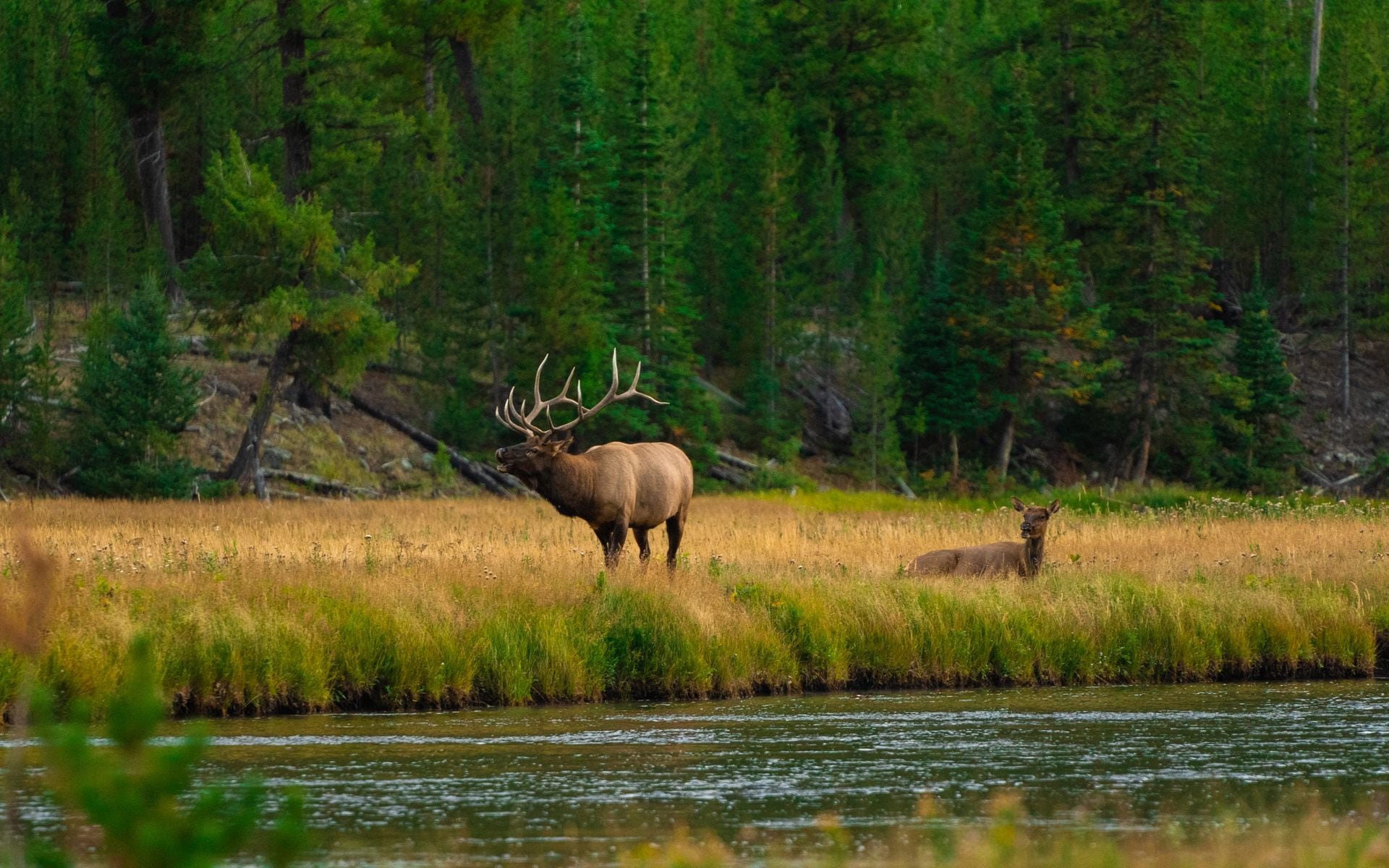
With a week and smart routing, bison are nearly certain in Hayden Valley or Lamar. Elk or moose are reliable in Grand Teton National Park. Pronghorn appear year-round on Antelope Flats Road and along US-191 south of Pinedale. Bald eagles show up on almost every float on the Snake River. Grizzly bears are a realistic target in Yellowstone if you spend mornings in Lamar or Hayden Valley from April through October. Wolves are possible year-round in Lamar but substantially easier December through March when snow pushes prey into the open valley.
Do I need a guide to see wildlife in Wyoming?
No, but a guide improves your odds significantly for wolves and grizzlies. Bison, elk, pronghorn, and moose are manageable on your own with a good pair of binoculars and the right timing. For wolves, operators like Yellowstone Vacation Tours track current pack locations using data shared among the guide community and carry spotting scopes that make a real difference at the distances involved. A half-day wolf-focused tour runs approximately $100 to $175 per person. For the National Elk Refuge sleigh rides, the National Elk Refuge and Greater Yellowstone Visitor Center on North Cache Street in Jackson handles booking directly.
When is the best single month to visit Wyoming for wildlife?
September edges out the competition. The elk rut peaks in the third week of the month across Grand Teton National Park and the National Elk Refuge. Grizzly bears are in hyperphagia, feeding heavily before denning, and are active through much of the day near Yellowstone Lake and berry patches on the northern range. Wolf packs are hunting actively as temperatures drop. Crowds thin noticeably after Labor Day, parking at Lamar is easier, and aspen in the Gros Ventre drainage turn gold by mid-September. If wolves are the priority and elk rut is secondary, December through February in Lamar beats any other window.
Is there good wildlife viewing outside the national parks?
Yes, and it is less appreciated. The Sublette pronghorn migration through the Upper Green River Basin near Pinedale is one of the longest overland mammal migrations in the Western Hemisphere. The Pryor Mountain Wild Horse Range near Lovell, just north of Cody, holds 90 to 120 horses with documented Spanish colonial lineage. Sinks Canyon State Park near Lander has a resident bighorn sheep herd visible year-round from the road. The BLM lands of the Red Desert east of Rock Springs hold an estimated 1,500 wild horses. None of these require a national park pass, and none have the summer crowd levels of Yellowstone or Grand Teton.