Overview
This itinerary sticks to the northwest corner of Wyoming, where the headliners sit close enough together to make a five-day window work. You fly into Jackson Hole Airport (JAC), spend your first two days in the Jackson Hole and the Tetons region, drive north into Yellowstone for two full park days, then cut east through the East Entrance and drop into Cody. Total driving is roughly 300 miles, and you can fly out of Yellowstone Regional Airport (COD) to avoid doubling back to Jackson. This route works from late May through early October, when the Teton Park Road is fully open and Yellowstone's interior roads are accessible. If you want more breathing room, see the 7 Days in Wyoming itinerary for a build-out that adds the Laramie Snowy Range or a second Yellowstone day.
The core challenge of Wyoming in five days is distances. Even at the northwest corner, the parks are large, entrance queues eat time in July and August, and wildlife stops can add an hour to any drive. Budget 30 minutes of buffer into each day, and resist the pull to pack in too many stops.
Day 1: Arrive Jackson, Get Your Bearings
Land at JAC and you are already inside Grand Teton National Park before reaching the airport exit. Pick up your rental car, a car is required, full stop, there is no statewide transit, and drive about 10 minutes south on US-89 into the town of Jackson. Your first stop should be the National Elk Refuge and Greater Yellowstone Visitor Center on Cache Street, which carries up-to-date wildlife reports, road conditions, and free maps for both parks. Staff there can tell you where wolves were spotted in Lamar Valley the day before and whether the Teton Park Road has any current closures.
From there, walk three blocks to the Town Square to get your bearings around the elk-antler arches and book any remaining reservations. For a low-key first breakfast in Jackson, Persephone Bakery on East Broadway opens early and draws a line by 8 a.m. for croissants, fresh bread, and coffee. For dinner that first evening, Gun Barrel Steak and Game House on West Broadway is a Jackson institution serving wild game alongside beef, elk steak and bison ribs are regular features, with entrees running roughly $40-80 (estimated). Sleep in Jackson tonight.
Day 2: Grand Teton National Park
Leave your lodging by 7 a.m. to reach Jenny Lake before the parking lots fill. The free ferry across the lake runs from June through September (estimated $18 per adult, round-trip) and saves you a 2-mile walk each direction. From the west-shore ferry dock, the hike to Inspiration Point is 2.5 miles round-trip with about 400 feet of elevation gain. Morning light comes in from the east and hits the Teton faces directly, which is why the early start matters. Back at the trailhead, drive the Teton Park Road north past String Lake and the Cathedral Group turnout, where the signature three-peak view opens up.
In the afternoon, work your way south along the Moose-Wilson Road to Mormon Row near the Antelope Flats. The historic Moulton barn photographs best when the afternoon sun is still on the Tetons behind it. Close the day at Schwabacher Landing on the Snake River, about 4 miles north of Moose Junction, the river bend here is one of the better spots in the valley for golden-hour light and you may see otters or moose along the bank. If you want to add a guided Snake River float trip, outfitters in Jackson run half-day trips through this wildlife corridor for roughly $70-100 per person (estimated).
The full overview of Wyoming's national parks and what each offers is covered in more detail if you want to decide how to weight your time between the Tetons and Yellowstone before you go.
Day 3: Drive North into Yellowstone, South and West Loops
Drive 60 miles from Moose Junction north through Grand Teton and the John D. Rockefeller Jr. Memorial Parkway to the South Entrance of Yellowstone. Budget 75 minutes in summer traffic and possibly more in July and August when the entrance station queues back up. Head straight for Old Faithful. The Visitor Education Center posts the next predicted eruption time, usually accurate within 10 minutes, so you can time your walk around the Upper Geyser Basin to land at the cone when the geyser fires.
From Old Faithful, drive 3 miles west to the Midway Geyser Basin and the Grand Prismatic Spring boardwalk. Grand Prismatic is more than 370 feet across and is best appreciated from the Fairy Falls trail overlook rather than the flat boardwalk view at its edge, the overlook adds about 1 mile round-trip but gives you the full color pattern from above. From Midway, swing back south to West Thumb Geyser Basin on the shore of Yellowstone Lake, then drive east about 45 minutes to Canyon Village for the night. Staying inside the park on Day 3 puts you in the right position for Lamar Valley the next morning without a 6 a.m. race from Jackson.
Day 4: Lamar Valley and the Grand Canyon of the Yellowstone
Set an alarm for 5:30 a.m. and drive north from Canyon Village toward the Lamar Valley, about 40 miles and just over an hour. Be in the valley before 8 a.m. The Lamar is where most of Yellowstone's wolf activity is visible from a roadside pullout, biologists and serious wildlife watchers park along the Slough Creek road shoulder with spotting scopes and watch the resident packs move at dawn and dusk. Pronghorn, bison herds numbering in the hundreds, and grizzly bears on the upper slopes are also regular from April through October. Bring your own binoculars; the distances involved make 8x or 10x glass worth having. For a deeper dive on viewing strategies, see the Wyoming Wildlife Safari itinerary.
Spend two to three hours in the Lamar, then drive back west through Tower-Roosevelt Junction toward Canyon. In the afternoon, take the South Rim Drive to Artist Point, the overlook that puts the Lower Falls and the 1,200-foot-deep Grand Canyon of the Yellowstone directly in front of you. The walk from the parking lot to the viewpoint is flat and takes about 20 minutes round-trip. This is the stop most people photograph with the yellow canyon walls; it earns its reputation.
Day 5: Drive to Cody, Explore, Depart
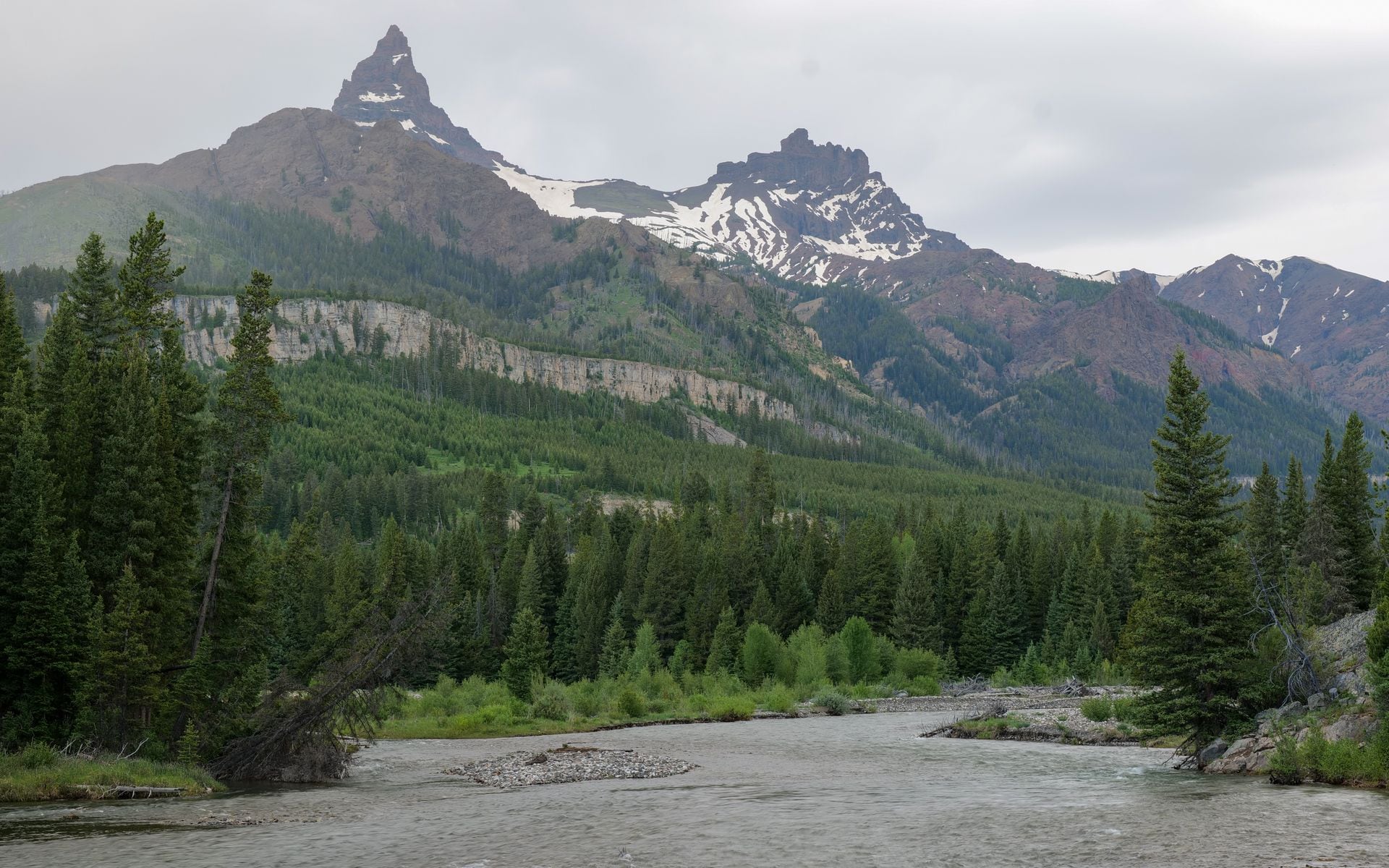
Drive 52 miles east from the Fishing Bridge area on Yellowstone Lake shore out through the East Entrance. The road follows the North Fork of the Shoshone River down through the Wapiti Valley, dramatically narrowing red canyon walls line the highway for the last 20 miles before Cody. Budget 90 minutes for the drive with one or two stops in the canyon. Cody sits in the Bighorn Basin and is worth a half day even if you have a late-afternoon flight.
The Buffalo Bill Center of the West holds five museums under one roof covering natural history, Plains Indian art and culture, firearms history, and the life of William F. Cody. Admission runs approximately $20-22 per adult (estimated) and a focused visit through two or three wings takes two hours. If you have time for a midday meal before heading to COD, The Cody Cattle Company on Demaris Drive runs a ranch-style barbecue buffet dinner with live Western music most evenings in summer, a lively final Wyoming meal. Fly out of COD that evening or continue east on US-14/16/20 toward Sheridan.
Where to Stay
For your two nights in Jackson, Cowboy Village Resort on Flat Creek Drive offers cabin-style units with kitchens at rates more realistic than downtown hotels, figure $250-400 per night in summer (estimated), considerably less than the larger resort properties. The location is walkable to the Town Square and close to the National Elk Refuge Visitor Center. Budget travelers sometimes base in Wilson or Victor, Idaho, about 20-30 minutes west over Teton Pass, where lodging runs 30-40 percent less than Jackson proper.
Inside Yellowstone, Canyon Lodge and Canyon Cabins through the park concessioner (Xanterra) sit in the right geographic position for Day 3 and Day 4. These book out six months in advance or more for peak summer dates, late June through mid-August is the tight window. If you strike out on in-park lodging, the town of Cody is only 52 miles from the East Entrance and makes a viable base for Yellowstone, though that adds 90 minutes of daily driving each way. Check the Wyoming Travel Guide trip planning section for where to stay organized by region.
Book These Ahead
In-park Yellowstone lodging is the most time-sensitive reservation on this list. Xanterra releases dates approximately 13 months in advance, and Canyon Lodge fills for July and August within days. Set a calendar reminder and book the moment the window opens. The Jenny Lake ferry runs on a first-come, first-served basis with no reservation system as of 2026, arrive early or expect a queue. Guided Snake River float trips in Grand Teton book out 4-6 weeks ahead for summer dates.
If your travel dates land in mid-September, you are in position for the elk rut on the Teton valley floor, bull elk bugle and spar in the sagebrush flats outside Jackson every morning and evening from roughly September 10 through early October. This is one of the most specific wildlife experiences in Wyoming and requires no advance booking beyond your lodging, which costs 20-30 percent less than peak July rates. For travelers whose primary goal is wildlife, the full Wyoming Wildlife Safari itinerary builds a trip specifically around the best viewing seasons and locations across the state.
Frequently asked questions
Can you realistically do both Yellowstone and Grand Teton in 5 days?
Yes, at a purposeful but not exhausting pace. This itinerary gives you one full day in Grand Teton and two in Yellowstone, hitting the major stops in each without rushing. What you will not do in five days is hike the backcountry, fish the Yellowstone River, or spend time in the southern or eastern sections of either park. If you want that kind of depth, consider the 7 Days in Wyoming itinerary instead.
When is the best time of year to do this 5-day Wyoming itinerary?
Late June through September is the primary window, with the Teton Park Road fully open by late May or early June and Yellowstone's interior road system accessible. July and August are the busiest months, entrance queues at both parks, full campgrounds, and lodging sold out months ahead. September offers the elk rut in the Teton valley, smaller crowds, and lower lodging prices, making it arguably the best month for this specific route. Avoid early spring: many Yellowstone roads close to vehicles from early November through late April, and the Teton Park Road is typically closed until mid-May.
Is 5 days enough to understand Wyoming, or should I plan a longer trip?
Five days covers the northwest corner well. Wyoming is large, Jackson to Cheyenne is nearly a full day of driving, and the central Wind River Range, the Bighorn Mountains above Sheridan, and the red rock and fossil country in the southwest are entirely separate trips. Think of this itinerary as the first chapter. If you want to see bison in the Lamar Valley, soak at the free bath house in Thermopolis, and fish the Green River all on one trip, you need closer to 10-14 days.