What to Expect
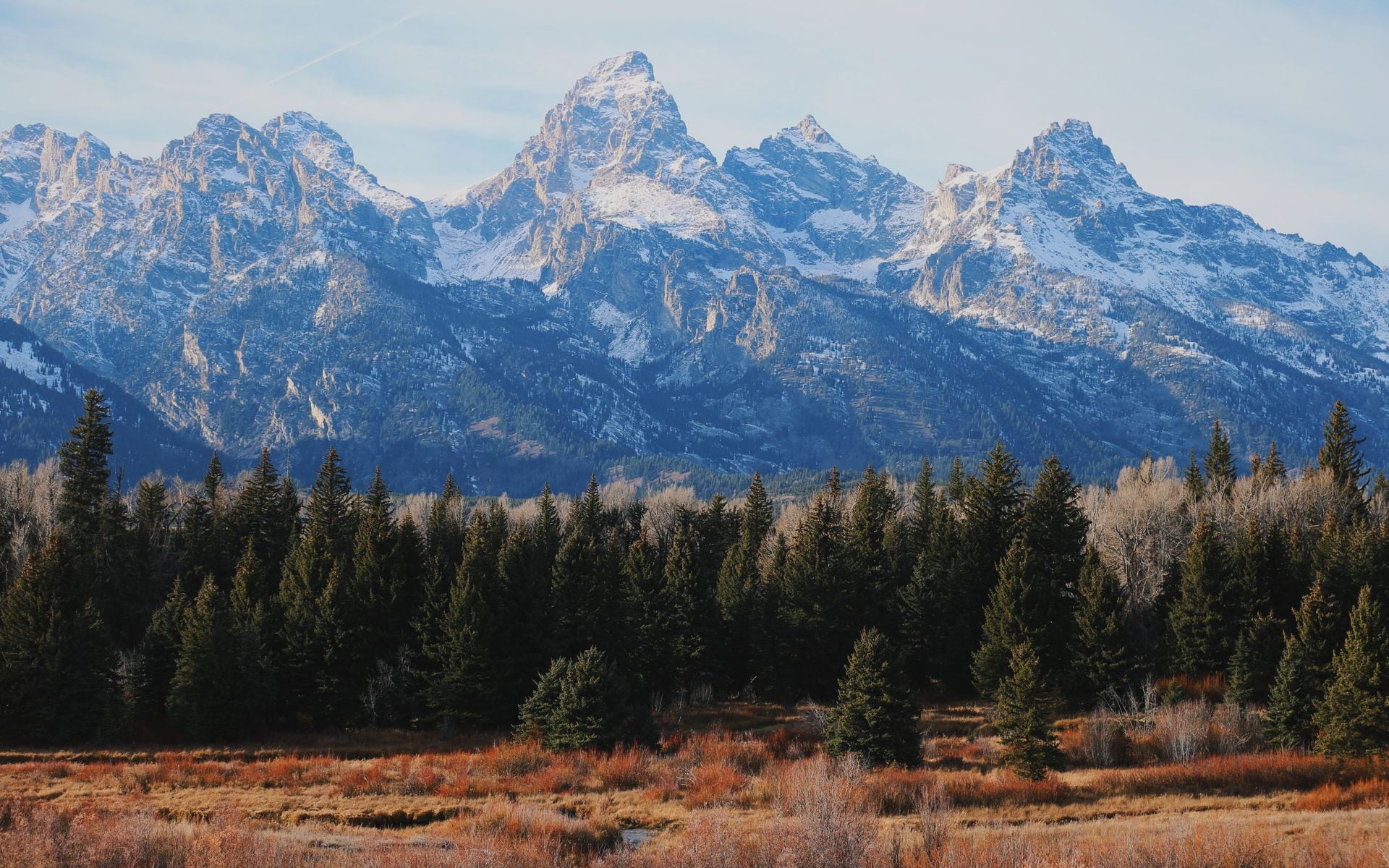
The park covers 310,000 acres along a 40-mile stretch of the Teton Range, from the Snake River bottoms to peaks above 13,000 feet. Grand Teton itself tops out at 13,775 feet and dominates the skyline from practically everywhere on the valley floor. That floor, Jackson Hole, sits at about 6,200 feet, which means you feel the altitude on your first uphill mile if you're coming from sea level. The Teton Park Road runs 42 miles from Moose Junction at the south end to Moran Junction at the north, with Jackson Lake filling most of the upper valley. What you won't find here are foothills, gentle approaches, or a gradual reveal. The range simply appears: granite, snow, and sky.
Wildlife is dense and varied. Bison graze Antelope Flats year-round, moose wade into the willows along Oxbow Bend just north of Moran Junction most mornings, and grizzly and black bears range through the park from late April through early November. Pronghorn are common on the flats. During September, bull elk push out of the forest for the rut, and the sound carries far across the valley at dusk. This is part of the broader Jackson Hole & the Tetons region, and the town of Jackson, 20 minutes south on US-26/89/191, is your practical base for restaurants, lodging, gear shops, and guides.
What to Do There
Jenny Lake is the park's centerpiece. The 4.7-mile loop trail around it covers forest, lakeside meadows, and views up into Cascade Canyon. For a more efficient approach to the canyon's highlights, take the Jenny Lake Ferry from the South Jenny Lake Boat Dock (approximately $10/adult roundtrip, labeled estimate). The ferry cuts 2 miles off the round trip to Hidden Falls and Inspiration Point, giving you more time in the canyon itself. From Inspiration Point the trail continues into Cascade Canyon, which runs 9 miles each way before splitting toward Hurricane Pass and Lake Solitude. Even going 2 to 3 miles past Inspiration Point puts you inside granite walls with cold glacier-fed streams and very few people compared to the lake shore below.
Mormon Row at Antelope Flats is a stretch of original homestead barns from the 1890s and early 1900s, including the often-photographed T.A. Moulton Barn. If you arrive before 8 a.m. in summer, you'll have the barns largely to yourself. By 9 a.m. the parking pullout fills, and there are cameras in every direction. Signal Mountain Summit Road, a 5-mile spur off Teton Park Road near Jackson Lake, requires no hiking and ends at an elevated viewpoint with the full Teton panorama to the west and the valley spread out below. It's one of the few places in the park where you gain perspective on the whole layout without a substantial climb.
Snake River float trips are a serious option for seeing the park from water level. Both Mad River Boat Trips and Jackson Hole Whitewater run guided scenic floats on the Snake as well as whitewater runs through the canyon south of Jackson. A scenic float runs approximately $65 to $90 per adult (labeled estimate). The river section inside the park moves through cottonwood forest with constant bison sightings and occasional beaver along the banks. For wildlife-focused trips, BrushBuck Wildlife Tours runs half-day vehicle tours specifically designed to find bears, wolves, and bison across the Tetons and surrounding valley, typically $175 to $250 per person (labeled estimate). They know the productive morning zones and adjust based on recent sightings.
Colter Bay Village at the north end offers a marina, horseback riding concessions, and access to Hermitage Point, a 9.5-mile loop through lakeside terrain that sees a fraction of the Jenny Lake traffic. String Lake, just north of Jenny Lake, has calm and shallow water with a sandy launch area and is the park's best swimming spot in July and August, when the snowmelt has warmed enough to be tolerable. For visitors interested in combining the park experience with a working ranch stay, several of Wyoming's Best Dude Ranches in Wyoming operate just outside the park boundary with ride-in access to park trails.
Getting There and Access
Jackson Hole Airport (JAC) sits inside the park boundary, the only commercial airport in the U.S. located within a national park, making it the most convenient air option by far. Salt Lake City (SLC) is about 5 hours by car; Denver (DEN) is roughly 6.5 hours. Bozeman (BZN) in Montana is about 4 hours to the north if you're combining the Tetons with Yellowstone. The main south entrance at Moose Junction is on US-26/89/191, about 20 minutes north of Jackson town square. The Moose Entrance Station is open year-round. The north entrance at Moran Junction connects to the John D. Rockefeller Jr. Memorial Parkway and to Yellowstone's South Entrance, 55 miles away. A 7-day vehicle pass costs approximately $35 (labeled estimate) and is interchangeable with Yellowstone for the week.
There is no park shuttle system, so you need your own vehicle. The inner Teton Park Road (the section between Moose and Jackson Lake Junction that runs closest to the range) and the Jenny Lake Scenic Drive close to motor vehicles from November through April. The outer road, US-89/191, stays open year-round. In winter, snowmobiling is permitted on specific corridors, and cross-country skiing on the closed Teton Park Road is popular. For a broader overview of Wyoming's National Parks and how to plan around multiple park visits, see our national parks guide.
Best Time to Go
Late June through mid-September is the window when all roads are open, the wildflowers are out on the high trails, and the weather is most predictable. July and August bring the highest crowds and the most reliable afternoon thunderstorms over the peaks. If you're visiting in those months, plan to be at Jenny Lake and Mormon Row before 8 a.m. or after 5 p.m. Parking fills by mid-morning on summer weekends, and the Jenny Lake Shuttle Road backs up. September earns a strong recommendation: visitor numbers drop noticeably after Labor Day, the Snake River cottonwoods and hillside aspens turn gold and yellow, and the elk rut begins around mid-month. The bugling carries across the valley on cool evenings. Fall color in the Tetons typically peaks in the second or third week of September.
May and early October are quieter but genuinely unpredictable. Snow can fall on any day of either month, and the high trails above 9,000 feet may still be buried. The Jenny Lake Ferry typically runs from late May through late September. Winter, December through March, brings deep snow, striking clarity when it's not snowing, and a visitor experience almost nothing like summer. The road closures mean far fewer people, and moose are easier to spot in the open willows. Come expecting cold: lows in January average around 10 to 15 degrees Fahrenheit at valley elevation.
Good to Know
The park is active grizzly and black bear country. Carry bear spray and keep it clipped where you can reach it in under two seconds, not buried at the bottom of your daypack. Bears are most active at dawn and dusk. Moose, though they look docile, can be aggressive, particularly cows with calves in spring and bulls in the September rut. The recommended safe distance is at least 25 yards from moose and bison, and 100 yards from bears. Bison look slow and are not; give them room on the road and do not approach for a photo.
Cell coverage is spotty across most of the park. Download offline maps before you leave Jackson. Gas is available at Colter Bay Village inside the park, but it costs more than in Jackson. Stock up in town. For dining after a park day, Gun Barrel Steak and Game House in Jackson is a reliable option for bison burgers and regional game in a Western-themed room, and Persephone Bakery downtown opens early enough to grab coffee and pastries before a morning drive into the park. Plan to leave extra time at every stop in summer: parking at Oxbow Bend, the Cathedral Group Turnout, and Mormon Row can require waiting or returning later in the day.
Frequently asked questions
Do I need a reservation to visit Grand Teton National Park?
Grand Teton does not currently require a timed-entry reservation to drive into the park. However, campgrounds and in-park lodging book out months in advance for July and August. Jenny Lake Campground and Climbers' Ranch fill the fastest. If you plan to camp inside the park, book through recreation.gov as early as the reservation window opens, typically six months ahead.
Can I visit Grand Teton and Yellowstone in the same trip?
Yes, and most visitors do. The parks share a connection via the John D. Rockefeller Jr. Memorial Parkway at the north end of Grand Teton, and the drive from Moose Junction to Old Faithful takes roughly 2.5 to 3 hours depending on wildlife traffic. Budget at least two full days for the Tetons and two to three days for Yellowstone. Your 7-day park pass covers both parks, so no extra entry fee.
What is the best hike in Grand Teton National Park for first-timers?
The Jenny Lake Ferry to Hidden Falls and Inspiration Point is the most practical first-time route. The ferry (approximately $10/adult roundtrip, labeled estimate) handles 2 miles of flat lake-level walking each way, leaving your legs for the climb to the falls and the ridge. Total time from South Jenny Lake Boat Dock to Inspiration Point and back is 3 to 4 hours. If you have more energy, continuing into lower Cascade Canyon for another mile adds serious canyon scenery without significant additional elevation.
Where should I stay when visiting Grand Teton National Park?
Jackson, 20 minutes south on US-89, is the main base. Cowboy Village Resort in Jackson offers cabin-style rooms at mid-range prices with easy park access and proximity to the town square. Inside the park, Colter Bay Village has log cabin units and an RV campground run by the park concessionaire, typically at a premium. Booking 4 to 6 months ahead is not excessive for summer nights inside or near the park.