What to Expect in Jackson Hole
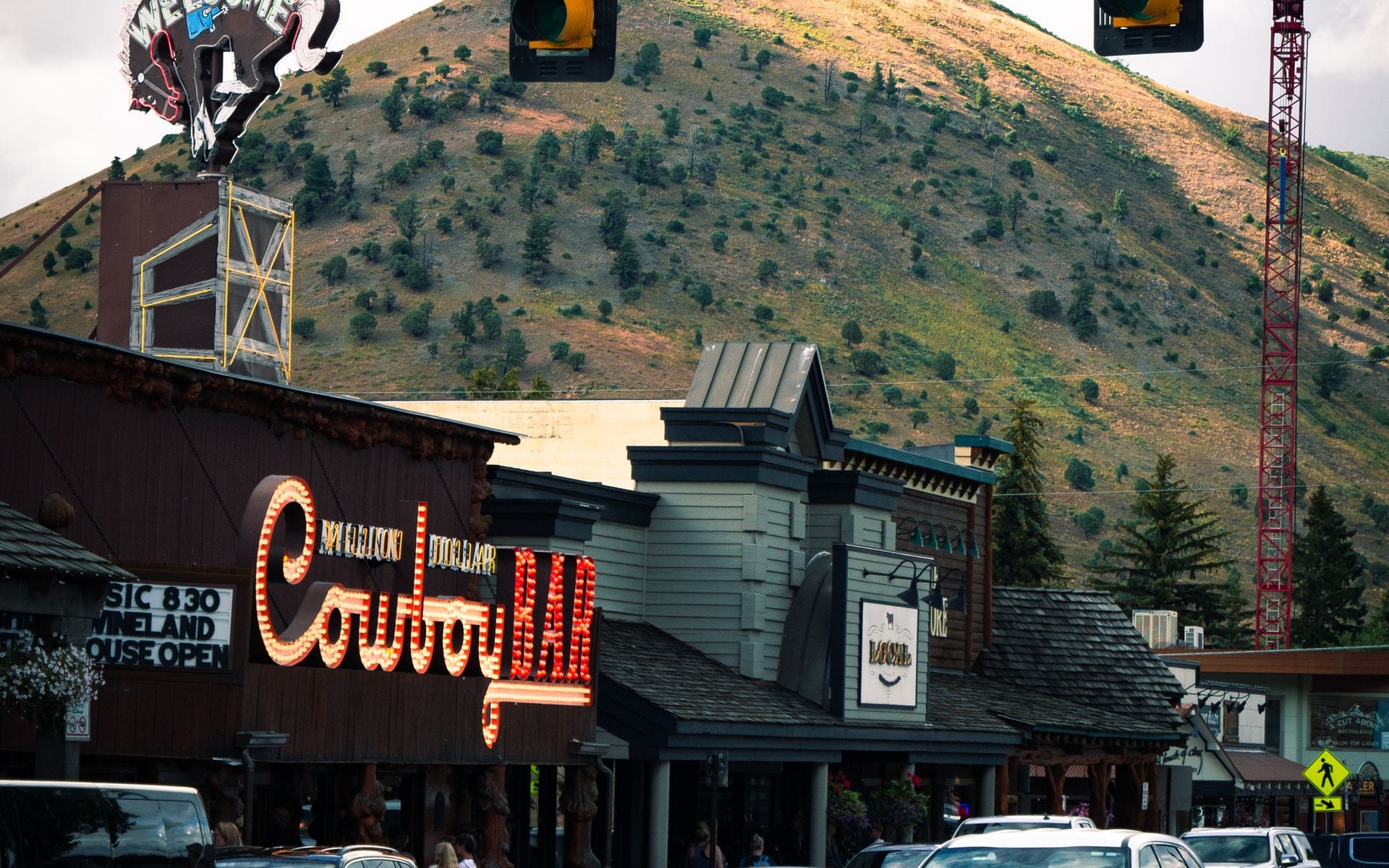
Jackson Hole is a valley and a town that share a name, and the distinction matters when you're planning. The valley runs roughly 48 miles north to south, drained by the Snake River, and sits at about 6,200 feet above sea level. The town of Jackson occupies the southern end, its central Town Square ringed by four arches made of naturally shed elk antlers, a few dozen galleries and outfitters, and a restaurant scene that runs from early-morning bakeries to serious wild-game steakhouses. For a fuller picture of everything in this corner of Wyoming, see the Jackson Hole & the Tetons regional guide.
Plan for resort-town prices throughout. Restaurants run $20 to $50 per person without drinks, hotel rooms start around $200 per night in summer and commonly reach $400 or more in peak winter, and guided trips from float fishing to snowmobiling are priced accordingly. That said, the valley delivers: the Teton Range rises straight off the valley floor with no foothills to soften the approach, and the transition from the elk antler arches on Town Square to a moose standing in the willows north of Moose Junction can take less than 20 minutes by car.
The Jackson Hole Airport (JAC) sits inside Grand Teton National Park, making it the only commercial airport in the country located within a national park boundary. Flights connect directly to Denver (DEN), Salt Lake City (SLC), Dallas, Chicago, and several other cities depending on the season. The runway is short and surrounded by mountains, so conditions matter, but the airport is modern and handles peak-season volume efficiently. If you're driving in, Salt Lake City is about five hours south on I-15 and then US-89 through the Snake River Canyon. Denver is roughly eight hours.
What to Do in Jackson Hole
Skiing and snowboarding are the primary draws from late November through April. Skiing and snowboarding in Wyoming tops out at Jackson Hole Mountain Resort in Teton Village, about 12 miles northwest of town via Highway 22 and Highway 390. The vertical drop is 4,139 feet, the steepest sustained terrain in the country for a major resort, and the expert runs including Corbet's Couloir and the Headwall are not marketing exaggeration. Lift tickets run roughly $150 to $300 per day. For a comparison of all the options across the state, see the Best Ski Resorts in Wyoming. Snow King Mountain is right on the edge of downtown Jackson, no shuttle required, with 1,571 vertical feet and night skiing. Grand Targhee Resort, about 45 minutes northwest of Jackson near Alta, Wyoming, sits on the west slope of the Tetons and typically picks up more snow than the Jackson side, averaging around 500 inches per year, with shorter lift lines and a more relaxed atmosphere.
In summer, Jackson Hole Mountain Resort runs its aerial tram from Teton Village up to Rendezvous Mountain at 10,450 feet. Tickets run approximately $60 to $70 per adult and the ride takes about 12 minutes, arriving at a summit with 360-degree views of the valley floor, the Snake River bottomlands, and Idaho's Teton Valley to the west. Bring a wind layer even in July as temperatures at the top run 20 to 30 degrees cooler than in town, and crowds build quickly after 9:00 a.m.
Grand Teton National Park begins roughly 20 minutes north of the Town Square. The inner Teton Park Road opens in late May or early June and closes in November; driving it from Moose Junction north to Jackson Lake Junction covers the classic valley views, Jenny Lake, and the historic barns of Mormon Row near Moran Junction. Private Snake River float trips leave from Moose and typically cover 5 to 10 miles over two to three hours, with a good chance of spotting great blue herons, osprey, and moose in the willows along the banks.
The National Elk Refuge north of town protects 25,000 acres of winter range for one of the largest elk herds in North America. From December through March, horse-drawn sleigh rides operate out of the National Elk Refuge and Greater Yellowstone Visitor Center at 532 N Cache Street, getting you into the herd at close range. In summer the refuge is quieter but still productive for birding and pronghorn sightings. Wildlife watching is productive year-round along the refuge boundary on the north side of town.
For food and drink, Persephone Bakery on East Broadway draws a consistent crowd for pastries, coffee, and seasonal lunch items, and is a reliable morning stop before heading north to the park. Gun Barrel Steak and Game House on West Broadway serves elk, bison, and wild game alongside beef in a rustic dining room, and is one of the few places in the country where you can work through a proper game plate without it feeling like a tourist gimmick. For a lower-key breakfast or an early lunch, the Virginian Restaurant on West Broadway has a Western dining room and generous portions at prices that run on the reasonable end for Jackson.
Getting There and Around
Flying direct to Jackson Hole Airport (JAC) is the fastest option. Outside of summer and the December-through-March ski season, direct routes thin out, so connecting through Denver (DEN) or Salt Lake City (SLC) is common. The drive from SLC takes about five hours north on I-15, then US-189 and US-189/191 to Hoback Junction, and US-89 north to Jackson. From Denver it's roughly eight hours via I-25 north and then US-26 or US-191.
A rental car is not optional once you land. Teton Village is 12 miles from the Town Square. Grand Teton National Park's south entrance at Moose is 20 miles north. Yellowstone's South Entrance is 60 miles north at a minimum. There is no public transit connecting those points. Pick up your rental at JAC or plan to arrange ground transport in advance from a Jackson-based outfitter. During ski season, some lodges in Teton Village offer shuttles to and from the airport, which can simplify things if you're staying on the mountain.
Best Time to Go
Late June through August is peak summer: the Teton Park Road is fully open, trails at elevation are snow-free, Snake River float trips and guided hikes are running, and the aerial tram operates daily. Crowds are real, especially in July and August, and lodging books out weeks ahead. Early June can be excellent if you don't need the high-alpine trails, and traffic is lighter.
September brings the elk rut to the National Elk Refuge area and the aspen groves above Jackson turn gold by mid-month. Temperatures drop, crowds thin noticeably from August levels, and the park is at its least congested. This is arguably the best single month to visit if you're flexible on timing.
Winter, December through early April, is skiing season. Jackson Hole Mountain Resort typically opens in late November and runs through mid-April in a good snow year. The National Elk Refuge sleigh rides operate during this same window. Lodging books out for holiday weeks (Christmas, New Year's, Presidents' Day) three to four months ahead.
Spring, mid-April through late May, is the weak season. The Teton Park Road is closed. High trails are buried. The town is quiet, some restaurants reduce hours, and conditions at elevation are unpredictable. Experienced visitors know to skip it unless they're specifically after the solitude.
Good to Know Before You Go
Jackson Hole is grizzly bear country. Carry bear spray when hiking anywhere outside of town, store food in bear-resistant containers at camp, and keep a minimum of 100 yards from any bear or wolf you spot. The National Elk Refuge and Greater Yellowstone Visitor Center at 532 N Cache Street is a good first stop for current wildlife activity, refuge conditions, and up-to-date park road status.
Book lodging three to four months ahead for summer and peak ski weeks. Cowboy Village Resort on Flat Creek Drive offers cabin-style rooms within walking distance of downtown at rates that tend to run lower than the large hotel brands in the same area. If budget is a real constraint, consider staying in the Teton Valley on the Idaho side: Victor and Driggs are about 40 minutes west over Teton Pass on Wyoming Highway 22, with meaningfully cheaper lodging and a short drive to Grand Targhee Resort.
Teton Pass on Highway 22 between Jackson and Victor is steep, winding, and can close or require chains in winter storms. Check Wyoming Department of Transportation road conditions at wyoroad.info before you drive it in winter. The pass tops out at 8,431 feet and the switchbacks on the Idaho descent are not casual.
Frequently asked questions
Is Jackson Hole better to visit in summer or winter?
Both seasons are legitimate, and the right answer depends on what you're after. Summer (late June through August) gets you Grand Teton National Park at full capacity, Snake River float trips, high-country hiking, and the aerial tram at Jackson Hole Mountain Resort. Winter (December through March) is ski season: Jackson Hole Mountain Resort, Snow King Mountain, and Grand Targhee Resort are all running, the National Elk Refuge sleigh rides operate, and the valley sees a different, quieter kind of visitor. If you can only go once, summer gives you more activities. If you ski, winter is hard to beat. The one season to skip unless you're specifically chasing solitude is spring (mid-April through late May), when roads are closed, trails are muddy, and conditions are inconsistent.
How far is Jackson Hole from Yellowstone National Park?
The South Entrance to Yellowstone is about 60 miles north of Jackson via US-89 through Grand Teton National Park. The drive takes 1.5 to 2 hours from the Town Square depending on stops, wildlife jams, and entrance wait times in summer. Budget a full day if you want to do both parks. Note that the direct route through Grand Teton on the Teton Park Road closes in winter, so the actual driving distance and time can increase during November through May when you may need to go around.
Do you need a car in Jackson Hole?
Yes. The town of Jackson is walkable and compact, but almost everything worth doing is spread across a 60-mile valley. Teton Village is 12 miles from the Town Square. Grand Teton National Park's Moose entrance is 20 miles north. Yellowstone is 60 miles beyond that. There is no statewide transit system and rideshare availability is limited outside of central Jackson. Rent a car at Jackson Hole Airport (JAC) or arrange in advance. A standard sedan handles summer roads fine; an all-wheel-drive vehicle is useful in winter, especially if you plan to cross Teton Pass.
What is the best base for visiting Grand Teton and Yellowstone?
Jackson is the most practical base for Grand Teton National Park, with the south entrance at Moose just 20 minutes north of town. For Yellowstone, Jackson puts you at the South Entrance, which is the least used of the park's five entrances and works well for accessing the southern and central portions. If you're spending most of your time in Yellowstone's northern sections around Mammoth or the Lamar Valley, staying in Cody (East Entrance, 52 miles away) might serve you better. Many visitors split the difference, staying in Jackson and taking one or two long day trips into Yellowstone.