What to Expect
Yellowstone is organized around the Grand Loop Road, a figure-eight of roughly 142 miles that connects most of the park's major stops. You can drive the full loop in a single long day, but a more practical plan is to break it into two days: the Lower Loop (Old Faithful, Grand Prismatic Spring, Yellowstone Lake, Hayden Valley) and the Upper Loop (Norris Geyser Basin, Mammoth Hot Springs, Tower-Roosevelt, Lamar Valley). Expect slow going in July and August. Pullouts fill quickly, bison jams are real, and popular boardwalks like the one at Grand Prismatic can feel crowded by 9 a.m.
Old Faithful erupts roughly every 90 minutes, and the board at the Old Faithful Visitor Education Center posts the next predicted eruption time, usually accurate to within plus or minus 10 minutes. Plan your boardwalk loop around the prediction rather than guessing. Grand Prismatic Spring, at 370 feet across, is the largest hot spring in the United States. The overlook trail on the hill above the spring gives a far better view than the boardwalk at water level, and it adds only a half-mile round trip. The Grand Canyon of the Yellowstone drops 1,000 feet through volcanic rhyolite to the Yellowstone River below, with 308-foot Lower Falls visible from Artist Point on the South Rim, a 0.8-mile walk with minimal elevation gain.
Don't underestimate the distances inside the park. From Mammoth Hot Springs in the north to the South Entrance at Wyoming's border, it's 57 miles and typically a 90-minute drive once you factor in wildlife stops and speed limits of 45 mph or less. Filling up before you enter is smart. Gas is available at Canyon Village, Grant Village, Old Faithful, and Fishing Bridge, but prices run higher than anything in Cody or Jackson.
What to Do There
Hayden Valley and Lamar Valley are the two main wildlife corridors. Hayden sits along the Yellowstone River between Canyon Village and Fishing Bridge. Early morning in June and July regularly turns up grizzly bears feeding on the valley floor, bison crossing the river, and sandhill cranes working the meadows. Lamar Valley, in the park's northeast corner near the Tower-Roosevelt junction, is where wolves are most reliably seen. The Druid Peak Pack and other packs have used this valley for decades, and the pullouts along the Lamar River can fill with spotting scopes and binoculars at dawn. This is widely considered one of the Best Places to See Wildlife in Wyoming, full stop.
If you want a guide to help you find wildlife and understand what you're looking at, BrushBuck Wildlife Tours out of Jackson runs multi-day programs that cover both the Teton front and Yellowstone's interior, with small-group vehicles and spotting scopes included. Yellowstone Vacation Tours, based in West Yellowstone, specializes in full-day loop drives as well as winter snowcoach trips that reach Old Faithful and Hayden Valley after the roads close to private cars. Both are solid options if you want to cover more ground faster than solo driving allows.
The park has two mapped day-hike areas beyond the boardwalks worth knowing. Mount Washburn, accessible from either the Chittenden Road trailhead or Dunraven Pass on the Upper Loop, is a 6-mile round trip to a fire lookout at 10,243 feet with views across the Yellowstone caldera. Shoshone Lake, the largest backcountry lake in the Lower 48, is reached by a 5.5-mile hike from the DeLacy Creek trailhead on the south side of the park. Backcountry camping anywhere in Yellowstone requires a permit, available at visitor centers or online through recreation.gov.
Boating on Yellowstone Lake, the largest high-elevation lake in North America at 7,733 feet, is permitted with a park-issued permit for private boats and kayaks. Bridge Bay Marina rents motorboats and guided lake tours from late May through mid-September. Be careful with afternoon weather on the lake: thunderstorms build fast over the Absaroka Range to the east, and the lake's surface temperature stays near 40 degrees Fahrenheit even in summer.
Getting There and Access
Wyoming has two entrances into Yellowstone. The East Entrance is 52 miles west of Cody on US-14/16/20, passing through the North Fork of the Shoshone River canyon along the Buffalo Bill Scenic Byway. The South Entrance connects directly to Grand Teton National Park, so if you're driving north from Jackson you'll pass through the Tetons first and enter Yellowstone's southern edge at the Lewis Falls area. The East Entrance line from Cody is consistently shorter than the West Entrance at peak season in July and August, which is worth factoring into your routing. The full Cody & Yellowstone Country region is organized around this east approach.
The closest commercial airports are Jackson Hole (JAC), about 85 miles from the South Entrance, and Yellowstone Regional in Cody (COD), about 52 miles from the East Entrance. Both require a rental car. Many visitors also drive in from Salt Lake City (SLC, approximately 5.5 hours to the South Entrance) or Denver (DEN, approximately 8 hours to the South Entrance).
A 7-day vehicle pass runs an estimated $35 per car. The America the Beautiful Annual Pass, an estimated $80, covers both Yellowstone and Grand Teton and is worth it if you plan to spend more than two or three days in the parks combined. Military and fourth-grade students get free annual passes through separate federal programs.
If you're entering from the east and want to overnight near the East Entrance, Cody has the most lodging options closest to the gate. Buffalo Bill's Irma Hotel & Restaurant on Sheridan Avenue, built in 1902, is a historic property right in downtown Cody that puts you in the park in under an hour from checkout. For the south approach, lodging options are covered under the Jackson Hole pages.
Best Time to Go
Summer, from mid-June through August, is when the full park is open and all major roads, campgrounds, and facilities are running. Peak crowds land between the Fourth of July and mid-August. Pullouts on Lamar Valley at dawn fill up fast during this window, and the Old Faithful area can feel gridlocked by midday. If you're going in summer, arrive at key stops before 8 a.m. or after 6 p.m.
Fall is the best-kept scheduling adjustment. September and early October bring cooler temperatures, noticeably thinner crowds, and the elk rut in full swing across the meadows around Madison and along the Firehole River. Wolf activity in Lamar Valley peaks in fall as packs establish territory. The first major road closures typically happen in late October or early November, starting with the Beartooth Highway and some higher-elevation routes.
Winter closes most roads to private vehicles from early November through late April, but the park stays open via snowcoach and snowmobile access routes from West Yellowstone. Yellowstone Vacation Tours runs winter tours that cover Old Faithful, Hayden Valley bison herds, and the thermal features, which look different in cold air and are worth the effort. The park is quietest and most atmospheric in January and February.
Spring, from late April through early June, is the mud and variable season. Roads reopen on a rolling schedule. The Beartooth Highway from Red Lodge, Montana to the Northeast Entrance typically doesn't open until Memorial Day weekend. Bears come out of hibernation in April and May, so early spring is a good time for wildlife viewing if you're willing to deal with the unpredictable road conditions. Check nps.gov/yell for current road status before you drive.
Good to Know
Yellowstone does not use a timed-entry reservation system to drive in. You can show up at the gate without a reservation. What books out early is everything inside the park. Lodging through Xanterra Parks and Resorts (Old Faithful Inn, Lake Yellowstone Hotel, Canyon Lodge, and others) opens reservations roughly 13 months in advance, and July and August nights at Old Faithful Inn typically go within hours of the opening date. Campgrounds through recreation.gov open six months out and go nearly as fast. If you want to sleep inside the park in summer, set a calendar reminder and book the day reservations open.
Bear spray is required in the backcountry and strongly recommended any time you're outside a vehicle in the park's interior. Yellowstone has one of the highest grizzly bear densities in the Lower 48. The rules: stay 100 yards from bears and wolves, 25 yards from bison and elk. These aren't soft suggestions. Bison gore more visitors than bears do, typically because people approach for photos. A bison standing in the road is not a photo op; it's a 2,000-pound animal that can run 35 mph.
Cell service is limited or nonexistent in most of the park. The NPS Yellowstone app works offline and includes maps, geyser prediction updates, and road status. Download it before you enter and bring a paper map as a backup. Gas is available at four stations inside the park but runs higher than anything in Cody or Jackson, so fill up before you enter.
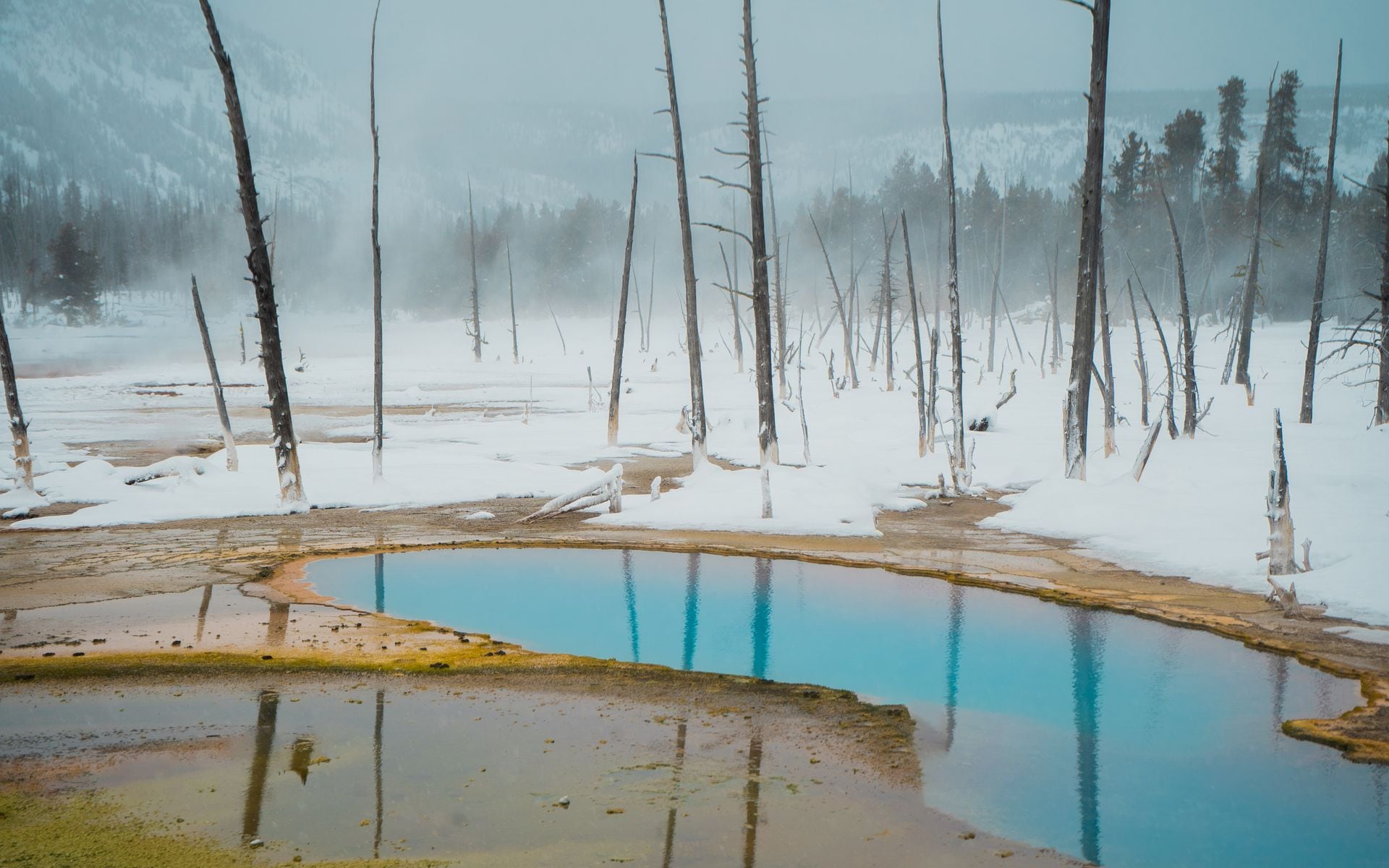
The park sits on one of the largest active volcanic systems in the world. The thermal features look approachable from a distance, but the ground crust around many pools is thin and the water temperatures in most hot springs are near boiling. Stay on the boardwalks, follow posted signs, and keep children close. Injuries from people leaving marked trails in thermal areas happen every year. The National Parks visitor experience starts with respecting how the environment works.
Frequently asked questions
Does Yellowstone require a reservation to enter?
No. Yellowstone does not use a timed-entry permit system for driving into the park. You can arrive at any entrance gate without a reservation. What sells out far in advance is in-park lodging and campgrounds. Xanterra lodging reservations open roughly 13 months before the stay date and popular summer nights fill within days. Campgrounds through recreation.gov open six months out. If you plan to stay inside the park, book the moment reservations open.
Which Wyoming entrance to Yellowstone should I use?
The two Wyoming entrances are the East Entrance and the South Entrance. The East Entrance is 52 miles west of Cody on US-14/16/20 and drops you near Fishing Bridge and Hayden Valley, with Old Faithful about 45 miles farther west. The South Entrance connects to Grand Teton National Park from Jackson and puts you near Grant Village and Yellowstone Lake. The East Entrance typically has shorter lines at peak season. If your main goals are Old Faithful and the geyser basins, either entrance works about equally well.
What is the best time of day to see wildlife in Yellowstone?
Dawn and dusk are the productive windows, especially in Lamar Valley for wolves and in Hayden Valley for grizzly bears and bison. In summer, being at a Lamar Valley pullout by 6 a.m. puts you ahead of most of the day-trip crowd. Midday in July and August is the least productive for wildlife and the most crowded for everything else. September and October tend to give better sightings with fewer people and cooler temperatures that keep animals moving later into the morning.
How many days do you need in Yellowstone?
Two days is enough to cover the Lower Loop and Upper Loop highlights at a reasonable pace, including Old Faithful, Grand Prismatic Spring, the Grand Canyon of the Yellowstone, Hayden Valley, and Lamar Valley. One day lets you see one loop or one major area, not both. Wildlife watchers, hikers doing longer trails, and anyone who wants to spend real time in Lamar Valley typically plan three to five days. If you're combining Yellowstone with Grand Teton, budget at least four to five days total for the two parks.