Wyoming holds one of the largest concentrations of large mammals in the lower 48 states, and the month you show up shapes everything from watching a wolf pack cross the Lamar Valley at dawn to riding a sleigh through thousands of elk on the National Elk Refuge.
The Short Answer, By Season
There is no single best month because different animals peak at different times. If wolves and grizzlies are your priority, April through mid-June gives you hungry bears just out of their dens and wolves actively denning near Lamar Valley. If the elk rut is your target, plan around September, when bulls bugle across meadows from Grand Teton’s Moose Wilson Road to the open sage flats near Dubois. If sheer variety matters more than any single species, July is when every major animal is present and all roads are fully open, though you will share pullouts with a lot of other people. For wolf watching with the best odds, January and February in Lamar Valley offer wolf packs visible against snow, often from road pullouts at distances a spotting scope can handle easily.
A standard Wyoming trip plan focuses on summer, and there are solid reasons for that: Yellowstone’s full road network opens in late May, the high country is accessible, and every wildlife species is out and moving. But the shoulder seasons, especially September and late April through May, are when serious wildlife watchers tend to come. Crowds are thinner, animals are actively doing things (feeding, mating, raising young), and the low-angle light in fall makes for better photography from the road. The Wyoming Travel Guide covers the full range of trip types if you’re still deciding when to go.
Spring: Bears Out of Dens and Bison Calves (April and May)
Bears emerge from dens in Yellowstone’s high country between late March and late April depending on elevation and snowpack. The Dunraven Pass area and the meadows north of Canyon Village are reliable spots through May. Grizzly sows with cubs of the year are typically visible near Hayden Valley and along the Yellowstone River corridor from late April onward. These are not always distant views: on a good morning, bears are feeding on winter-killed elk carcasses within spotting-scope range of the road. Park at the established pullouts between Fishing Bridge and Canyon Village, scan the sage, and be patient. The key insider tip is that the wildlife radio channel (1610 AM inside Yellowstone) broadcasts active sighting reports from rangers and volunteer watchers, and it is worth tuning in before you leave your campground.
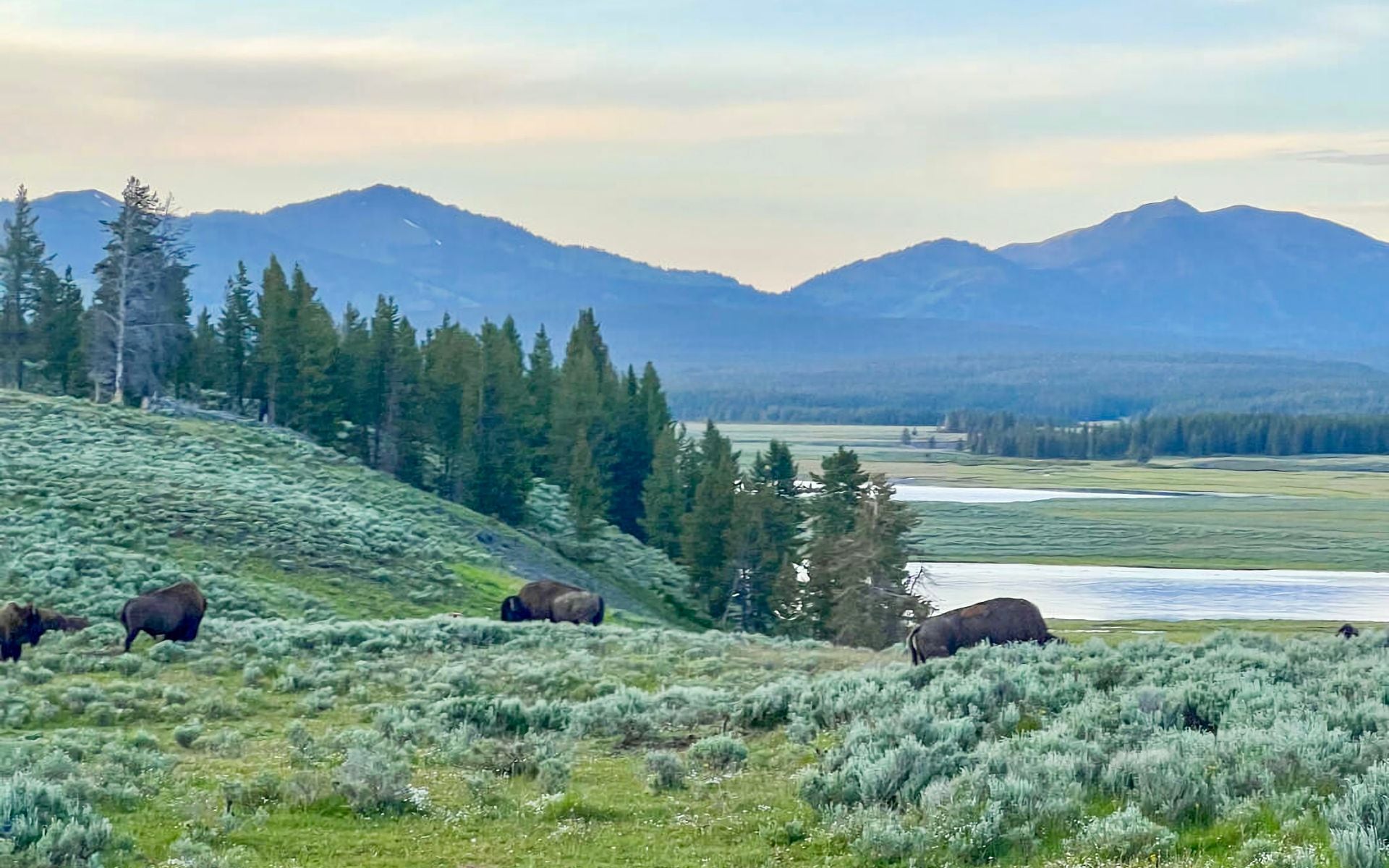
May is also when bison calves appear in Hayden Valley, arriving orange-red and staying close to their mothers. Elk calves follow in late May and early June, often seen in the meadows of Grand Teton National Park along Antelope Flats Road east of Moose Junction. Moose with newborn calves are common in the Snake River willows south of Moose village during late May and early June. Keep at least 25 yards from elk and bison, 100 yards from bears and wolves, and considerably more when any animal appears agitated. Spring road conditions are variable: some passes inside Yellowstone remain closed through mid-May, so check the NPS road status page before routing your day.
Summer: Every Species Is Out, and So Is Everyone Else (June Through August)
June through August is the full-access window. Lamar Valley in early summer is green and productive, wolves are raising pups and territorial, and bison herds of several hundred animals block traffic on the Northeast Entrance Road on a regular basis. Pronghorn move through the sage flats east of the Tetons, visible from US 287 between Dubois and Moran Junction. Bighorn sheep are reliably seen on the cliffs at Whiskey Mountain near Dubois, and mountain goats appear on the slopes above Cody along the North Fork Highway (US-14/16/20). Black bears are active throughout the forest zones of both parks. The downside is that every pullout near a wolf sighting fills with cars within minutes, and early-morning parking near popular spots like Lamar Valley fills well before sunrise in July and August. If summer is your only option, aim for weekday mornings in June before school is entirely out or in late August after families have returned home.
For guided access to summer wildlife, companies like wildlife tour operators BrushBuck Wildlife Tours and Jackson Hole EcoTour Adventures run half-day and full-day tours from Jackson with naturalist guides and vehicle-mounted spotting scopes. BrushBuck’s sunrise tours (estimated $150 to $250 per person) cover Antelope Flats and the Snake River corridor, regularly turning up moose, elk, bison, and osprey. Jackson Hole EcoTour Adventures uses small vans and Swarovski optics, and reviews consistently mention guides who know which meadow holds a moose on any given morning.
Fall: The Elk Rut and Hyperphagia Season (September and October)
September is the month most wildlife photographers target in Wyoming, and the elk rut is the reason. Bulls bugle from before dawn until midmorning and again in the evening near Jackson, along the Gros Ventre Road, on Mormon Row near Moose, and at the edge of the National Elk Refuge. The sound carries a long way in the cold morning air and is a reliable signal of where to look. Grizzlies are in hyperphagia through September and October, feeding hard before denning, which means more roadside sightings in the Yellowstone backcountry and near Cody along the North Fork. Wolf packs tighten up territorially in fall as prey becomes more concentrated, and Lamar Valley wolf sightings increase again from mid-September onward.
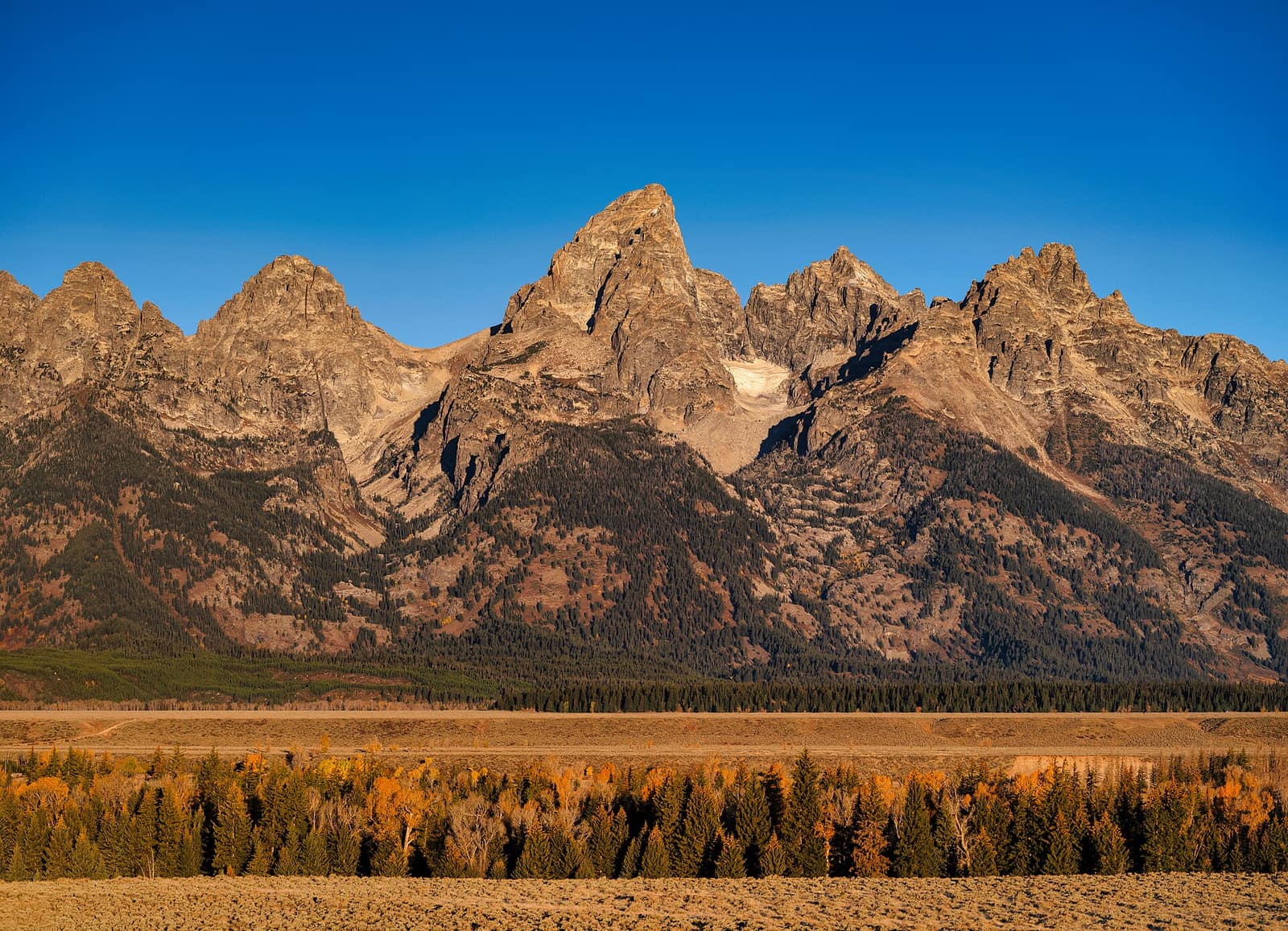
October quiets down quickly. By mid-October, many seasonal lodges close, visitor numbers drop significantly, and the aspen gold sweeping through Grand Teton and the Gros Ventre range makes every bison herd and moose look like a painting. You can find parking at Oxbow Bend, a reliable spot for moose and trumpeter swans near Moran Junction, without circling for 20 minutes. Overnight lows in October drop into the teens at elevation, so come prepared with layers and a windproof outer shell.
Winter: Wolves in the Lamar and Sleigh Rides on the Refuge (November Through March)
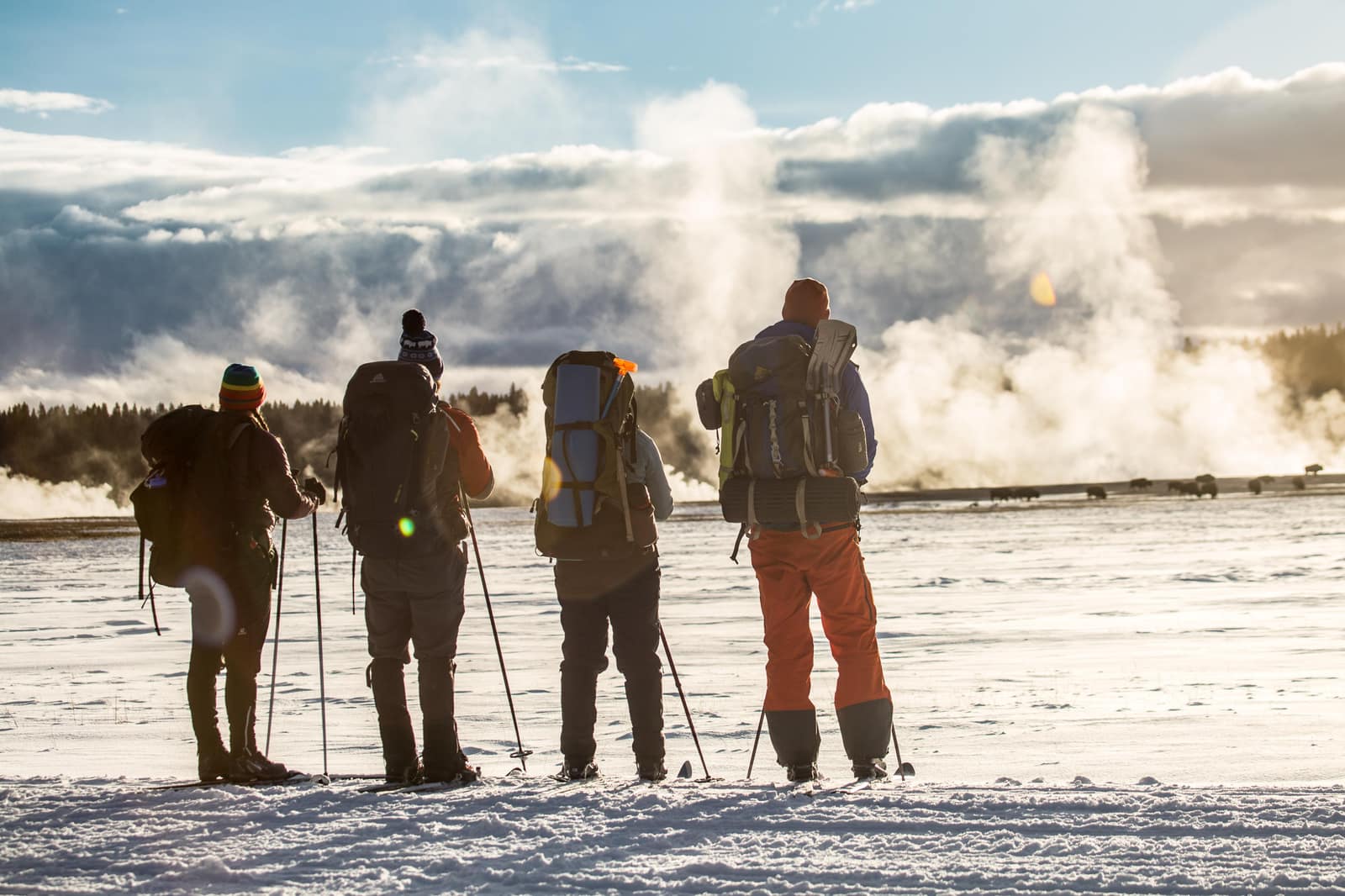
Lamar Valley in January and February is the most reliable wolf-watching location in the lower 48 states. Snow makes tracks easy to read, wolf packs are vocal and territorial, and the areas around Druid Peak, Junction Butte, and Crystal Creek flats are checked by volunteer wolf watchers daily. You do not need a guide to do this: park at one of the Lamar Valley pullouts before dawn, set up a spotting scope, and wait. Temperatures can drop to -20°F or colder on bad nights, so dress in real winter layers, keep optics warm inside your coat until you need them, and do not leave your vehicle running unattended in a pullout. The Northeast Entrance Road into Lamar from Cooke City is one of the few Yellowstone roads open to wheeled vehicles in winter; the rest of the park is accessible only by guided snowcoach or snowmobile.
The National Elk Refuge in Jackson runs horse-drawn sleigh rides through the wintering elk herd from December through March. Tickets are estimated at around $25 to $30 for adults, and the ride puts you among a herd that can reach 5,000 to 7,000 animals. The National Elk Refuge and Greater Yellowstone Visitor Center on North Cache Street in Jackson is the booking point and also runs free exhibits on the region’s ecosystem worth an hour of your time. Bald eagles, golden eagles, and rough-legged hawks work the edges of the herd all winter and are easy to see from the refuge road even without leaving your car. For Yellowstone-scale winter tours by snowcoach, Yellowstone Vacation Tours covers Hayden Valley, the Grand Canyon of the Yellowstone, and thermal features in single-day departures from West Yellowstone and runs year-round.
Self-Guided Tips and the Case for a Guide
You can do every bit of Wyoming wildlife watching on your own with patience, binoculars, and an early alarm. The most productive windows are the first 90 minutes after sunrise and the last 90 minutes before sunset. Animals move to feed and drink at those edges, the light is better for photography, and the crowds are smaller. Mid-day wildlife watching in July at Yellowstone produces fewer sightings per hour than 6 a.m. in a cold September. Build your days around those windows and use midday for driving, eating, or watching the thermal features, which are indifferent to time of day.
A guide shortens the learning curve significantly and puts you in front of animals you would otherwise spend hours looking for. BrushBuck Wildlife Tours and Jackson Hole EcoTour Adventures both run well-reviewed small-group tours out of Jackson in the $150 to $350 per person range depending on group size and tour length, and both supply high-quality spotting scopes. For full-park Yellowstone coverage in summer, Yellowstone Vacation Tours runs both loop tours with experienced naturalist guides who know the difference between a good morning in Hayden Valley and a wasted one. If you’re flying in through JAC, see the guide to flying into Jackson Hole Airport for ground transport options. For a full budget breakdown, check whether Wyoming is expensive to visit before booking.
Frequently asked questions
What is the single best month to see wildlife in Wyoming?
September, if you want variety and action. The elk rut is running, grizzlies are in hyperphagia and more visible than at any other time of year, wolves are territorial in Lamar Valley, and visitor crowds have thinned considerably from the July peak. May is a close second if you specifically want to see bears newly out of their dens and orange bison calves in Hayden Valley.
Do you need a guide to see wolves in Yellowstone?
No. Lamar Valley has well-marked pullouts and an active community of volunteer wolf watchers who share sightings openly every morning. If you arrive before dawn with a spotting scope and dress for cold, you can find wolf packs on your own. A guide from a company like BrushBuck Wildlife Tours or Yellowstone Vacation Tours speeds up the process and provides better optics, but the wolves are there either way.
What wildlife is most commonly seen in Grand Teton National Park?
Moose are the most reliable year-round, particularly near Oxbow Bend, the Snake River willows south of Moose Junction, and along the Moose Wilson Road. Bison herds use Antelope Flats Road and the Gros Ventre River area. Pronghorn move through the sage flats along US 26/89/191 north of Jackson. Black bears are present but less commonly seen than in Yellowstone. A small grizzly population uses the park’s northern zones, especially near the Teton Wilderness boundary.
Can you see wildlife at Yellowstone in winter?
Yes, and winter is one of the best times for wolves and bison. The Northeast Entrance Road to Lamar Valley stays open to wheeled vehicles year-round from the Cooke City side. The rest of Yellowstone’s road network is closed to cars from early November through late April, but guided snowcoach tours run to Old Faithful, Hayden Valley, and the Grand Canyon of the Yellowstone through that period. Yellowstone Vacation Tours offers winter snowcoach departures from West Yellowstone.