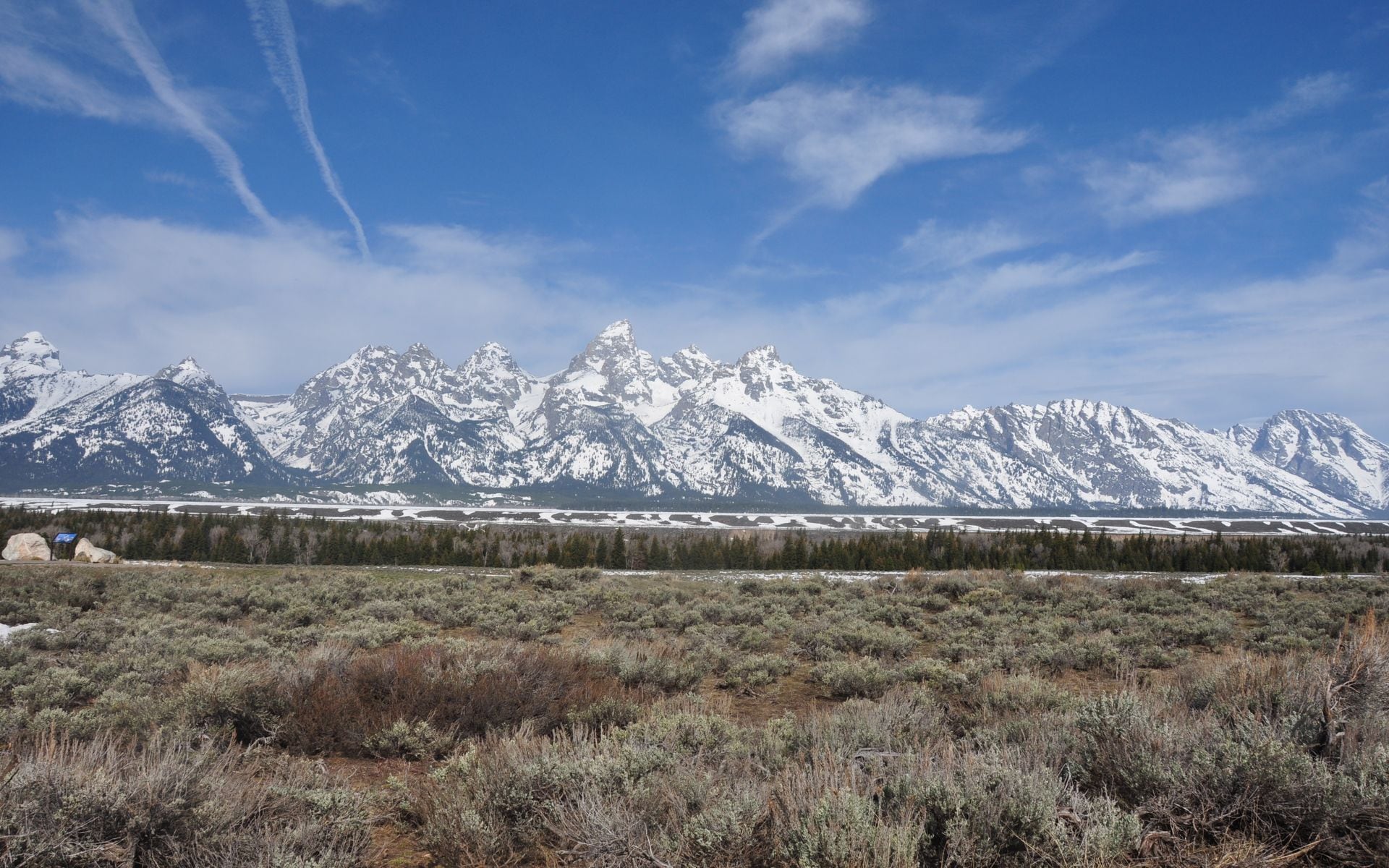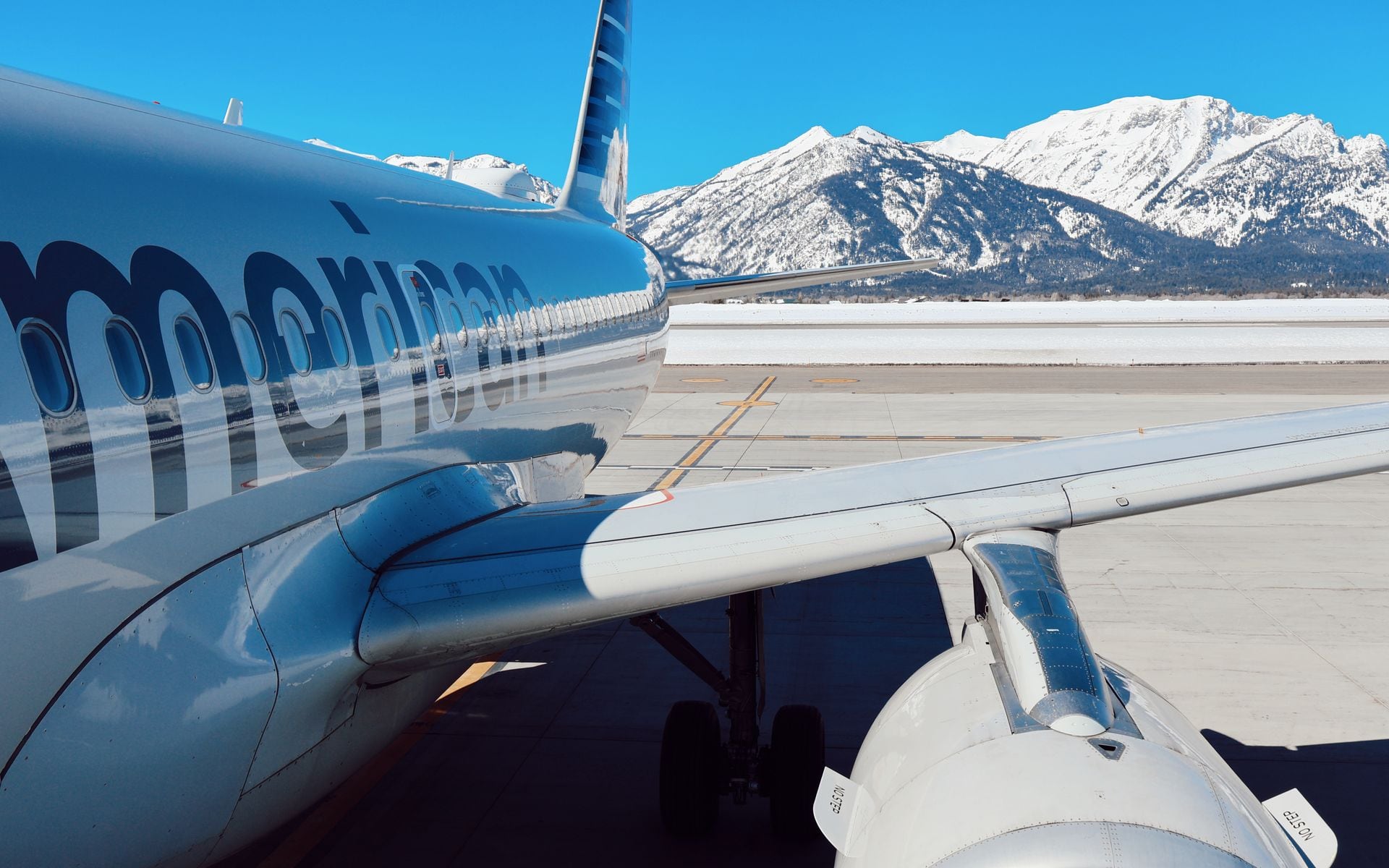
Jackson Hole Airport is the only commercial airport inside a U.S. national park, sitting at 6,451 feet in the Teton valley seven miles north of Jackson. Before you book your flight, here is what to expect on arrival.
A Few Things That Make JAC Unusual
Jackson Hole Airport (airport code JAC) operates under a special use permit from the National Park Service because it sits entirely within Grand Teton National Park boundaries. That permit has historically limited expansions, capped the number of flights, and shaped everything from the terminal’s dark-wood architecture to the specific departure flight paths aircraft must fly to minimize noise over the park. You will notice on takeoff that jets bank unusually early and climb steeply northward over the valley rather than looping directly over the Tetons, those are NPS noise abatement routes, not pilot preference.
The terminal itself is compact by design, a single building with two concourses, wood beams, and floor-to-ceiling windows on the baggage claim level that look straight at the Teton Range. If you have been staring at your phone during the flight, put it away as you approach baggage claim. The view of the peaks from inside the terminal is one of the better airport moments in the American West and it costs nothing extra.
Check our full Wyoming Airports and Getting There guide for a comparison of all commercial airports in the state, including Cody (COD) if you are coming in from the east and targeting Yellowstone rather than the Tetons.
Airlines and Nonstop Routes Into JAC
Delta, United, American, and Alaska all serve JAC year-round from their respective hubs, and that list expands in summer and ski season. In peak summer (late June through August), you can find nonstop service from Atlanta (ATL), New York JFK, Los Angeles (LAX), Denver (DEN), Salt Lake City (SLC), Dallas-Fort Worth (DFW), Chicago O’Hare (ORD), Houston Intercontinental (IAH), Seattle-Tacoma (SEA), San Francisco (SFO), and Minneapolis-St. Paul (MSP). Southwest, Frontier, and Sun Country add seasonal routes during the summer and winter peaks. Outside those peak windows, late September through November and April through mid-May, nonstop options thin out and connecting through Denver or Salt Lake often becomes the only practical route.
Fares at JAC trend higher than comparable Wyoming airports because demand is strong and the permitted slot count limits competition. If you are flexible on dates, flying in mid-June or the first week of September rather than peak July or peak Christmas week can save $100 to $200 per ticket. The Best Time to Visit Wyoming page breaks down how the season affects both crowds and pricing across the state.
Getting From JAC to Jackson, Teton Village, and the Parks
The airport is seven miles north of Jackson’s town square, a roughly 15-minute drive on US-26/89. Teton Village, where Jackson Hole Mountain Resort sits, is about 12 miles from the airport by way of WY-22 west and WY-390 north, typically a 25-minute drive without traffic. In ski season on a Saturday afternoon when charter flights unload, that same stretch can take 45 minutes.
For Grand Teton National Park visitors, the Moose entrance station and the main Teton Park Road are about 20 miles north of JAC along US-26/89/191. Jenny Lake is roughly 33 miles from the airport. Yellowstone’s South Entrance is about 57 miles north, around an hour of driving under normal summer conditions.
Ground transport options beyond rental cars: the START Bus (Teton County Transit) runs a fixed route from the airport to Jackson town square for around $3 per person. That route runs frequently during peak hours but stops running in the late evening, so check the schedule if your flight lands after 9 p.m. Taxis and rideshare (Uber and Lyft both operate in Jackson) are available at the ground transportation curb outside baggage claim. Expect a rideshare from JAC to downtown Jackson to run $20 to $35 depending on surge pricing, and $40 to $65 to Teton Village. If you are traveling with kids and a lot of gear, see the wyoming with kids guide for notes on wrangling logistics with a family in tow.
Rental Cars: Book Early or Pay the Price
Every major rental car company operates at JAC: Hertz, Avis, Budget, Enterprise, National, Dollar, and Alamo all have counters in the terminal. What they do not always have in July and August is available inventory. Jackson is one of the tightest rental car markets in the West during peak summer, and rates reflect it. An economy car that runs $60 per day in May can top $150 to $200 per day in mid-July when supply is thin.
Book your rental the same day you book your flight. If you are visiting Wyoming beyond Jackson and plan to drive to Yellowstone, Cody, or the Wind River country, a standard SUV or AWD vehicle is worth the upgrade. The Yellowstone road system is paved but rutted in spots, and mountain passes on the Beartooth or the Chief Joseph Scenic Byway are no place for a compact with minimal clearance. Check out our Wyoming Travel Guide for route planning guidance before you commit to a vehicle class.
Parking and Terminal Layout
JAC has both short-term and long-term surface parking lots directly in front of the terminal. Short-term rates run approximately $4 per hour. Long-term parking costs around $20 to $25 per day, which adds up on a week-long trip. If you are leaving a vehicle for more than four or five days, some travelers park at the Jackson Town Square or other in-town lots and take the START Bus to the airport to save on fees, though that requires timing around the bus schedule.
The terminal is small enough that security lines are usually short outside of peak flight windows. TSA PreCheck lanes are available. Plan to arrive 75 minutes before domestic departures in the off-season and 90 minutes in summer and ski season when the terminal can get crowded fast. JAC has a single security checkpoint and the gate areas, while comfortable, are compact.
Winter Arrivals: What to Expect
Flying into JAC in December through March means flying into a mountain airport at 6,451 feet that receives significant snowfall. The approach over the Wind River Range and the Snake River Canyon is often turbulent in winter storm conditions. Delays and diversions to Salt Lake City are not uncommon when weather moves through. Build an extra buffer into your first and last day of a ski trip rather than booking activities immediately after an afternoon arrival.
The airport has deicing equipment and handles winter operations well, but the roads out are a different matter. WY-22 over Teton Pass, the route to Teton Village from the west, closes during severe storms and is rated one of the steeper and more challenging passes in the state at 8,431 feet with a 10-percent grade on the Jackson side. US-26/89 along the Snake River is the more reliable winter route but is still subject to closures. The Wyoming Department of Transportation road conditions line (511) and the WyoRoad app are your best tools once you have landed.
Read the do you need bear spray in wyoming post if you are arriving in shoulder seasons like May or October, when wildlife is active along the valley floor and trails near the airport are open. Moose are a genuine obstacle on the roads north of town.
Frequently asked questions
How far is Jackson Hole Airport from Yellowstone National Park?
Yellowstone’s South Entrance is about 57 miles north of JAC, roughly an hour of driving on US-26/89/191 through Grand Teton National Park under normal summer conditions. Add time for wildlife jams inside the park once you cross the entrance, which are common in July and August. The drive from JAC to Old Faithful is approximately 95 miles and takes around two hours without stops.
Can I get from Jackson Hole Airport to downtown Jackson without a car?
Yes. The START Bus (Teton County Transit) runs a fixed route from the airport terminal directly to Jackson’s town square for approximately $3 per person. It operates frequently during peak hours but does not run late at night, so check the schedule for evening flights at startbus.com. Rideshare (Uber and Lyft both operate in Jackson) is available at the ground transportation curb and typically costs $20 to $35 to downtown Jackson depending on time of day and surge pricing.
What airlines fly nonstop to Jackson Hole Airport?
Delta, United, American, and Alaska offer year-round service from their respective hubs, including Salt Lake City (SLC) and Denver (DEN). During summer (late June through August) and ski season (December through March), nonstop routes expand to include Atlanta (ATL), New York (JFK), Los Angeles (LAX), Dallas-Fort Worth (DFW), Chicago (ORD), Houston (IAH), Seattle (SEA), San Francisco (SFO), and Minneapolis (MSP). Southwest, Frontier, and Sun Country add seasonal service during peak periods. Outside those windows, connecting through Denver or Salt Lake City is often the only option.
Is Jackson Hole Airport open year-round?
Yes, JAC operates year-round, though the number of available flights drops significantly in the spring shoulder season (April through mid-May) and fall shoulder season (mid-September through November). The airport does not close, but some routes go seasonal and connecting through a hub becomes necessary for many origin cities. Winter operations are fully supported with deicing equipment, though storm delays and occasional Salt Lake City diversions happen a few times each season.
How early should I arrive at JAC for my flight?
Plan on 75 minutes before departure in the off-season and at least 90 minutes during summer and ski season. JAC is a small terminal with a single security checkpoint, and on peak weekend mornings when multiple flights are boarding at once, lines through TSA can back up more than you would expect from a two-gate airport. If you have TSA PreCheck, the dedicated lane moves significantly faster and 60 minutes is usually sufficient in non-peak periods.