Held every July in Wyoming’s capital city, Cheyenne Frontier Days is the largest outdoor rodeo in the world, drawing more than 200,000 visitors over ten days. Here is what to know before you go.
What Is Cheyenne Frontier Days?
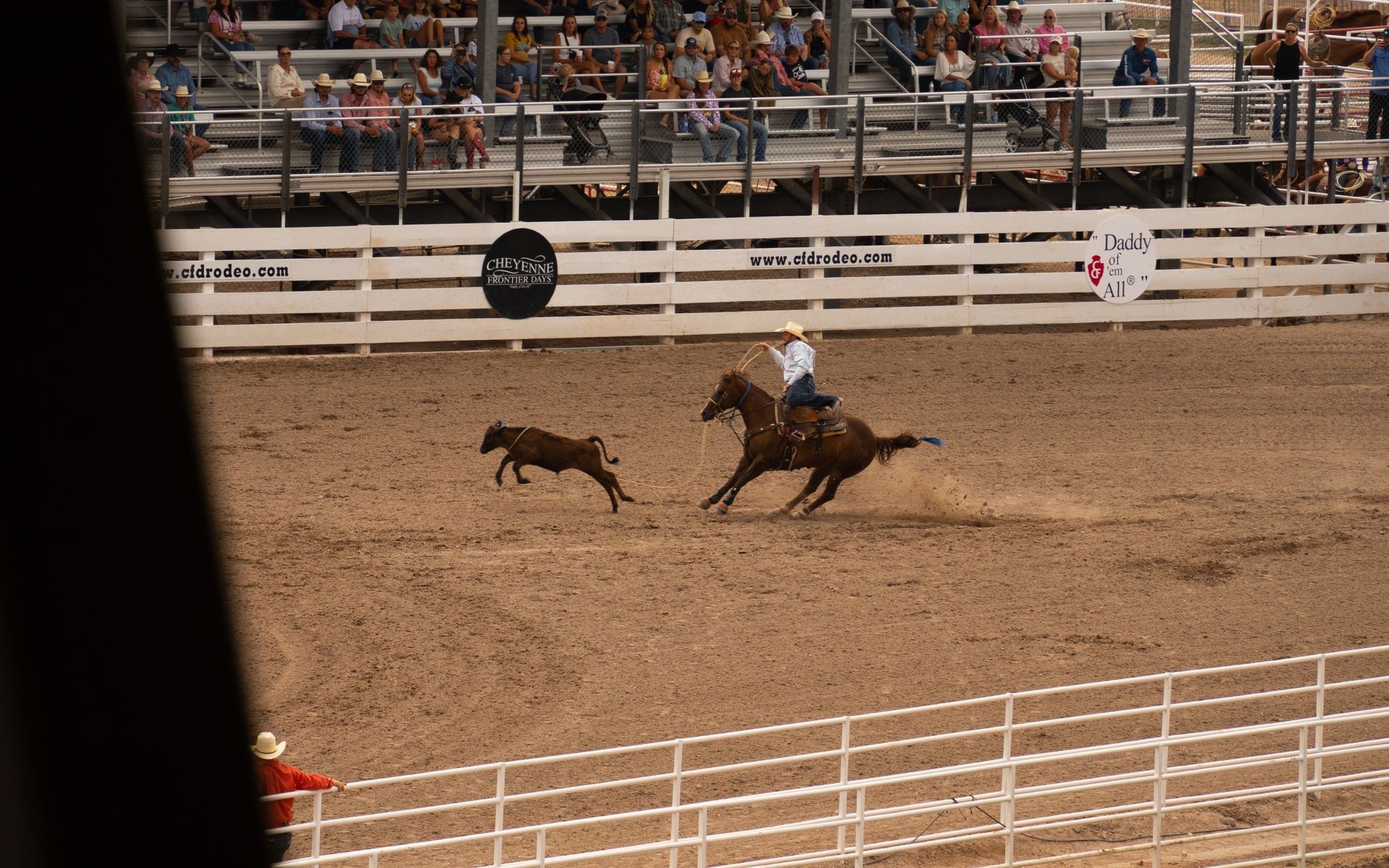
Cheyenne Frontier Days has been running since 1897, which makes it one of the oldest continuously held rodeos in the United States. Locals and longtime rodeo fans call it the “Daddy of ‘Em All,” and the name holds up: the event stretches ten days across the last full week of July each year and fills Cheyenne’s Frontier Park with PRCA championship rodeo, live music, a carnival midway, a Native American Indian Village, and daily parades through downtown. The city’s usual population of about 65,000 roughly doubles during the run. If you’re building a Wyoming trip around the summer calendar and want to see the cowboy and ranch culture side of the state in full force, there is no better single event on offer.
The event is free to walk the grounds and visit the midway, the Indian Village, and the exhibits surrounding the arena. Only the rodeo performances and the nightly concerts require a ticket. That split makes Frontier Days surprisingly accessible: you can spend a full morning at the free acts stage and wander the grounds without spending a dollar. Families with kids should know that children under 12 are generally admitted free to rodeo performances, though confirm that policy when purchasing tickets since it occasionally shifts.
Frontier Days falls squarely in Wyoming’s peak summer travel window. If you’re also thinking about what to do in Jackson Hole in summer, note that both the parks and this rodeo run concurrently in late July, so splitting a trip between northwest Wyoming and Cheyenne in the same week requires some planning around drive times.
The Rodeo: What Makes This One Different
The professional rodeo at Frontier Days is PRCA-sanctioned, meaning the best bull riders, barrel racers, saddle bronc riders, team ropers, and steer wrestlers in the country compete here. Events run across multiple performances each day. Morning slack sessions, which are typically free or offered at a nominal charge, are where a high volume of competitors run through their events before scores are posted. These sessions are a genuine insider move: you see more total action than in the main performances, the crowds are smaller, and you can position yourself close to the chutes. Main afternoon and evening performances are where the leaderboard matters, and those are the ticketed shows.
Tickets for main rodeo performances generally run $25 to $75 per person depending on seat location and the specific day of the run. Premium seating and the championship finals weekend can push closer to $100. Check the official Frontier Days website for current-year pricing and the exact performance schedule, which is usually published in early spring. The Cheyenne Frontier Park arena seats roughly 20,000 for rodeo, and the grandstand fills up. Weekend performances and the final championship days sell out well in advance. Buying early is not optional here.
Free Acts, Concerts, Parades, and the Indian Village
Every morning during Frontier Days, Frontier Park hosts free outdoor concerts on the free acts stage. These shows have featured major country and rock artists throughout the event’s history, and the lawn fills up fast. Arriving by 9 a.m. gives you a decent standing spot. Separate ticketed headline concerts run nightly at the arena and have historically featured top-tier country artists. Those concert tickets go on sale months in advance and routinely sell out before the event week arrives.
The parade is worth building a morning around. The Frontier Days parade routes through downtown Cheyenne on multiple mornings throughout the ten days, with floats, marching bands, horse-drawn wagons, and columns of mounted riders. It is one of the largest parades in Wyoming by attendance, and it’s free.
The Indian Village, located within Frontier Park, brings together Native American dancers, artisans, and cultural demonstrations throughout the run. Spend an hour here and you will come away with something more specific than a rodeo impression. It covers traditions from Northern Plains tribes and is one of the genuinely educational corners of the event. The Old West Museum, right on the Frontier Park grounds, traces 120 years of Frontier Days history through photographs, cowboy gear, and horse-drawn vehicles. Admission to the museum is separate from the grounds but worth the entry fee if you want the full context of what you’re watching.
Where to Stay During Frontier Days
Book your lodging in Cheyenne as early as possible. Ideally, you’re reserving six to nine months out. Hotels within a few miles of Frontier Park fill first, and nightly rates during the event run 40 to 60 percent higher than they would on a normal summer weekend. That pricing spike surprises visitors who don’t plan ahead. Booking in early winter for a late-July trip is not too early.
Downtown Cheyenne has several solid options within easy reach of the grounds. The Staybridge Suites Cheyenne by IHG (rated 4.7 stars) and the Best Western Plus Frontier Inn (rated 4.4 stars) are consistently well-reviewed by Frontier Days visitors and put you within ten minutes of Frontier Park. For something with more atmosphere, the Terry Bison Ranch Resort sits just south of Cheyenne off I-25 and offers cabin and RV options with bison roaming the property. It books quickly for event week. If Cheyenne is sold out entirely, Denver (DEN) sits 90 miles south on I-25, about 90 minutes by car, and the city has far more hotel inventory. Many visitors drive up from Denver for a day or two of events and return south each night.
Getting to Cheyenne
Cheyenne has its own commercial airport (CYS) but with limited service and few direct connections from major hubs. Most visitors fly into Denver International (DEN) and drive north on I-25, which takes about 90 minutes under normal conditions. From Jackson, the drive to Cheyenne runs roughly four and a half hours south and east, passing through Pinedale or Rock Springs depending on your route. If you’re doing a full Wyoming summer trip, Cheyenne fits naturally at the southeast end of a loop that starts or ends in the parks.
Parking around Frontier Park fills by mid-morning on main performance days. The event typically operates shuttle service from remote parking areas, which is worth using. Check the current-year shuttle information on the official Frontier Days website before you arrive.
Eating and Drinking Near the Grounds
Inside Frontier Park, the food options are classic rodeo fare. Fine for a corn dog or a beer mid-session, but not a place to linger over dinner. For actual meals, downtown Cheyenne is a short drive or rideshare away. Pour Decisions is a cocktail bar with a 4.7-star rating and a solid reputation among locals. T-Joe’s Steakhouse and Saloon fits the Frontier Days atmosphere with steak plates and a saloon layout that makes sense after a day at the rodeo. The Albany Restaurant Bar & Liquormart on 17th Street is one of the older downtown establishments and stays crowded throughout the event run. Expect waits at all three during peak event days, particularly on afternoons following the main rodeo performances. Making a reservation where possible is worth the effort.
Browsing the Wyoming rodeos and cowboy culture page will give you more context on how Frontier Days compares to other rodeo events around the state, including the Cody Nite Rodeo, which runs nightly in Cody all summer, and the WYO Rodeo in Sheridan each July.
Tips for First-Timers
Late July in Cheyenne runs warm. Daytime highs regularly sit in the upper 80s to low 90s Fahrenheit, and the sun at 6,000 feet elevation hits harder than it looks. Afternoon thunderstorms are common and can arrive quickly off the Laramie Range to the west. Carry a light rain jacket and apply sunscreen early. Wear boots and a hat if you own them. The event actively encourages western dress and you’ll look right at home.
Cash is useful at vendor booths and some food stalls that don’t run card readers reliably in the crowds. And a practical note on timing: if you are combining Frontier Days with the national parks to the northwest, the drive from Jackson to Cheyenne is a full day in itself, so build in a travel day rather than arriving at the rodeo fatigued from five hours behind the wheel. If your trip extends into the colder months, our guide on Wyoming in winter covers the full seasonal picture, including what Cheyenne looks like once the event season wraps up.
Frequently asked questions
When does Cheyenne Frontier Days take place?
Frontier Days runs for ten days during the last full week of July each year. The exact dates shift by a day or two annually. Check the official event calendar in early spring once the current year’s schedule is published. The event has run continuously every July since 1897.
How much do rodeo tickets cost at Frontier Days?
Main rodeo performance tickets typically run $25 to $75 per person depending on seat location and the specific day. Championship finals and premium seating can push closer to $100. Morning slack sessions, where competitors run through events before the scored performances, are often free or very low cost and let you see more total action with smaller crowds. Children under 12 are generally admitted free to main performances, though confirm this when purchasing.
How far in advance should I book lodging for Frontier Days?
Six to nine months at minimum. Hotels within a few miles of Frontier Park in Cheyenne fill first, and rates during the event run 40 to 60 percent higher than normal. Booking in early winter for a July trip is a reasonable approach. If Cheyenne is sold out, Denver (DEN) is 90 miles south on I-25 and has significantly more hotel inventory at normal rates.
Is Cheyenne Frontier Days free to attend?
Walking the Frontier Park grounds, visiting the midway, the Indian Village, and the free acts morning concert stage costs nothing. The ticketed parts are the main rodeo performances and the nightly headline concerts. So you can spend a full day at Frontier Days without buying a ticket, but you won’t see the PRCA rodeo or the evening concerts from inside the arena.