Wyoming in December through March is a different trip than the summer version. Crowds drop, lodging rates come down, the parks empty out, and the mountains load up with some of the deepest snow in the Rockies. If your plan centers on skiing, snowcoach tours through Yellowstone, or watching elk move through the National Elk Refuge in Jackson, winter is the right call.
When Wyoming’s Winter Season Runs
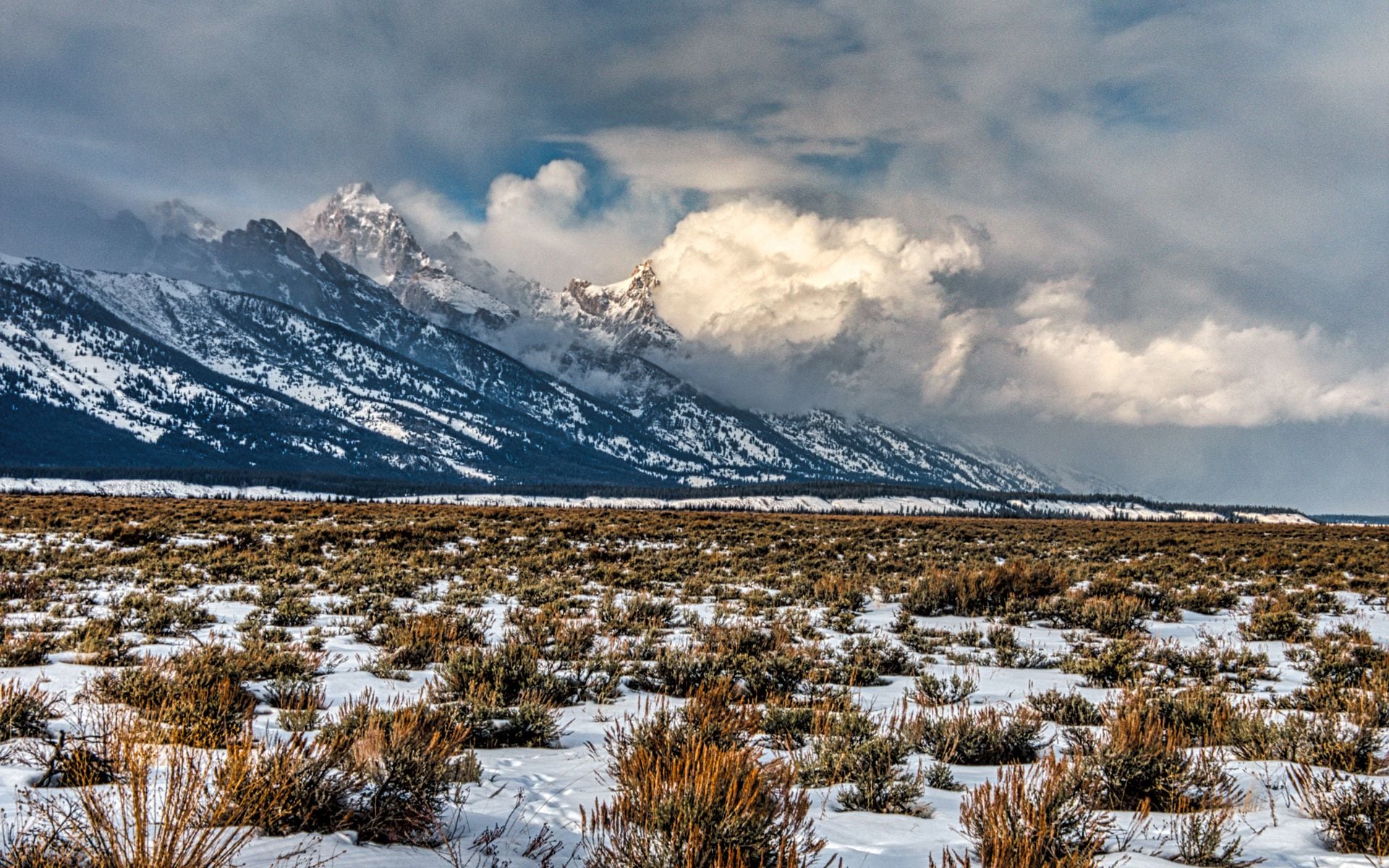
Wyoming’s core winter window runs December through March. January and February are the coldest and snowiest months at elevation, with temperatures in Jackson regularly hitting single digits Fahrenheit overnight and wind chills on the high plains pushing well below zero. The mountains see the heaviest accumulation in these months, with Jackson Hole Mountain Resort averaging over 400 inches per season. If you want solid snow without the harshest cold, late February and March often deliver strong base depths with slightly longer days and more light in the evenings.
Spring, which in Wyoming usually means April through May, arrives late and unevenly. The Teton Park Road and Yellowstone’s interior roads remain closed to cars until late April or early May depending on snowpack. Timing your trip matters. See the Wyoming trip timing guide for a month-by-month breakdown of what’s open and what’s not before you commit to dates.
Skiing and Snowboarding in Wyoming
Wyoming’s ski terrain runs from big-mountain expert to small-hill accessible, with most of the serious skiing concentrated in the northwest corner. Skiing and snowboarding in Wyoming means primarily three resorts around Jackson, plus a handful of smaller areas spread across the state.
Jackson Hole Mountain Resort in Teton Village, about 12 miles north of the town of Jackson, rises 4,139 vertical feet up Rendezvous Mountain. The terrain skews expert, with runs like Corbet’s Couloir and the Hobacks drawing serious skiers from across the country. Day lift tickets run roughly $220 to $350 depending on the date; Ikon Pass holders get access. Flying into JAC (Jackson Hole Airport), the only commercial airport inside a U.S. national park, puts you about 20 minutes from Teton Village with no mountain pass between the airport and the base area.
Grand Targhee Resort, located near Alta, Wyoming on the western slope of the Tetons, averages close to 500 inches of annual snowfall. The approach from the Wyoming side means driving through Jackson and over Teton Pass at 8,431 feet; coming from Driggs, Idaho (about 42 miles from Jackson via the flatter Idaho route) avoids the pass entirely. Targhee attracts powder hunters who find Jackson Hole too crowded or priced out of range. Lift tickets typically run $100 to $175 per day, and the mountain often has untracked snow well into the afternoon on weekdays.
Snow King Mountain sits at the edge of Jackson’s town square with 1,571 vertical feet and night skiing, making it practical for an evening session without driving to Teton Village. Day tickets run $60 to $100. For the southeast corner of the state, Snowy Range Ski Area outside Centennial on WY-130, about 32 miles west of Laramie at roughly 10,000 feet elevation, is a smaller and affordable option with reliable high-altitude snow and day tickets typically under $75.
Yellowstone in Winter
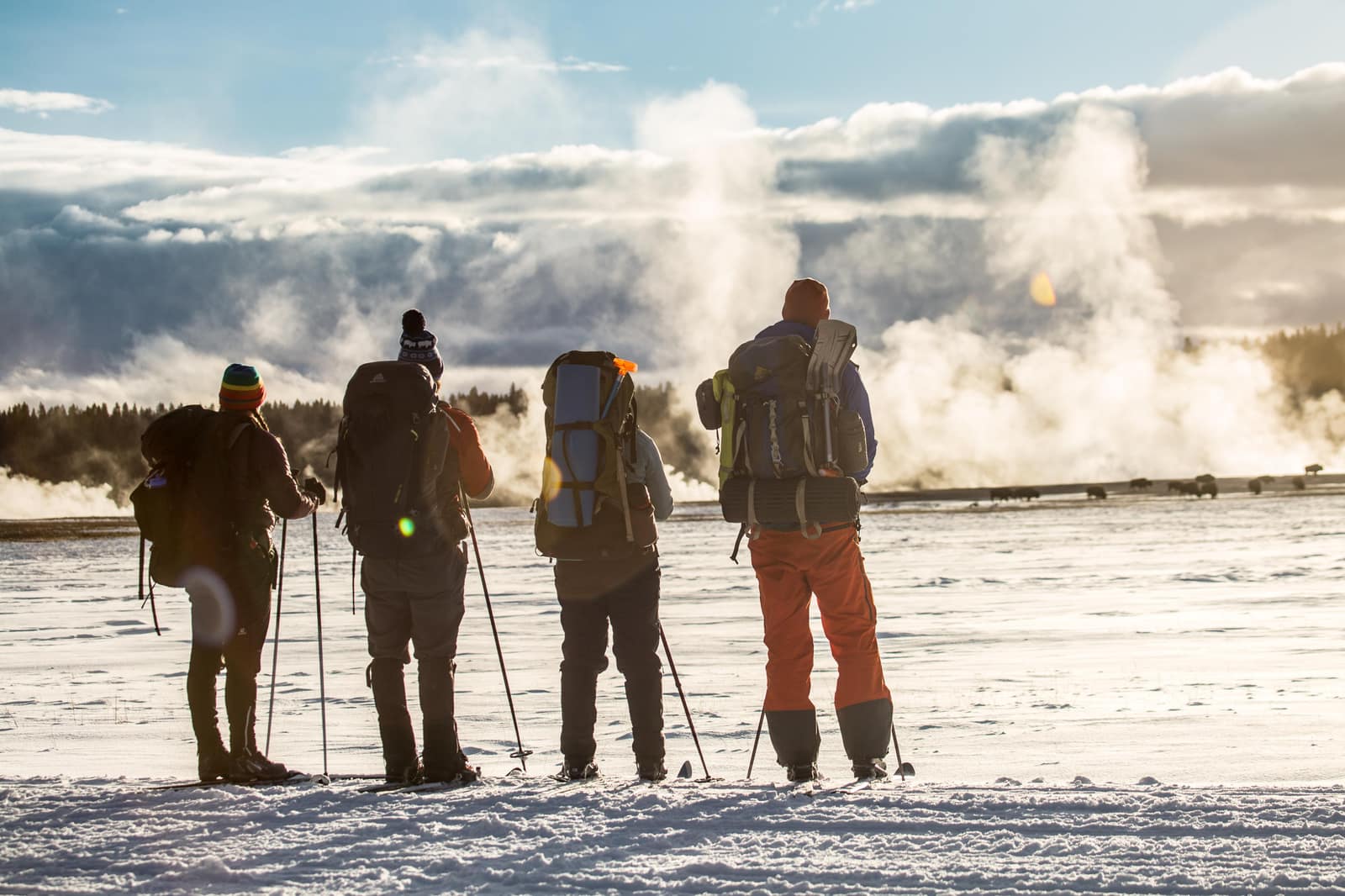
Yellowstone closes to private cars from early November through late April, but it doesn’t close to visitors. Snowcoach and snowmobile tours are the way in, running from West Yellowstone, Flagg Ranch on the south side, and through the South Entrance near Jackson. Yellowstone Vacation Tours out of West Yellowstone offers both snowcoach excursions and guided snowmobile trips into the park interior, reaching Old Faithful and the Grand Canyon of the Yellowstone when no private vehicles can get there. A snowcoach day tour runs roughly $150 to $200 per person depending on the route.
Wildlife in winter Yellowstone is often easier to spot than in summer. Bison cluster near thermal areas and road margins for warmth and stay visible from the groomed roads open to snow travel. Wolf packs move through the Lamar Valley, which stays accessible from the North Entrance at Gardiner, Montana (open to cars year-round). If seeing wolves is the priority, January and February are the strongest months. Tracks show clearly in the snow, and the packs are active in the long cold nights.
Thermal features also perform differently in winter. Old Faithful’s eruption column shoots 100 to 180 feet into air that may be at minus 10 degrees Fahrenheit, and the steam and mist freeze into ice crystals around nearby trees. It’s the kind of thing you don’t see in July.
Jackson and the National Elk Refuge
Jackson itself doesn’t shut down in winter. The antler arches on the town square are lit after dark, restaurants and bars stay open, and reservations at popular spots are far easier than in July. Lodging prices typically drop across the board in November before the ski season hits, then climb again through January and February. A hotel that runs $400 per night in summer often lists at $200 to $250 in early December.
The National Elk Refuge, directly north of Jackson on US-191, runs horse-drawn sleigh rides through the wintering elk herd from late December through March. Several thousand elk move onto the refuge’s 25,000 acres each fall and stay through spring, and the rides take you into the middle of the herd. Tickets run around $25 to $30 per adult and sell out quickly around the holidays. The National Elk Refuge and Greater Yellowstone Visitor Center in town is worth a stop before you go to understand the refuge’s role in the region’s elk population management.
Roads, Weather, and Getting Around
Winter driving in Wyoming demands attention. US-26/89 over Teton Pass (8,431 feet) between Jackson and Victor, Idaho closes during heavy winter storms and can be icy even when technically open. US-287 through Togwotee Pass (9,658 feet) between Dubois and the Moran Junction can ice over and close without much warning. The I-80 corridor across the southern part of the state stays mostly open but sees intense wind and blowing snow between Rawlins and Laramie, where ground blizzards with near-zero visibility happen multiple times each winter. Check Wyoming DOT road conditions at 511.wyoming.gov before any mountain or plains drive.
Rent a car with all-wheel drive or four-wheel drive. Car rental desks at JAC (Jackson Hole Airport) and CPR (Casper Airport) regularly stock SUVs in winter. If you’re driving to Grand Targhee over Teton Pass, carry tire chains in the trunk. On any remote stretch of Wyoming highway in January or February, keep water, snacks, and extra layers with you in case of a weather delay or a roadside stop.
For a realistic look at how many days to plan for, see the guide on how many days Wyoming takes. Most winter trips built around skiing run well at five to seven days, which leaves room for resort days alongside a snowcoach excursion into Yellowstone. Some Wyoming dude ranches stay open through winter for horseback rides on snow-covered trails and snowshoe access to the back country. The dude ranch guide covers what a winter stay looks like and which properties are open.
Use the Wyoming travel guide to build the rest of your itinerary, whether you’re planning a ski-only trip, a Yellowstone winter tour, or a combination of both across the state’s wide geography.
Frequently asked questions
Is Jackson Hole worth visiting in winter?
Yes, particularly if skiing is a priority. Jackson Hole Mountain Resort has 4,139 vertical feet and terrain that’s hard to match in the lower 48, and the town of Jackson stays fully open with good restaurants and shorter waits than July. The trade-off is cost: day tickets at the resort run $220 to $350, and Jackson lodging prices climb in January and February. If budget matters, look at lodging in Wilson or Victor, Idaho, and consider Grand Targhee Resort as a lower-priced ski alternative on the west slope of the Tetons.
Can you visit Yellowstone National Park in winter?
Yes, but not by private car. Most Yellowstone roads close to vehicles from early November through late April. Access runs on guided snowcoaches and snowmobile tours departing from West Yellowstone, Flagg Ranch, and the South Entrance near Jackson. Yellowstone Vacation Tours out of West Yellowstone is one established operator running both. A snowcoach day tour typically runs $150 to $200 per person. Winter Yellowstone is quieter, the thermal features are more dramatic in cold air, and wildlife like bison and wolves are easier to see against the snow.
How cold is Wyoming in January?
In Jackson, January highs average in the low 20s Fahrenheit with overnight lows near 0 degrees Fahrenheit. Wind chill on the open plains and at high elevation can push the felt temperature to minus 20 degrees or colder. At ski resort elevations above 9,000 feet, temperatures drop further. Pack a warm base layer, an insulating mid-layer, and a waterproof outer shell. Gloves, a hat, and warm boots rated for real cold are not optional. Days are short (sunrise around 7:45 a.m., sunset by 5:15 p.m. in Jackson in January), so plan outdoor activities for the midday hours.