Dog sledding in Jackson Hole runs December through March, when the valley floor sits under two or three feet of packed snow and the Teton Range is visible on clear days from the open meadows where the dogs work. It’s one of the more immersive things you can do on a Jackson winter trip: you’re not watching from a chairlift or a snowcoach window. You’re standing on the runners at 20 to 25 mph behind a team of Alaskan huskies that genuinely want to be there, pulling hard through spruce timber and across frozen meadows. Here’s how the tours work, what they cost, and when to book.
How Dog Sled Tours Work in Jackson Hole
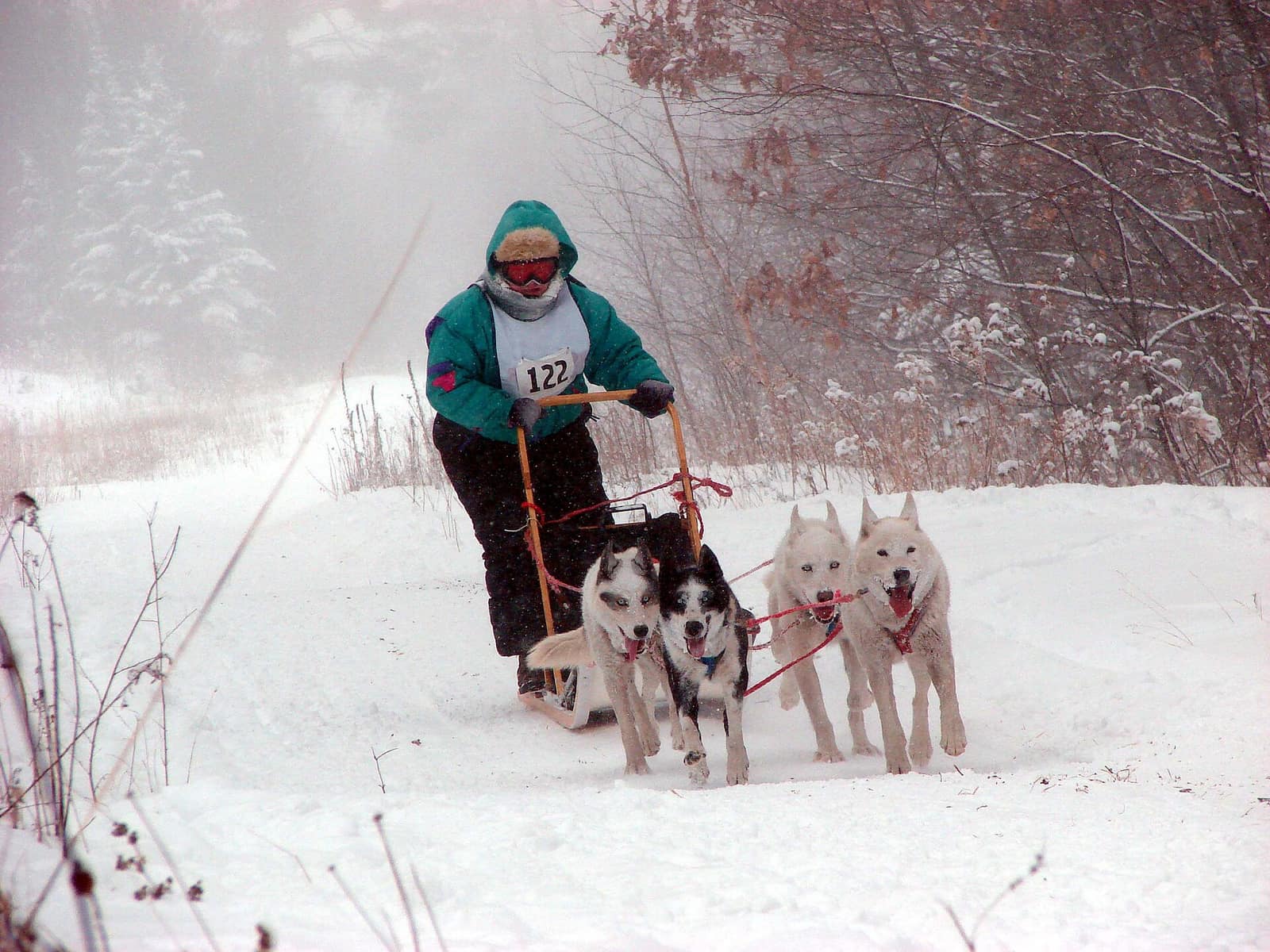
Most dog sled tours out of the Jackson Hole area operate as guided half-day experiences, typically running two to three hours on the trail. The structure varies by outfitter, but most trips give guests time in both the passenger basket (the sled) and on the runners as a musher. You ride as a passenger first, usually, while the lead guide manages the team and walks you through the basics: how to set the snow hook (the anchor that stops the sled), how to shift your weight on turns, and how to read the team ahead of you. Then the guide hands you the stanchion and lets you drive a portion of the trail.
The dogs are Alaskan huskies, bred specifically for pulling and trail endurance. These are leaner, high-drive working dogs that know their job and get visibly impatient at the starting line. The team for a tourist sled typically runs 6 to 10 dogs, depending on trail conditions, snow depth, and total passenger weight. When the snow hook comes up and the line goes taut, the team accelerates fast. The first quarter mile is the loudest: dogs barking, the sled snapping through the first turn, snow flying off the brush bow. After that, it settles into the rhythm of the trail.
Outfitters typically run groups of two to four guests per trip with one guide. Some operators will take a solo booking for a small premium; others require at least two people. Ask directly before you assume a solo spot is available at the standard rate.
Where the Runs Go
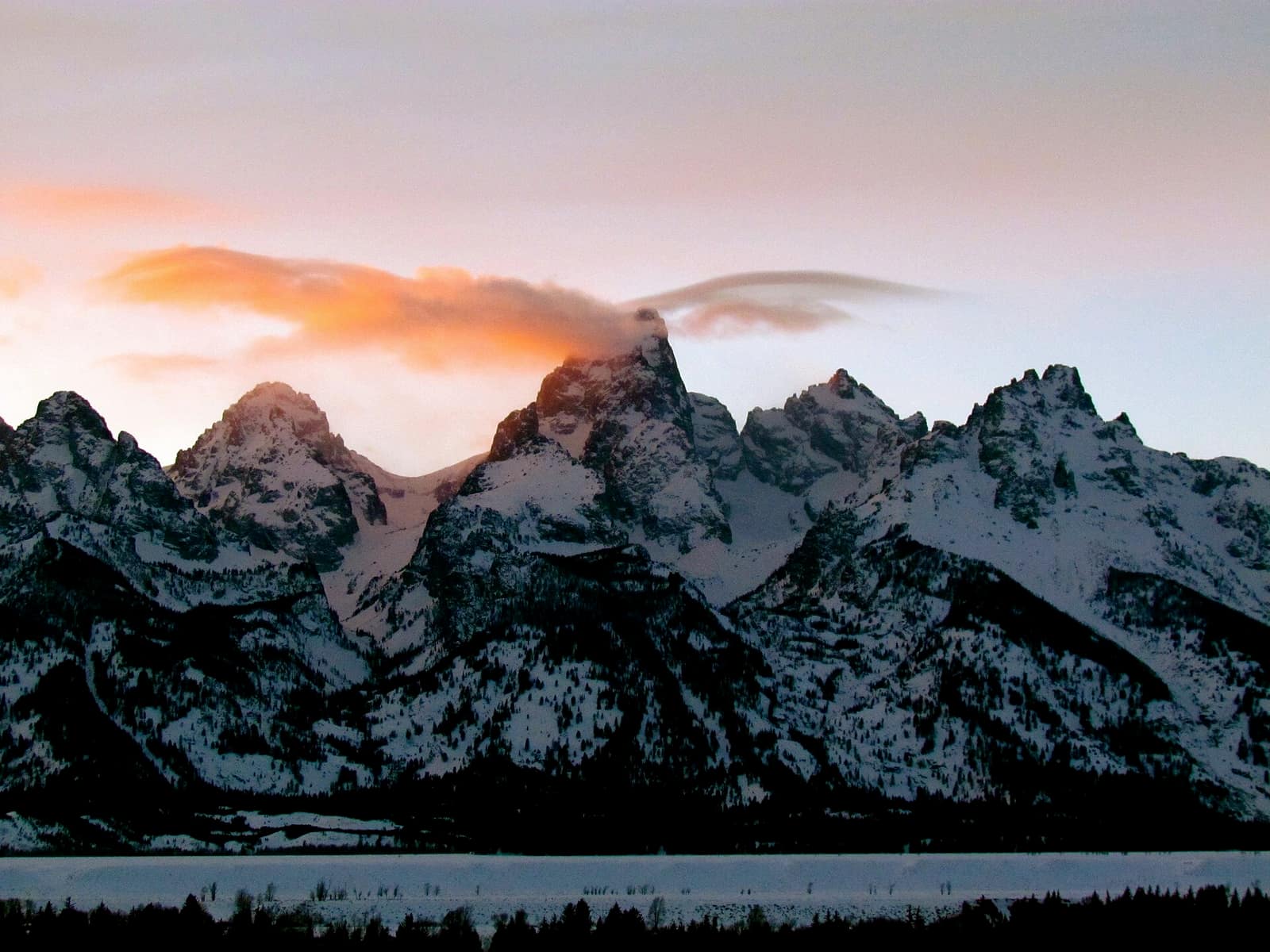
The routes change with snow conditions and permit areas, but most Jackson-area tours operate in the Bridger-Teton National Forest lands east and northeast of town. You won’t be inside Grand Teton National Park on the sled (permits for commercial dog sled operators inside the park are limited), but the Tetons are visible from the open sections of trail on clear days. The terrain mixes open sagebrush meadows, wide and flat with long sight lines to the peaks, and tighter spruce-fir corridors where the trees close in overhead and cut the wind.
Elevations on the main tour routes typically run between 6,000 and 7,500 feet. Trails are groomed or broken by the outfitter before each departure and reset after significant fresh snow. A first-timer on a half-day tour covers 8 to 12 miles of trail depending on pace, rest stops, and how long guests spend on the runners.
Snow conditions are most consistent from late December through late February. March tours are possible in most seasons, but lower-elevation meadows can develop ice crust as the days lengthen and temperatures swing wider. If you’re planning a March trip and snow quality matters, verify trail conditions with the outfitter before you drive out.
For the Grand Teton winter road schedule, the NPS publishes current opening and closure dates at nps.gov/grte/planyourvisit/winter-activities.htm.
What These Tours Cost
In the Jackson market, dog sled tours typically run $200 to $350 per person for a two- to three-hour guided half-day trip. Full-day excursions covering more terrain, with a trailside lunch and extended time on the runners, can reach $500 per person or more. These prices reflect the year-round cost of maintaining a working kennel of 20 to 40 dogs, including feed, veterinary care, and equipment.
Verify pricing directly with the outfitter before you book. Rates adjust annually and vary by group size, tour length, and the season. Some operators offer discounts for early booking; others are flat-rate regardless of lead time. Children are typically welcome on passenger tours from age 4 or 5 onward, but age minimums and weight limits for the mushing portion vary by operator. Confirm what’s included in the quoted rate: most tours include transportation from a meeting point in Jackson, but it’s worth asking.
What to Wear on the Trail
The temperature range for a Jackson Hole dog sled tour runs from about 5 to 25 degrees Fahrenheit at valley elevations in January and February, with wind chill from trail speed adding felt cold when you’re standing on the runners. Dress for the coldest end of that range.
Layer this way:
- Base layer: merino wool or synthetic thermal, covering both top and bottom
- Mid layer: fleece or a medium-weight down jacket; insulated ski or snow pants on the bottom
- Outer layer: a waterproof, windproof shell over everything
- Feet: insulated winter boots rated for sub-zero temperatures; you’ll stand on the runners, not clip into bindings
- Hands: mittens over liner gloves; bare hands in moving air at 20 mph lose dexterity quickly
- Face: a balaclava or neck gaiter plus goggles, particularly for the sections when you’re driving
Most outfitters provide insulated one-piece oversuit covers for guests who arrive underdressed, and some include boot covers. Arrive dressed rather than relying on the loaner gear. The suits are an insurance policy, not the system. Tuck a pair of chemical hand warmers into your jacket pocket before you leave the truck. They’re worth the bulk.
When to Book and How Far Ahead
The season opens when the valley accumulates a stable snow base, usually mid-December in most years and occasionally earlier. It runs through March. The most consistent window for cold temperatures and reliable trail conditions is January through mid-February.
Three stretches see the highest demand: Christmas through New Year’s, Martin Luther King Day weekend, and Presidents Day weekend. If any of those dates are in your travel window, book the dog sled tour before you finalize lodging. The tour slots fill before the hotels do, and you won’t find walk-up availability during a holiday week in Jackson.
For a mid-January or early February trip outside the holiday weeks, two to three weeks of lead time is usually enough. February trips that don’t land on Presidents Day often have openings with short notice. Calling ahead is always better than hoping something is available when you arrive.
Making Dog Sledding Part of a Jackson Hole Winter Trip
The Jackson Hole and Tetons region runs a full winter calendar well past skiing. A dog sled tour typically takes up a morning block of two to three hours, which leaves the afternoon open for the ski mountain, a drive through the elk refuge, or town. If you’re also skiing at Jackson Hole Mountain Resort or Grand Targhee, the dog sled pairs better on a non-ski day or a half-day when your legs have already done their work. The two activities don’t overlap geographically, so you’re building a trip around different experiences on different days, not choosing between them.
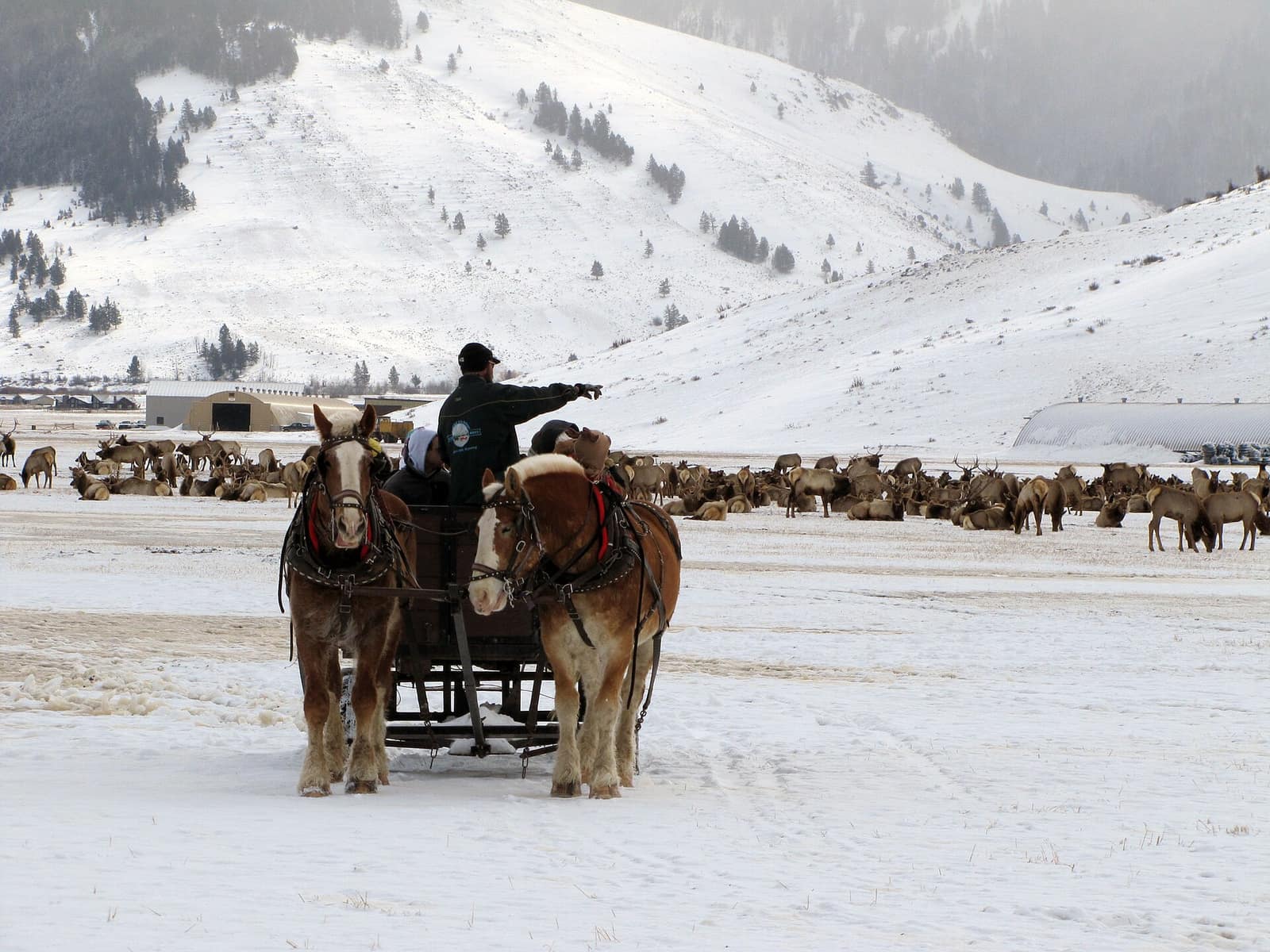
The National Elk Refuge sleigh ride, which runs from late December through March out of the Visitor Center on US-191 north of Jackson, makes a clean afternoon pairing with a morning dog sled session. Two different slow-speed experiences, two different landscapes, and the elk herd in plain view from the refuge floor. Wyoming in winter covers the full schedule of what’s open from December through March, including snowcoach tours into Yellowstone and the ski options at both resorts. For the ski-specific breakdown, skiing and snowboarding in Wyoming covers Jackson Hole Mountain Resort, Grand Targhee, Snow King, and the smaller areas across the state.
Getting there: Jackson Hole Airport (JAC) sits 8 miles north of town inside Grand Teton National Park and is the most direct approach, with seasonal direct flights from Denver, Dallas, Chicago, Los Angeles, and New York. From Salt Lake City, the drive runs about 4.5 hours via US-89 through Star Valley and Alpine, Wyoming. For road conditions on Teton Pass (US-26/89, summit elevation 8,431 feet) in winter, check 511.wyoming.gov before you cross.
Where to stay: Jackson has the full range, from budget motels to the Four Seasons at Teton Village. For a trip built around activities like the dog sled tour, the elk refuge, and a ski day or two, a Jackson hotel with walkable restaurants and a short drive to the meeting points keeps logistics simple. Mid-range hotels in Jackson typically run $150 to $300 per night in January outside the holiday weeks. Teton Village puts you at the mountain’s base but adds a 30-minute drive to most dog sled pickup locations.
For the full seasonal picture before you commit to dates, the best time to visit Wyoming breaks down each month across the state.