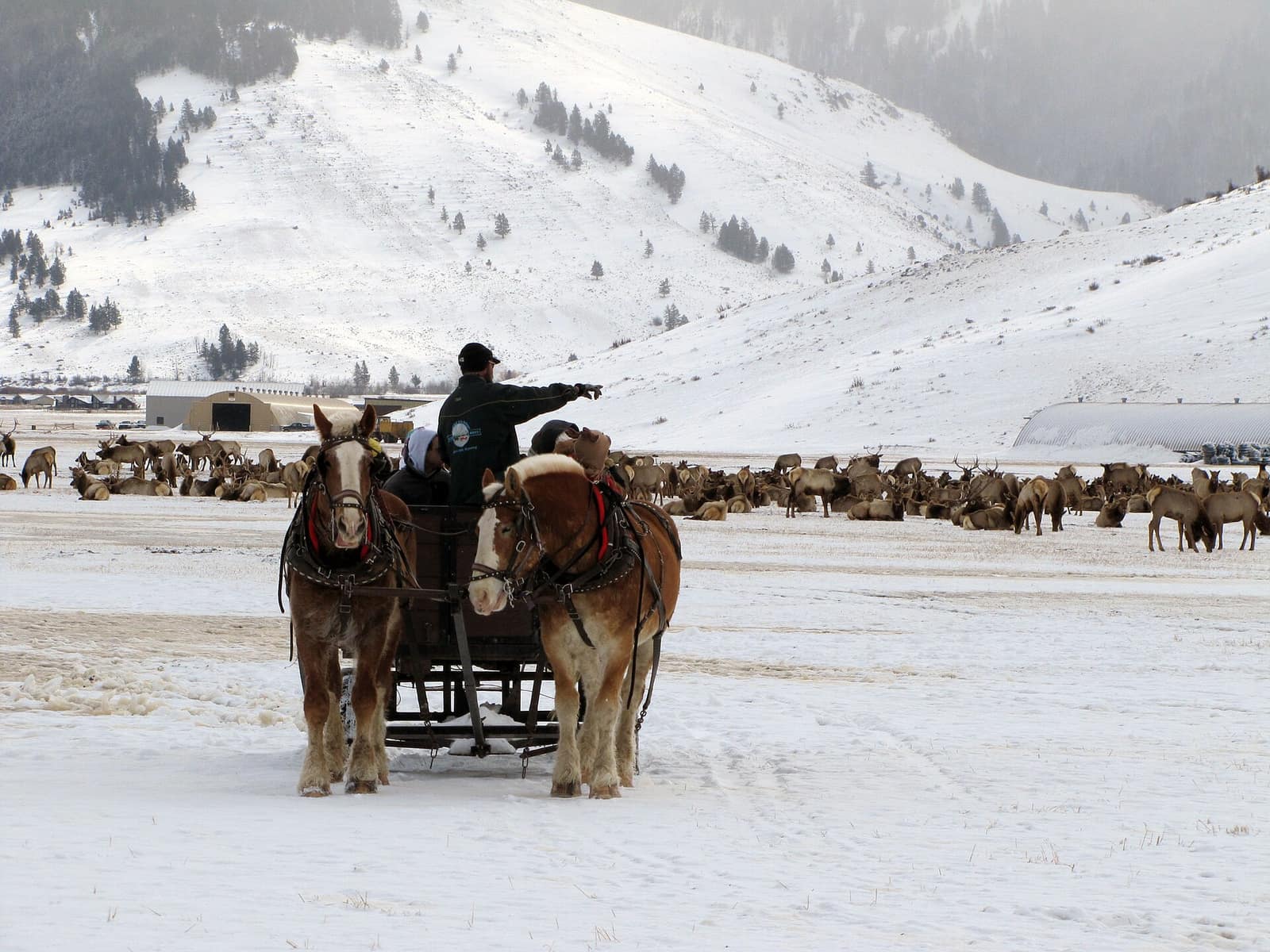
The National Elk Refuge north of Jackson draws between 5,000 and 8,000 elk each winter onto its 25,000 acres of valley floor. The horse-drawn sleigh rides that run through that herd from late December into March are one of the few wildlife experiences in the American West where you roll out into the middle of a mass congregation of large animals at close range, on purpose.
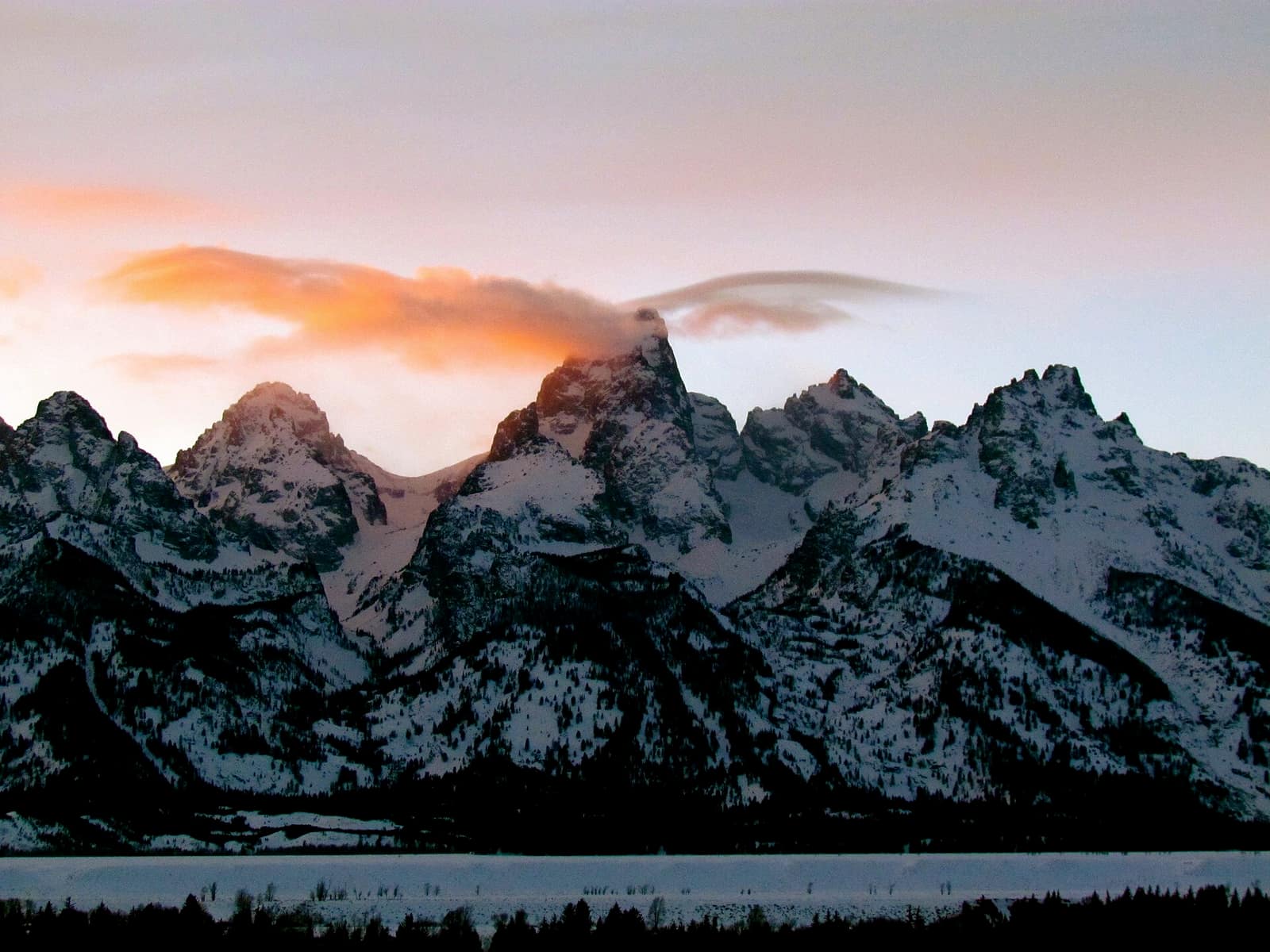
This is not a zoo recreation and it’s not a short walk to a fence line. The Teton Range sits on the western horizon while thousands of elk spread across the snow in front of you, and the horses know where they’re going. Whether you’re mid-trip between ski days at Jackson Hole Mountain Resort or you came specifically for the national elk refuge sleigh rides, the experience is worth planning around.
What the National Elk Refuge Is
The National Elk Refuge covers about 25,000 acres on the valley floor directly north of Jackson’s town square, administered by the U.S. Fish and Wildlife Service. Each fall, starting in October and November, elk from the greater Yellowstone ecosystem migrate onto the refuge to winter there, escaping the deep snowpack that covers the high country around Grand Teton National Park and the Gros Ventre Wilderness.
The herd that winters here typically ranges from 5,000 to 8,000 animals. Some years it’s higher, depending on conditions in the surrounding high country. The elk stay through March and into early April, moving back up to summer range once the snowpack on the upper slopes softens and the grasses emerge.
During the winter months you can see parts of the herd from the refuge boundary on US-26, but the view from an open sled moving among the animals is a different scale entirely. For context on the rest of Wyoming’s wildlife calendar, the wildlife watching guide covers where and when to find other species across the state.
When the Sleigh Rides Run
The season typically opens in late December and runs through March. January and February are the deepest winter months: the coldest temperatures, the fullest herds, and the most consistent snow cover on the refuge floor.
If you’re weighing months, February often delivers the densest elk concentrations and solid conditions without the holiday crowds that hit around Christmas and New Year’s. The holiday-week rides are the ones that sell out the fastest. By early to mid-January the rush eases, and while you should still book ahead, weekday availability improves.
The rides don’t run every day regardless of conditions. Extreme cold, heavy storms, and operational factors can close a given day’s schedule. Call or check online before you drive up from town.
For broader trip timing, the Wyoming trip-timing guide breaks down what’s open and what’s not each month across the state.
How to Book Tickets
Rides are managed by the Jackson Hole Wildlife Foundation in partnership with the National Elk Refuge. You purchase tickets through the Greater Yellowstone Visitor Center at 532 N. Cache Street in Jackson, which sits at the south end of the refuge near the main elk viewing area. Tickets have historically run around $25 to $35 per adult and around $15 for children, though prices are updated each season.
Book in advance for any holiday period. Christmas week and New Year’s week rides fill days or weeks out. In January and February on a weekday, walk-up availability is more common, but calling ahead or buying online before you arrive is always the safer move. Don’t count on showing up and getting on a sled on a January Saturday without a reservation.
The visitor center is worth stopping at even if you already have tickets. The exhibits explain the refuge’s history, the elk population management program that goes back to the early 20th century, and the full cast of wildlife that shares the refuge with the elk, including bison and coyotes.
What the Ride Is Like
The sleigh is horse-drawn and open, carrying a group of visitors with a guide. Rides last roughly 45 minutes to an hour. The horses pull the sled out onto the refuge floor at a walking pace, and the guide points out elk as you move among them.
Cow elk don’t spook easily at the sleigh. They’ve been wintering on this land for generations, and the sleigh is a familiar presence. Some will be within 20 to 30 feet. You’re sitting in an open sled at near ground level, not looking down from an SUV window, which changes what the experience feels like. Antler bulls can be more reactive and the guide will keep distance, but the herd generally tolerates the sled without moving off.
If wildlife photography is the point, bring a long lens. The flat refuge floor and open light give you clean backgrounds that are hard to get from a roadside pullout. Early morning light on the Tetons from this position on the valley floor is particularly good.
The route isn’t fixed. The guide will go where the elk are concentrated that day, which shifts across the refuge through the winter. January concentrations often push toward the northern sections of the refuge. Ask your guide before boarding; they’ll know where the herd is sitting.
For more on the best times to see wildlife across Wyoming by species and season, the wildlife watching guide has the full breakdown.
What to Wear
Jackson sits at about 6,200 feet with January daytime temperatures averaging in the low 20s Fahrenheit and overnight lows near 0°F. Wind chill on the open refuge floor can push the felt temperature considerably lower. You’re sitting still on an open sled with no windbreak for 45 to 60 minutes.
Dress for that:
- A heavy insulating parka rated for real cold, not just a ski shell
- Insulated snow pants or heavyweight leg layers over a base
- Wool socks and waterproof boots rated to at least minus 20°F
- Wool hat or balaclava and warm gloves
- Hand warmers in your pockets and gloves
The guides have done this in every kind of Jackson winter weather. If you ask whether you’re overdressed, the answer will be no. Wyoming cold on an open sled is the kind that’s obvious to anyone after the first five minutes.
What Else to Do Near the Refuge
The sleigh rides run during the day and leave the mornings and evenings free for everything else in Jackson. A few things that pair well:
The visitor center exhibits. The Greater Yellowstone Visitor Center on N. Cache Street is free. The exhibits on the refuge’s history, the Jackson Hole elk population, and the surrounding ecosystem context are better than most people expect and set up the sleigh ride well.
Scanning from the refuge boundary. The road along the south edge of the refuge, accessible from Cache Street, lets you scan for elk and bison from your car. Trumpeter swans winter along Flat Creek in years when the water stays open. If you have binoculars, bring them.
Jackson town activities. The antler arches on Jackson’s town square are about a five-minute walk from the visitor center. Restaurants and bars in town are fully open in winter, and reservations are considerably easier to get than in July. See the Jackson Hole region guide for the full picture of what’s operating in winter.
Where to Stay and How to Get There
Jackson is the base for this trip. The refuge is directly north of the town square, and the visitor center is a 5-minute drive from the center of town on N. Cache Street heading north.
Lodging in Jackson in winter ranges from budget motels on the highway approaches (roughly $150 to $250 per night depending on the week) up to high-end properties near the town square and in Teton Village. Prices in town tend to drop slightly between Thanksgiving and Christmas before climbing through January and February. If your trip combines the elk refuge with skiing, lodging in Teton Village puts you at the base of Jackson Hole Mountain Resort with a 12-mile drive to the refuge.
Jackson Hole Airport (JAC) is 9 miles north of town and handles direct flights from several major hubs in winter. It’s the only commercial airport inside a U.S. national park. Salt Lake City (SLC), about 300 miles south, is the main alternative if JAC fares are steep; the drive covers some demanding winter highway miles on US-89 through Idaho, so check road conditions before you commit. The Jackson Hole travel guide covers the airport, car rentals, and what’s near what.
A car is required. There’s no statewide transit connecting Jackson to the refuge or to other Wyoming destinations. Rent an all-wheel drive or four-wheel drive vehicle; the roads are manageable with the right tires but an icy Cache Street in January is not the place to be in a front-wheel drive compact.
Frequently Asked Questions
Do the National Elk Refuge sleigh rides require a reservation?
Reservations are strongly advised for any holiday period. Christmas and New Year’s week rides fill well in advance. In mid-January and February on weekdays, walk-up availability is more common, but calling the Greater Yellowstone Visitor Center before you arrive is always worth doing. The season can sell out faster than people expect around school break windows.
Are the sleigh rides appropriate for young children?
Yes. The pace is slow and steady, the sled is stable, and the 45-to-60-minute duration works for most ages. The main concern is cold. A child who isn’t dressed for 20°F and wind on an open sled will have a rough time regardless of how many elk are within 30 feet. Bundle them with the same layers you’d use for a ski day and they’ll be fine.
Can you see the elk from the road without taking the sleigh ride?
You can see portions of the herd from US-26 along the refuge’s south boundary and from the viewpoint near the visitor center on Cache Street. That view is real and worth stopping for if you’re passing through. The sleigh puts you in among the animals at a scale and proximity that the road view doesn’t match.
When does the herd leave the refuge?
Typically March through early April, when snowpack on the surrounding high country softens and the grasses become accessible again. By late April, most of the herd has moved back up into Grand Teton and the Gros Ventre Wilderness for the summer. The best time to visit Wyoming guide has a month-by-month breakdown of what’s happening across the state as the seasons turn.