Overview
This three-day route bases you in Jackson for all three nights. You fly into Jackson Hole Airport (JAC), the only commercial airport inside a U.S. national park, which puts you 25 minutes from downtown Jackson and within reach of both parks without a long driving day on arrival. It works best June through September, when the Teton Park Road is fully open to cars and the South Entrance to Yellowstone is accessible without winter restrictions. Outside that window, the Teton Park Road closes to vehicles from early November through late April, and Yellowstone's interior roads follow a similar seasonal pattern. For a deeper look at Wyoming travel logistics before you commit to dates, it's worth reading through the full guide.
A note on how this state works: Jackson to Old Faithful runs about 60 miles by road and takes roughly one hour. Jackson to the Grand Prismatic Spring parking area takes a few minutes more. Wyoming roads are long and the parks are big, so start early on each park day to get ahead of summer traffic, which at Old Faithful and the Grand Prismatic pullouts builds noticeably by 10 a.m. You will need a park pass: a 7-day vehicle pass for Yellowstone runs $35 per vehicle (estimated) and the same for Grand Teton, or a single America the Beautiful annual pass at $80 (estimated) covers both and pays for itself immediately on a trip like this. If three days leaves you wanting more, the 5 Days in Wyoming and 7 Days in Wyoming itineraries add Cody, the Wind River Range, and more time in the backcountry.
Day 1: Arrive in Jackson and Get Your Bearings
Land at JAC in the morning if possible, grab your rental car at the terminal, and drive the five minutes into downtown Jackson on WY-22. The town square's four arched gateways built from stacked elk antlers are the obvious first stop: it's a two-minute walk from most parking and gives you a quick read on the town's character. The surrounding blocks hold gear shops, outfitters, galleries, and enough coffee to get through the afternoon. Persephone Bakery on East Broadway is a solid morning or lunch stop, known for its pastries and bread made fresh daily, with coffee drinks and a small cafe menu. Expect $12 to $20 per person (estimated) for a meal.
Spend the afternoon on the National Elk Refuge road, which heads east from downtown Jackson past the refuge boundary. From October through April this is where the largest elk herd in North America winters, with estimates of 5,000 to 9,000 animals moving into the valley from higher ground. In summer the elk are up in the mountains, but bison and pronghorn are often visible from the road, which runs about 4 miles east before dead-ending near the refuge headquarters. It's a free drive and one of the better wildlife-viewing spots in the valley for a first afternoon. For dinner, Hand Fire Pizza on North Cache Street is a reliable choice: wood-fired Neapolitan-style pies in a renovated theater building with a full bar and busy summer energy. Expect $18 to $28 per pizza (estimated). After dinner, read through the Jackson Hole and the Tetons region guide to orient yourself for the next two days.
Day 2: Grand Teton National Park
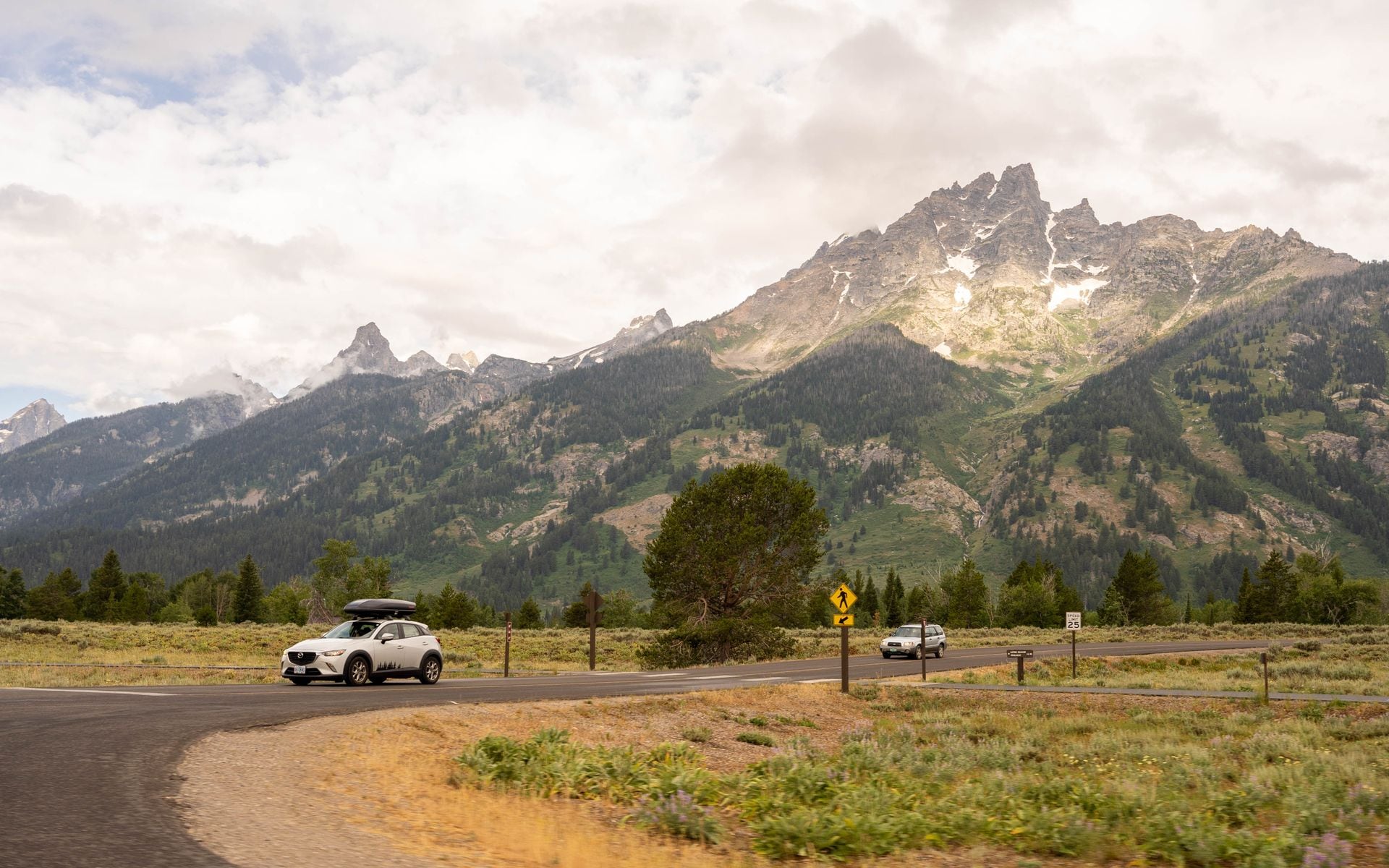
Leave by 7:30 a.m. The Teton Range begins about 20 minutes north of Jackson on US-89/191. Stop first at the Moose Visitor Center near the south park entrance to pick up a map and check current road and trail conditions, then continue north on the Teton Park Road, which runs along the base of the range. The road itself offers good views, but the payoff is at Jenny Lake. The 2-mile loop around the lake is flat and accessible, but the better option is the shuttle-and-hike combination: take the Jenny Lake Shuttle across the lake (roughly $18 round-trip, estimated) and hike to Hidden Falls and Inspiration Point, gaining about 500 feet before opening up to views over the valley. In summer the shuttle starts running around 8 a.m. and lines build by mid-morning.
After the hike, continue north on the Teton Park Road to Signal Mountain Summit Road. The 5-mile paved loop to the summit gives you an elevated view over all of Jackson Hole that you cannot get from the valley floor, and it takes about 30 minutes to drive with stops. On the way back south, turn east on Antelope Flats Road near Moran Junction and follow the 2-mile detour to Mormon Row, a cluster of homestead-era barns and houses from the early 1900s. The barn placement against the range works well in late afternoon light. Get back to Jackson by early evening. This is one of Wyoming's most concentrated national park days you can put together without crossing into Yellowstone, and it earns every mile of driving.
A practical note for this day: the Teton Park Road between Jenny Lake and Signal Mountain can back up significantly in July and August, particularly in late morning. Parking at Jenny Lake fills before 9 a.m. on peak summer days. If you arrive and the main lot is full, use the String Lake overflow lot a mile north and walk the connector trail. Bring water, sunscreen, and layers, since the Inspiration Point trail gains elevation quickly and the temperature at the viewpoint can be noticeably cooler than in the valley.
Day 3: Yellowstone from the South
Leave Jackson by 7 a.m. Drive US-89 north through Grand Teton, past Moran Junction, and continue about 60 miles to the Yellowstone South Entrance. The drive takes roughly one hour to the gate. Your first stop inside the park is West Thumb Geyser Basin, about 2 miles north of the South Entrance gate. The boardwalk loop takes 25 to 35 minutes and passes hot springs, geysers, and mud pools that drain directly into Yellowstone Lake, which sits at 7,733 feet elevation and stays cold even in August. The combination of hot thermal features right at the lake edge is not something you see in other sections of the park.
From West Thumb, head north on Grand Loop Road about 30 miles to the Old Faithful area. This stretch passes the Continental Divide twice and drops into the Upper Geyser Basin along the Firehole River. Check the eruption prediction board at the Old Faithful Visitor Education Center when you arrive: eruptions run on roughly a 90-minute cycle but vary by 10 to 15 minutes in either direction, and the prediction is usually accurate within a few minutes. Walk the Upper Geyser Basin loop while you wait, which passes a half-dozen other named geysers and takes 45 to 60 minutes. The Old Faithful Inn, built in 1904 from lodgepole pine, is worth walking through even if you're not staying there: the interior log lobby is one of the most impressive rooms in the national park system.
After Old Faithful, drive north 4 miles on Grand Loop Road to the Midway Geyser Basin parking area and walk the boardwalk to Grand Prismatic Spring. At 370 feet across, it is the largest hot spring in the United States and the third largest in the world. From the boardwalk level you are looking across its surface, which is striking but does not show the full color pattern. For the aerial view, walk a short distance up the Fairy Falls Trail to the overlook, about a 10-minute walk from the main trailhead parking area off Fountain Flat Drive. The overlook is worth the short detour. Plan to start heading south by 4 p.m. to reach Jackson before dinner and avoid the later afternoon traffic south through Grand Teton.
Where to Stay
Cowboy Village Resort on Flat Creek Drive in Jackson offers 40 cabin-style units with kitchenettes, a heated outdoor pool, and a hot tub. Rates run approximately $200 to $400 per night in peak summer (estimated), which is mid-range for Jackson. The location is walkable to downtown Jackson and about 10 minutes from the south park entrance to Grand Teton. For three nights, staying in Jackson gives you a consistent base without packing and unpacking, and the drive times to both parks are manageable. Budget-conscious travelers sometimes drive 30 minutes west over Teton Pass to Driggs or Victor, Idaho, where lodging can run $80 to $150 per night less (estimated), though that adds commute time each morning.
If you prefer in-park lodging inside Grand Teton, Jenny Lake Lodge, Signal Mountain Lodge, and the Colter Bay cabins along Jackson Lake all book 6 to 12 months in advance for July and August dates. The in-park lodges put you closer to the mountains and remove the daily commute from Jackson, but availability is the limiting factor for most summer trips planned less than a year out.
Book These Ahead
The America the Beautiful annual pass ($80, estimated) covers both Yellowstone and Grand Teton on a single pass and saves money over buying separate 7-day vehicle passes for each. Buy it at the entrance gate on Day 2 when you first enter Grand Teton, then use it again on Day 3 at the Yellowstone South Entrance. Snake River float trips through Grand Teton are a popular add-on for Day 2 afternoon: licensed outfitters run 10-mile scenic floats through the park for approximately $65 to $90 per person (estimated) with guide narration on wildlife and history. These fill quickly in summer and are worth booking 4 to 6 weeks out. For Day 2 specifically, if you want Jenny Lake Shuttle access without a long wait, get to the dock before 9 a.m. No reservation is required for the shuttle, but the line grows quickly after the lot fills.
Frequently asked questions
Is 3 days enough time for Wyoming?
Three days is enough to see the core of Wyoming's northwest corner well: Jackson Hole, Grand Teton National Park, and the south section of Yellowstone. You will not cover the state's full range, which includes Cody, the Bighorn Mountains, Devils Tower, and the Wind River Range. If your goal is a well-rounded Wyoming trip across multiple regions, a week is a more realistic minimum. See the 5 Days in Wyoming itinerary for a mid-length option that adds a day at Yellowstone's north end and time in Cody.
Should I fly into Jackson Hole or Denver for a short Wyoming trip?
If your main goal is the parks, fly into Jackson Hole Airport (JAC) if fares are competitive. JAC puts you 25 minutes from downtown Jackson, 20 minutes from the south park entrance to Grand Teton, and about 60 miles from Yellowstone's South Entrance. Flying into Denver (DEN) and driving saves money on airfare but adds 7 to 8 hours of driving to reach Jackson, which consumes most of a short trip. Salt Lake City (SLC) is a closer alternative to Denver, about 5 to 6 hours from Jackson, and sometimes has better fares than JAC.
Can you see both Yellowstone and Grand Teton in 3 days?
Yes, though you will see one section of each rather than both parks in full. This itinerary devotes a full day to Grand Teton and a full day to the southwest corner of Yellowstone, which includes the geothermal highlights most people come to see: Old Faithful, the Upper Geyser Basin, and Grand Prismatic Spring. The sections of Yellowstone you will not cover on a three-day trip from Jackson include the Lamar Valley in the northeast (where wolf and bear sightings are most consistent), the Grand Canyon of the Yellowstone, and Mammoth Hot Springs near the north entrance. Those areas require driving through the full park interior or basing in Cody or Gardiner, Montana.