Overview
This plan bases you in the town of Jackson for the full week and routes you through three zones: the Jackson Hole & the Tetons valley itself, Grand Teton National Park 20 minutes north, and Yellowstone National Park via the South Entrance about 60 miles and 90 minutes up the road. You get two days in Grand Teton, two days in Yellowstone, one day on the National Elk Refuge and around town, and two days for arrival, departure, and the slower rhythms that make a trip feel like a trip rather than a checklist. Fly into Jackson Hole Airport (JAC), the only commercial airport inside a U.S. national park, and pick up your rental car there. If your schedule is shorter, see 5 Days in Wyoming or 3 Days in Wyoming for tighter windows. The full Wyoming Travel Guide covers planning essentials from park fees to packing.
Day 1: Arrive and Get Your Bearings in Jackson
Check into your lodging and give yourself the afternoon to walk the town. The elk-antler arches on the Town Square are a two-block walk from most downtown hotels, and the square is where you get your first unfiltered look at who else is here in July. Browse the shops along Cache and Broadway, stop by the visitor information center on North Cache Street, and let the altitude settle in. Jackson sits at 6,237 feet, and the parks go up from there.
For dinner, Virginian Restaurant on West Broadway is a genuinely good option on a night when you don't want to make a decision: solid American cooking, generous portions, and prices that are modest by Jackson standards. If you want something livelier, Hand Fire Pizza on North Cache Street, housed in a renovated theater, has excellent wood-fired pies and a full bar. Both are a short walk from downtown. Tomorrow starts early, so keep tonight low-key.
Day 2: Grand Teton National Park, Jenny Lake, and the Cathedral Group
Leave Jackson by 7:30 a.m. and drive north on US-26/US-89/US-191 to the Moose Visitor Center at the park's south entrance, about 12 miles and 20 minutes. Pick up a park map and check current conditions, then continue north on the inner Teton Park Road (open to cars late May through early November) to Jenny Lake, another 15 miles. The Jenny Lake ferry runs late May through September and crosses to the west shore trailhead, cutting about 2 miles of flat walking off your route. Estimate $10 to $18 for a round-trip ticket.
From the west shore, hike to Hidden Falls in about half a mile, then continue up to Inspiration Point. The climb is steep but short, and the view down into the valley gives you a real sense of scale. Back at the lake, drive north on the Teton Park Road to the Signal Mountain summit spur (5 miles, open to vehicles) for the widest aerial view of Jackson Hole from ground level. The Snake River is directly below, and on a clear day you can see the Gros Ventre Range to the east. Return to Jackson by late afternoon. Persephone Bakery on East Broadway closes mid-afternoon, so if you want pastries for tomorrow's early start, pick them up tonight.
Day 3: Grand Teton, Oxbow Bend, Mormon Row, and the Snake River
Drive north 35 miles on US-89 to the Moran Junction area and pull over at Oxbow Bend first thing in the morning. Dawn at Oxbow is the most reliable wildlife-watching spot in the valley: moose feed in the willows along the river, ospreys and eagles work the water, and in September the elk rut brings bulls out into the open. Bring binoculars. From Moran Junction, continue 4 miles to Jackson Lake Junction and the Greater Yellowstone Visitor Center for exhibits on the ecosystem and current wildlife activity reports.
On the return south, take the Antelope Flats Road turnoff near the Moose-Wilson Road junction toward Mormon Row. Two weathered 1890s homestead barns stand in the sage with the central Teton peaks directly behind them. Arrive before 9 a.m. to get ahead of the photography crowd. After lunch back in Jackson, consider a guided Snake River float trip through the park. Outfitters launch from the Deadman's Bar put-in for scenic 10-mile floats that follow the river through the park's cottonwood corridor, with Teton views overhead most of the way. Guided trips run June through September; estimate $60 to $90 per adult. Gun Barrel Steak and Game House on West Broadway is the right dinner choice after a full day outside, with bison, elk, and Wyoming beef on the menu.
Day 4: Drive to Yellowstone via the South Entrance, West Thumb, and Old Faithful
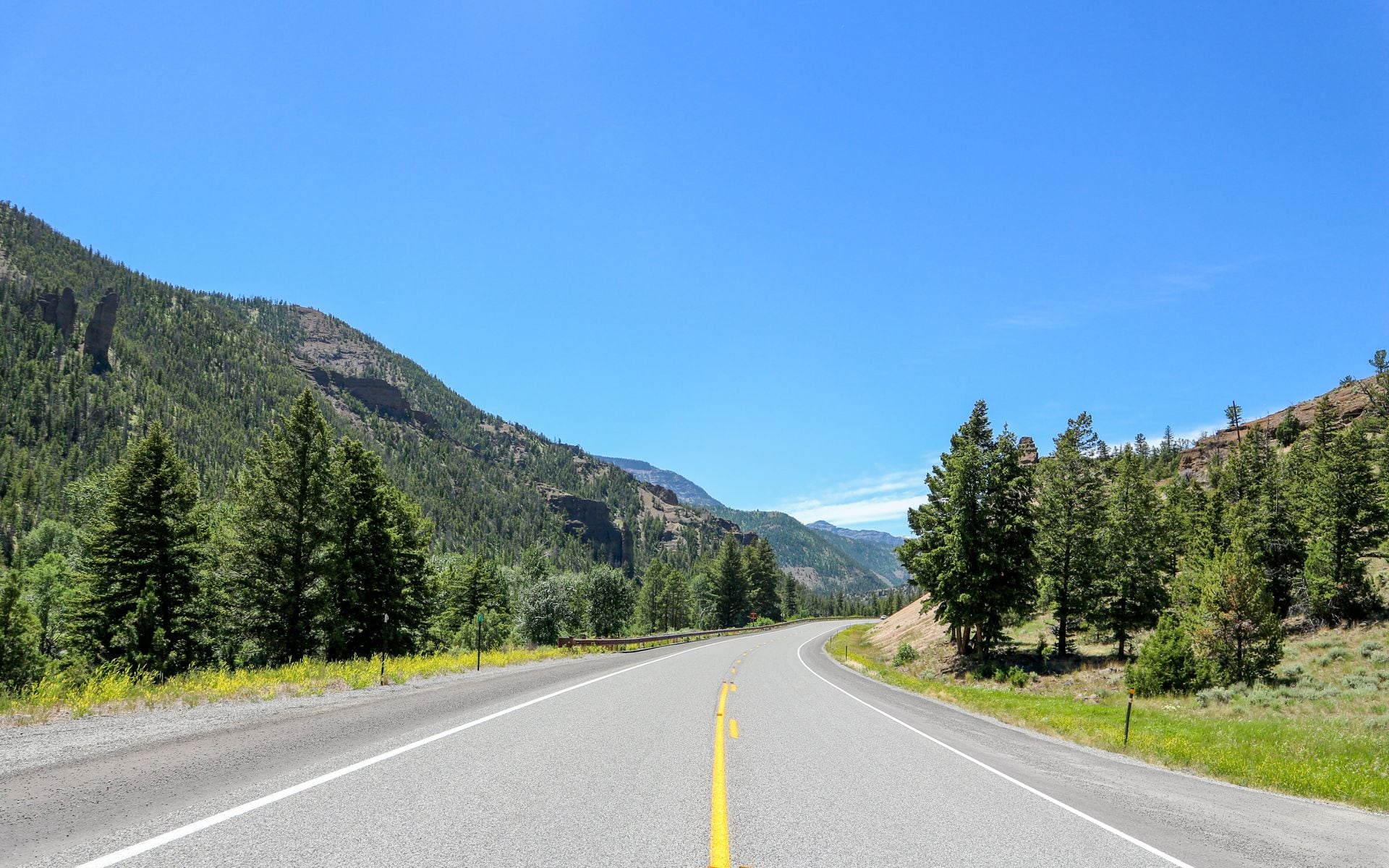
Leave Jackson by 7 a.m. The South Entrance of Yellowstone is 60 miles north on US-89/US-191/US-287, and the drive through the John D. Rockefeller Jr. Memorial Parkway corridor between the two parks is worth taking slowly. Enter Yellowstone through the South Entrance and drive north along the Lewis River past Lewis Lake to West Thumb Geyser Basin on the shore of Yellowstone Lake. The basin sits right where the lake's edge meets active thermal ground, and it is genuinely unlike anything in Grand Teton.
From West Thumb, drive west and north on the Grand Loop Road, crossing the continental divide twice, to Old Faithful Village. The entire Old Faithful basin has dozens of named geysers, but most visitors miss the Grand Geyser, which erupts roughly every 7 to 8 hours and throws water significantly higher than Old Faithful, sometimes over 200 feet. Check the predicted eruption times at the visitor center and plan around it. The afternoon is the quietest window on the boardwalks. If you have a Yellowstone in-park lodging reservation, check in tonight. If not, plan the 90-minute drive back to Jackson.
Day 5: Yellowstone, Grand Canyon of the Yellowstone, and Lamar Valley
If you stayed in the park, you have a head start. Drive east from the Old Faithful area about 40 miles on the Grand Loop Road to the Canyon area. The Lower Falls of the Yellowstone River drop 308 feet, more than twice the height of Niagara Falls. Artist Point on the south rim gives you the full canyon view: yellow rhyolite walls, the river far below, and the falls at the far end. Allow 90 minutes at Canyon before continuing northeast.
The Lamar Valley is about 30 miles from Canyon Village and is Wyoming's most productive wolf-watching terrain. The Lamar Valley Road runs east along the Lamar River, and you can pull over anywhere to scan the north-facing slopes with binoculars. Gray wolves were reintroduced to Yellowstone in 1995, and established packs now use the Lamar's elk herds as their primary prey. Dawn and dusk are the best windows, but midday sightings happen. Grizzly bears and bison are both common here. After the valley, return south through the park to Jackson, about 90 miles and 2.5 hours on US-89, depending on traffic near the South Entrance.
Day 6: National Elk Refuge, Wildlife Art Museum, and a Slow Day in Town
Walk north from downtown Jackson on Cache Street to the National Elk Refuge and Greater Yellowstone Visitor Center at 532 N Cache Street. The visitor center is free and runs good exhibits on the Greater Yellowstone ecosystem. From mid-December through early April, horse-drawn sleigh rides take visitors into the refuge alongside up to 11,000 elk that winter on the refuge. In summer, the elk move to higher ground, but moose, deer, and birds use the refuge through the season. The refuge visitor center staff can tell you where the current wildlife is.
The National Museum of Wildlife Art sits on the bluff directly above the refuge entrance, about a 10-minute walk. Admission runs around $14 to $16 for adults. The permanent collection focuses on Western wildlife and landscape art and is worth two hours. In the evening, stop at Persephone Bakery on East Broadway before it closes if you want to pick up something for the road tomorrow. For dinner, you've already seen what Jackson has at the higher end. The Virginian on West Broadway is a reliable fallback at more reasonable prices.
Day 7: Final Morning and Departure
Keep the morning light. JAC is small and close to downtown, but summer mornings can back up at the rental car return and security. If your flight is afternoon, take the 13-mile drive south on US-89 to Hoback Junction at the mouth of the Snake River Canyon, where the canyon walls close in fast and the river picks up speed. It's a good final look at the Wyoming landscape before you leave. Return to Jackson, get one last coffee from Persephone, and head to the airport. The drive from downtown Jackson to JAC is about 8 minutes.
If this trip has you thinking about extending your Wyoming time or adding Cody and the east side of Yellowstone, see our National Parks page for everything the parks offer across the state.
Where to Stay
Base yourself in Jackson proper for the whole week. It keeps your commute to the parks under 25 minutes in either direction and puts you walking distance from restaurants and the town square. Cowboy Village Resort on Flat Creek Drive offers cabin-style units with a heated outdoor pool and is one of the better mid-range values in a resort-price market. The Lodge at Jackson Hole on Scott Lane is a more traditional hotel layout with on-site breakfast available and easy access to downtown. Both are within 10 minutes of the park road.
For the Yellowstone nights on days 4 and 5, an in-park lodge at Canyon Village or Old Faithful cuts your driving time dramatically and lets you catch early-morning conditions that day-trippers miss. Those rooms book out months in advance. If you can't get them, base staying in Jackson is fine, just budget 90 minutes each way to the Yellowstone attractions you want most.
Book These Ahead
Yellowstone in-park lodging fills for July and August by February or March most years. Book as soon as you have firm dates. Snake River float trips through the park book up two to four weeks ahead in peak summer, so lock in a date before you leave home. The Jenny Lake ferry is first-come, first-served, and the line forms early on summer mornings. Arriving before 8 a.m. in July generally gets you on within 30 minutes. If the line looks long, skip the ferry and take the flat 2-mile lakeshore trail around the south shore instead.
Rental cars at JAC sell out in July and August earlier than almost any other Wyoming airport. Reserve your car when you book your flights, and do not count on picking up a vehicle day-of. The America the Beautiful annual pass (around $80 and valid for a full year) covers Grand Teton and Yellowstone entry, which is worthwhile if you're paying for both parks. A Yellowstone single-vehicle entry runs about $35 at the gate.
Frequently asked questions
Is one week enough time for Jackson Hole?
Seven days is enough to do Grand Teton and Yellowstone without feeling rushed, spend time on the Snake River, and have a day just to be in Jackson without an agenda. If your main goal is only the town and Grand Teton, five days works. If you want to add Cody or the east side of Yellowstone, you need more than a week.
What is the best time of year for this Jackson Hole itinerary?
June through September is the main window. The inner Teton Park Road opens by late May, all the Grand Teton hike corridors are clear of snow by late June, and Yellowstone's full road system is open. July and August are the busiest months with the warmest days. September is smaller crowds, elk rut in the valley, and reliable fall color on the aspen above 8,000 feet.
Do I need a reservation to enter Grand Teton or Yellowstone?
As of 2026, neither park requires a timed-entry reservation to drive in. You pay a vehicle entry fee at the gate (around $35 per vehicle and valid for 7 days at both parks). However, in-park lodging and popular campgrounds at both parks book out months in advance, and backcountry permits for overnight trips require planning. The America the Beautiful annual pass covers entry at both parks.
Can I do Yellowstone as a day trip from Jackson?
Yes, but it's a long day. The South Entrance is about 90 minutes from Jackson. To see Old Faithful and the Lamar Valley on the same day, you're covering roughly 180 miles of park road plus the drive each way. The itinerary above splits Yellowstone across two days for good reason. If you only have one day, choose Old Faithful or the Lamar Valley, not both.